

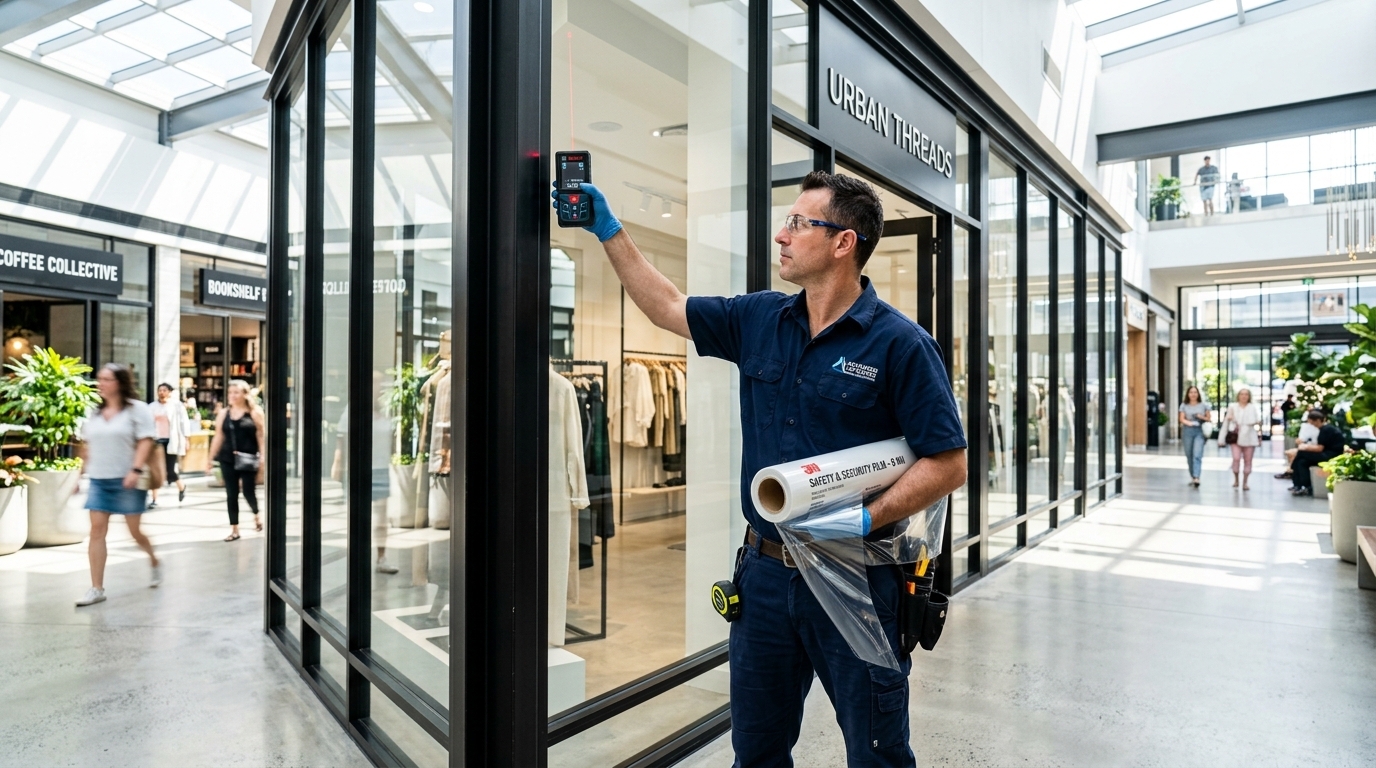
Security window film installation typically costs between $8 and $18 per square foot installed, with perimeter attachment systems adding $4 to $12 per linear foot. Facility managers, school administrators, and property owners rely on these cost metrics to budget physical security retrofits accurately.
Understanding how film thickness, multi-ply engineering, and structural framing anchors influence final pricing ensures your perimeter hardening project achieves maximum defensive value.
Basic architectural safety and security window film installations start at approximately $8 per square foot for entry-level human impact protection. High-threat commercial installations utilizing 14 mil multi-ply laminates and structural silicone wet-glaze anchoring range between $14 and $18 per square foot.
Total project investment depends on window dimensions, substrate glass types, required security ratings, and accessibility. Large commercial contracts often achieve significant volume discounts that reduce net unit costs.
| Security Film Specification | Installed Material Cost / Sq. Ft. | Anchoring System Requirement | Target Security Threat Level |
|---|---|---|---|
| 4 Mil Safety Film | $7 – $10 | Daylight install (No anchor) | Code compliance, accidental impact, spontaneous breakage |
| 8 Mil Standard Security | $9 – $14 | Structural silicone wet-glaze | Forced entry delay, smash-and-grab, retail burglaries |
| 14 Mil Maximum Security | $13 – $18 | Heavy wet-glaze or mechanical clamp | Bomb blast mitigation, civil unrest, high-value asset defense |
| 3M Ultra Multi-Ply Series | $12 – $17 | Dow Corning 995 wet-glaze | Active shooter delay, extreme tear resistance |
Detailed threat assessments determine whether standard daylight installation suffices or whether heavy structural perimeter anchoring is required.
Security films are manufactured in standard thickness tiers, with thicker laminates providing higher tensile break strength. Selecting the correct thickness ensures optimal protection without overspending on unnecessary material weight.
Understanding the engineering characteristics of each thickness tier clarifies cost differences.
A 4 mil safety film represents the baseline entry level for architectural glass protection. This film is engineered primarily to meet building safety glazing codes and prevent accidental human impact injuries.
Priced between $7 and $10 per square foot installed, 4 mil film holds shattered glass shards safely together when glass breaks from accidental collisions or seismic vibrations. It satisfies federal safety glazing criteria such as CPSC 16 CFR 1202 Category II.
While effective for fragment retention, 4 mil film offers limited forced entry delay against determined physical attack. Property managers specify 4 mil film primarily for code compliance in high-traffic corridors and glass stairwells.
An 8 mil security film is the commercial standard for storefronts, municipal buildings, and residential ground-floor entries. It features break strengths between two hundred and two hundred and fifty pounds per linear inch.
Installed pricing ranges from $9 to $14 per square foot depending on project volume and glass layout. When struck with crowbars or baseball bats, the heavy polyester membrane absorbs blunt trauma and maintains structural envelope integrity.
Retailers facing organized retail theft can examine practical deployment tactics in our analysis of security film for smash-and-grab retail theft.
A 14 mil heavy-duty security film is specified for high-threat properties requiring maximum physical protection. These facilities include government centers, critical infrastructure, defense contractors, and high-value jewelry retailers.
Installed material pricing ranges from $13 to $18 per square foot. These thick composite laminates feature break strengths exceeding three hundred and fifty pounds per linear inch, providing extraordinary puncture and blast mitigation capabilities.
Installing 14 mil film requires certified technicians with advanced squeegee techniques to evacuate water through the dense membrane. Extended adhesive curing periods are factored into project schedules.
Facility directors can review our complete engineering guide on security window film thickness specifications for in-depth technical comparisons.
Proprietary multi-ply films like 3M Scotchshield Ultra Series use patented technology that cross-laminates dozens of microscopic polyester layers. Although an Ultra 600 or Ultra 800 film feels thinner and more flexible than traditional 14 mil polyester, it delivers superior tear resistance.
Installed pricing for micro-layered technology typically ranges from $12 to $17 per square foot. This material flexes under violent impact rather than tearing along stress points, providing unmatched forced entry delay.
Specifiers favor micro-ply technology because its thinner profile allows for faster adhesive curing and superior optical clarity on large vision glass.
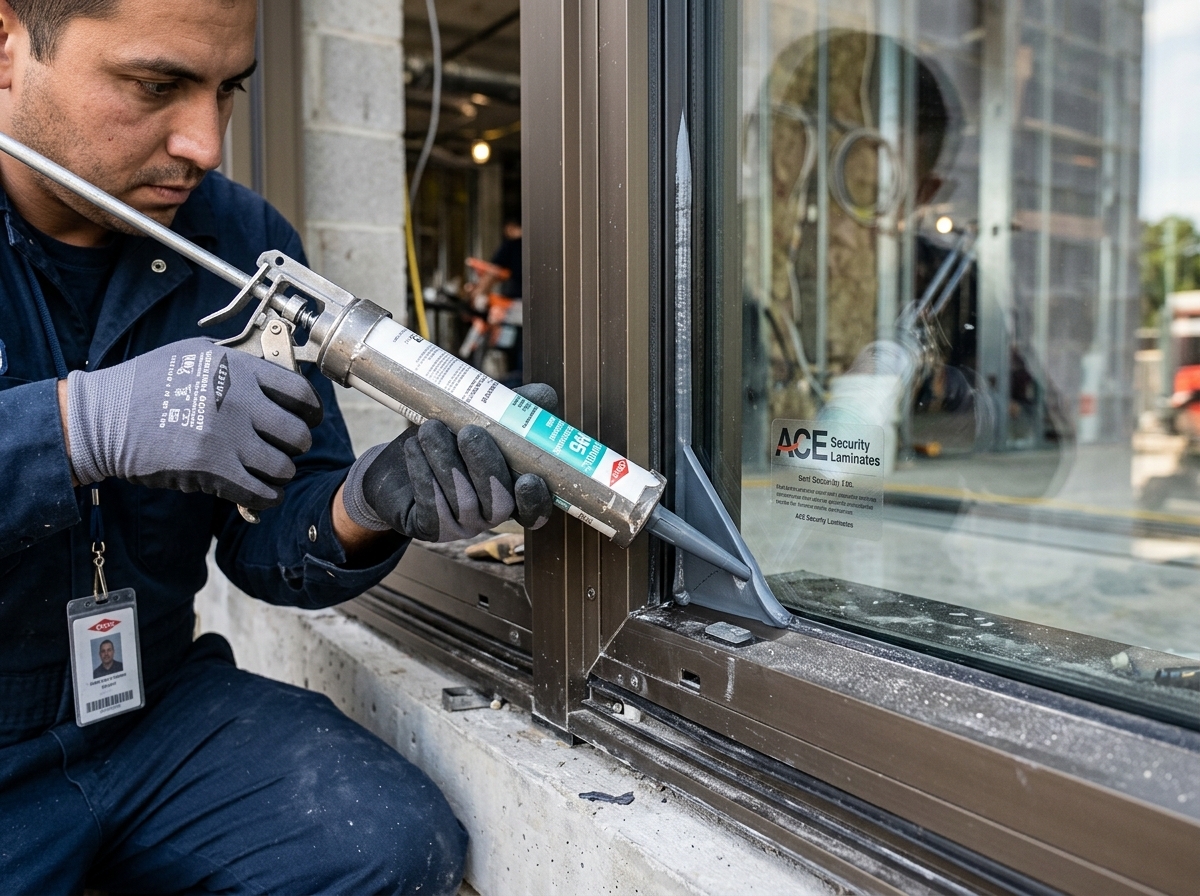
A security film installation is only as strong as its perimeter frame attachment. If an unanchored filmed pane is struck with heavy force, the entire pane can pop out of the frame as a single sheet.
Structural attachment systems bond the film directly to window frame mullions, transferring impact forces into the building structure.
The most common and cost-effective commercial attachment system is a structural silicone wet-glaze bead utilizing Dow Corning 995. Technicians apply a triangular silicone bead along the entire window perimeter, overlapping both the film face and the aluminum frame.
Wet-glaze attachment pricing ranges from $4 to $8 per linear foot of frame perimeter. For a standard four-foot by six-foot commercial window pane, the perimeter measures twenty linear feet, adding $80 to $160 to the window installation cost.
Once fully cured, Dow Corning 995 forms a flexible, high-tensile rubberized anchor that withstands substantial blunt force and explosive blast pressures. Learn how heavy-duty laminates hold shattered glass together under severe force in our report on how security window film prevents glass shattering.
High-threat government facilities and critical infrastructure properties often require mechanical clamping systems. These systems use heavy-duty aluminum batten bars or rubber gasket profiles screwed directly into window frames.
Mechanical attachment hardware costs between $10 and $20 per linear foot installed. These profiles physically clamp the security film edges against the frame with mechanical fasteners, creating an impenetrable anchor.
Mechanical retention systems are engineered specifically to satisfy strict GSA Level C and Level D blast mitigation standards.
Estimating commercial security film projects involves analyzing multiple site conditions beyond basic glass dimensions. Certified installation contractors review these site parameters during preliminary field audits.
Accurate scoping eliminates unexpected mid-project cost adjustments.
Project scale directly affects the net cost per square foot. Hardening a single glass storefront entrance incurs minimum mobilization and travel trip charges, resulting in higher square-foot rates.
Conversely, hardening a multi-story commercial campus or school district exceeding ten thousand square feet allows contractors to optimize material yields and installation labor. Volume contracts routinely reduce unit costs by fifteen to twenty-five percent.
Scheduling complete perimeter hardening in a single continuous phase yields the most competitive pricing.
Window frame condition plays an important role in installation preparation. Technicians must inspect existing rubber glazing gaskets to verify structural adhesion capability for wet-glaze silicone beads.
If aging gaskets are brittle or failing, technicians must cut back the rubber bead to expose bare metal framing, increasing labor time. Contractors also assess glass substrates to ensure annealed, tempered, or laminated glass units are compatible with specified film thicknesses.
Standard installation pricing assumes glass is accessible from floor level or standard extension ladders. Windows located higher than ten feet off finished floor surfaces require specialized access equipment.
Atrium elevations, multistory lobbies, and mezzanine vision glass require scissor lifts or modular scaffolding towers. Rental delivery fees, safety rigging, and specialized operator labor increase total project expenses accordingly.
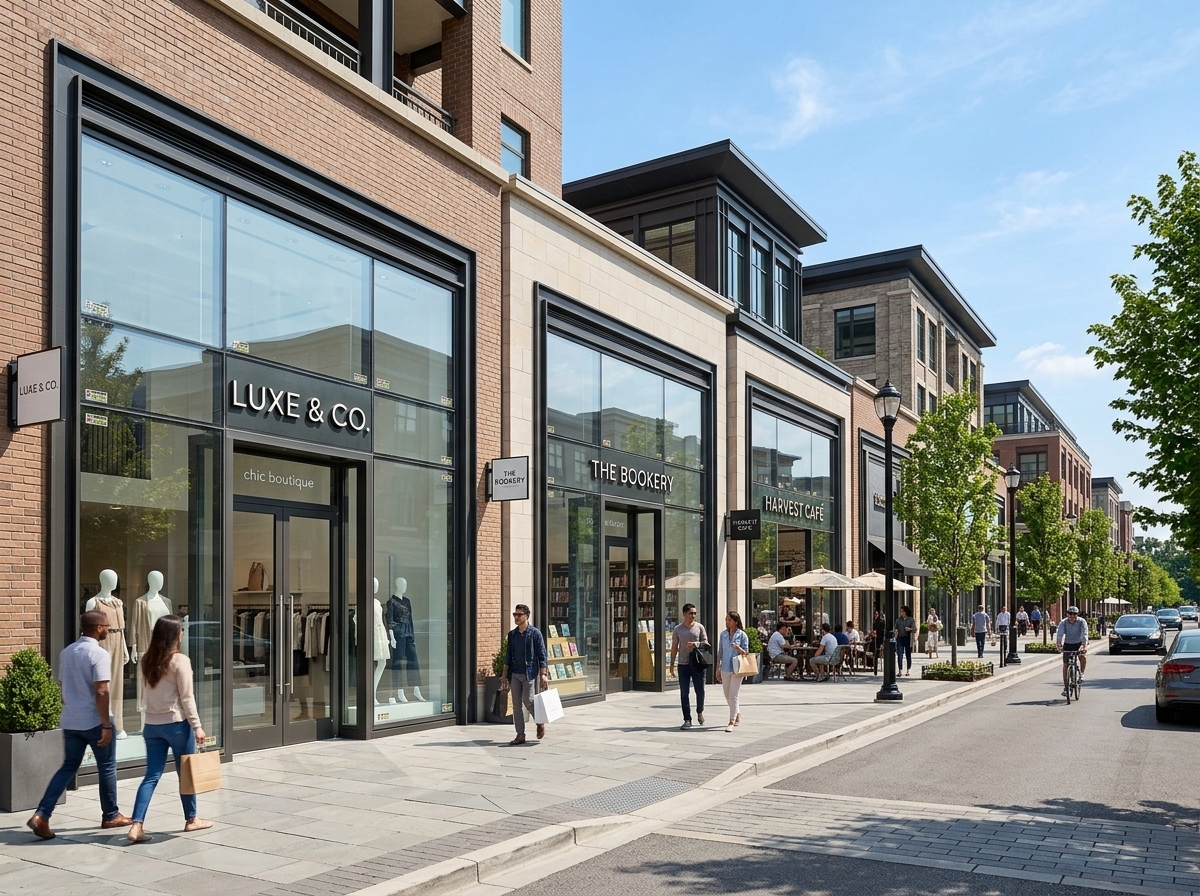
Property owners evaluating perimeter hardening often weigh security window film retrofits against full window replacement with factory-laminated security glass. A side-by-side financial comparison demonstrates dramatic cost efficiencies.
Replacing existing commercial storefronts with laminated impact glass costs between $80 and $250 per square foot installed. This process requires structural demolition, new heavy-gauge framing, perimeter flashing reconstruction, and significant tenant disruption.
In contrast, retrofitting existing architectural glass with 8 mil or 14 mil security film and structural wet-glaze anchoring costs between $12 and $22 per square foot total. Installation takes place cleanly from the interior without structural demolition or business closure.
Security window film delivers comparable forced entry delay and blast shard protection at eighty to ninety percent lower capital expenditure.
Here are answers to common pricing questions property managers, security directors, and homeowners ask when budgeting window security projects.
These practical answers help simplify procurement planning.
Security window film material and base application labor are priced by the square foot of glass daylight opening. Perimeter attachment systems, such as structural silicone wet-glaze anchoring, are priced separately by the linear foot of window frame perimeter.
Detailed commercial proposals itemize both components to provide transparent, accurate cost breakdowns.
A standard residential sliding patio door consists of two glass panels totaling approximately forty square feet of glass. Installing an 8 mil security film with structural silicone wet-glaze anchoring typically costs between $450 and $750 complete.
This investment provides robust forced entry protection on what is statistically the most vulnerable residential ground-floor entry point.
Yes, many commercial property insurance underwriters provide premium discounts for documented physical perimeter hardening. By mitigating smash-and-grab losses, burglary claims, and windstorm glass damage, security film reduces underwriter liability.
Facility directors should provide certified product data sheets and installation receipts to their insurance broker to request underwriting credits.
Budgeting for architectural security window film is an investment in human safety, business continuity, and physical asset protection. Whether you manage a national retail portfolio, an educational facility, or a corporate headquarters, high-tensile security film delivers superior forced entry delay at a fraction of glazing replacement costs.
Certified security film specialists provide detailed on-site glazing audits, blast mitigation engineering assessments, and transparent cost estimates tailored to your threat profile. To schedule a comprehensive perimeter security evaluation for your building, contact American Window Film.
No Comments Yet
Let us know what you think