

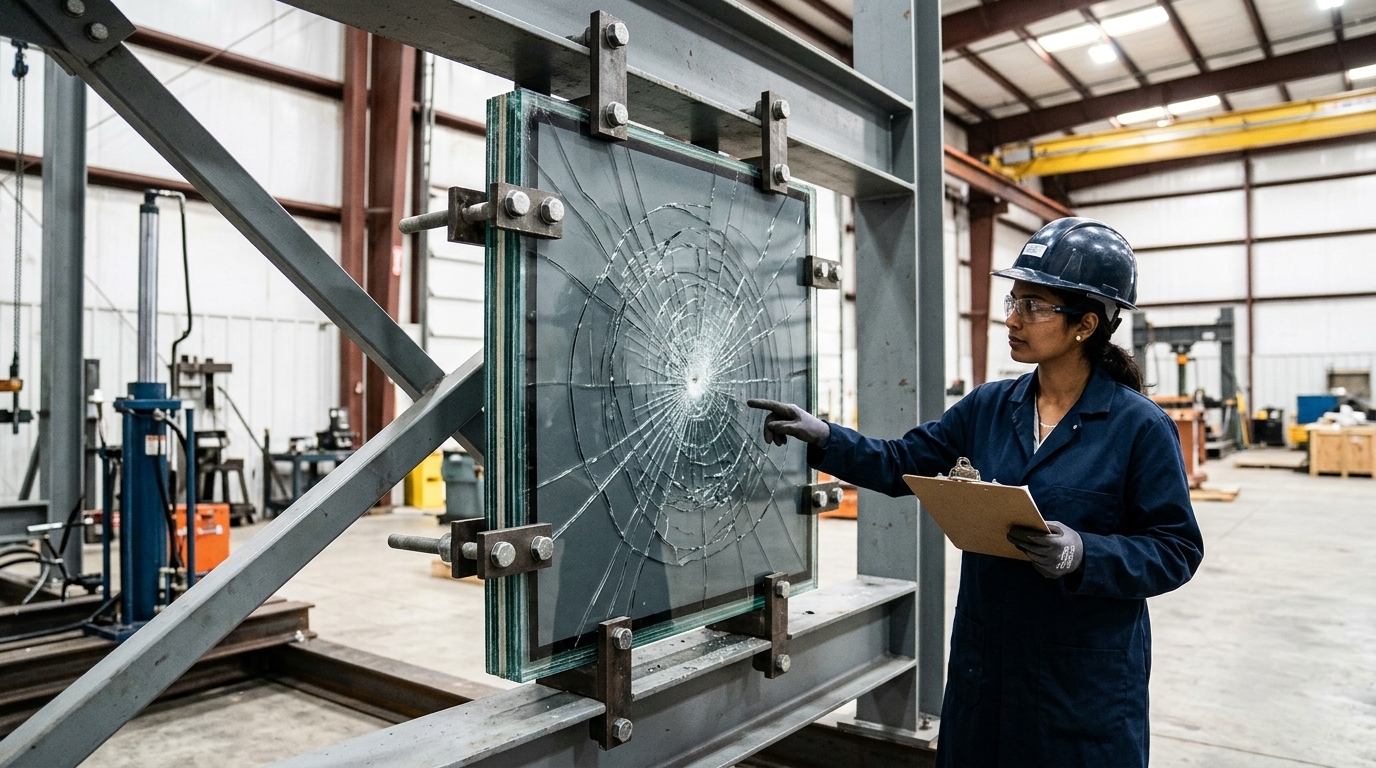
One of the most persistent questions in architectural physical security is whether window film can stop bullets. Online videos frequently show glass withstanding violent strikes, leading many property owners to believe a thin plastic film makes glass bulletproof.
The straightforward answer is no. Security window film cannot stop a bullet from penetrating standard architectural glass, but understanding what it actually does during a ballistic event is critical for institutional safety planning.
There is no such product as "bulletproof window film" anywhere in the architectural glazing industry. Major global manufacturers such as 3M do not market or certify any window film as bulletproof or bullet-resistant.
Any contractor or online reseller claiming a retrofitted window film can stop handgun rounds or rifle fire on standard float glass is misrepresenting ballistic engineering.
Architectural security films range from 4 mil to 14 mil in thickness, which is roughly equivalent to two to four sheets of standard printer paper. While multi-ply polyester possesses remarkable tensile strength, it lacks the physical mass and structural density required to arrest a high-velocity lead projectile.
When a bullet strikes a standard window pane, the projectile travels at speeds between nine hundred and three thousand feet per second. The projectile easily punches through both the glass and the flexible polyester film membrane.
Facility planners must distinguish between marketing hyperbole and certified physical protection when budgeting safety retrofits.
Stopping a ballistic projectile requires absorbing and dissipating massive kinetic energy over an extremely short distance. Genuine bullet-resistant assemblies accomplish this through substantial thickness and alternating material densities.
A standard architectural window consists of a single quarter-inch pane or a one-inch insulated glass unit. A thin surface laminate cannot deform or decelerate a spinning projectile before it pierces the pane.
Believing film alone provides ballistic immunity creates a dangerous false sense of security for building occupants.
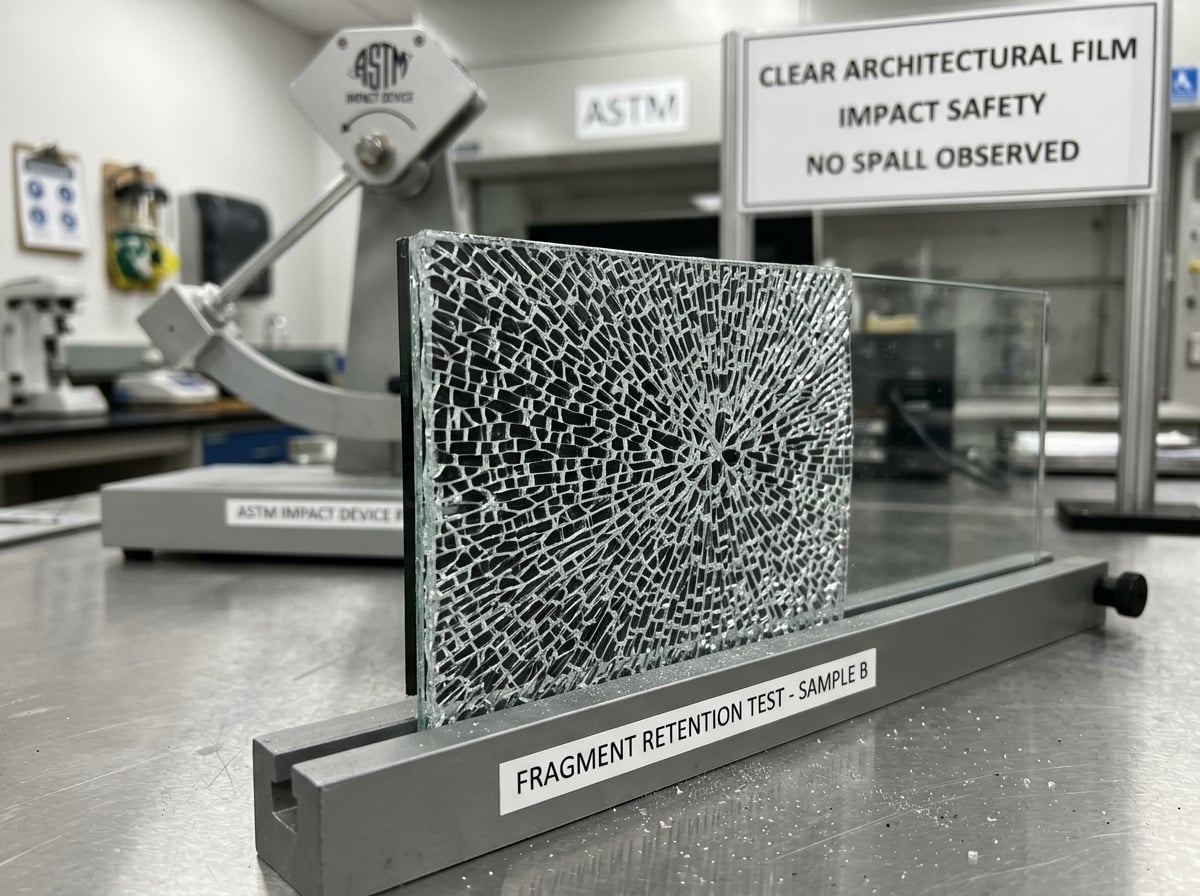
While security film cannot prevent bullet penetration, it dramatically alters how the glass assembly behaves when struck. The film transforms brittle glass into a unified structural shield that mitigates collateral hazards.
These physical dynamics provide vital defensive benefits during active threat situations.
When a bullet penetrates untreated tempered or annealed glass, it unleashes a lethal shower of razor-sharp glass shards traveling at high velocity. This explosive fragmentation, known in ballistic engineering as "spall," often inflicts severe or fatal injuries on room occupants far from the initial point of impact.
Security window film acts as a high-strength containment membrane that traps fractured glass fragments in place. Even as the bullet passes through the glass, the surrounding pane spiderwebs while adhering firmly to the film adhesive.
By suppressing dangerous interior glass spall, the film protects innocent bystanders from severe lacerations during an active shooting incident. Educational administrators can review our related guide on school security window film for active shooter defense.
In untreated glass, a single bullet completely collapses the entire window pane into a pile of rubble on the floor. This instantaneous structural failure creates a wide opening that allows an armed attacker to step directly inside or reach through to unlock interior doors.
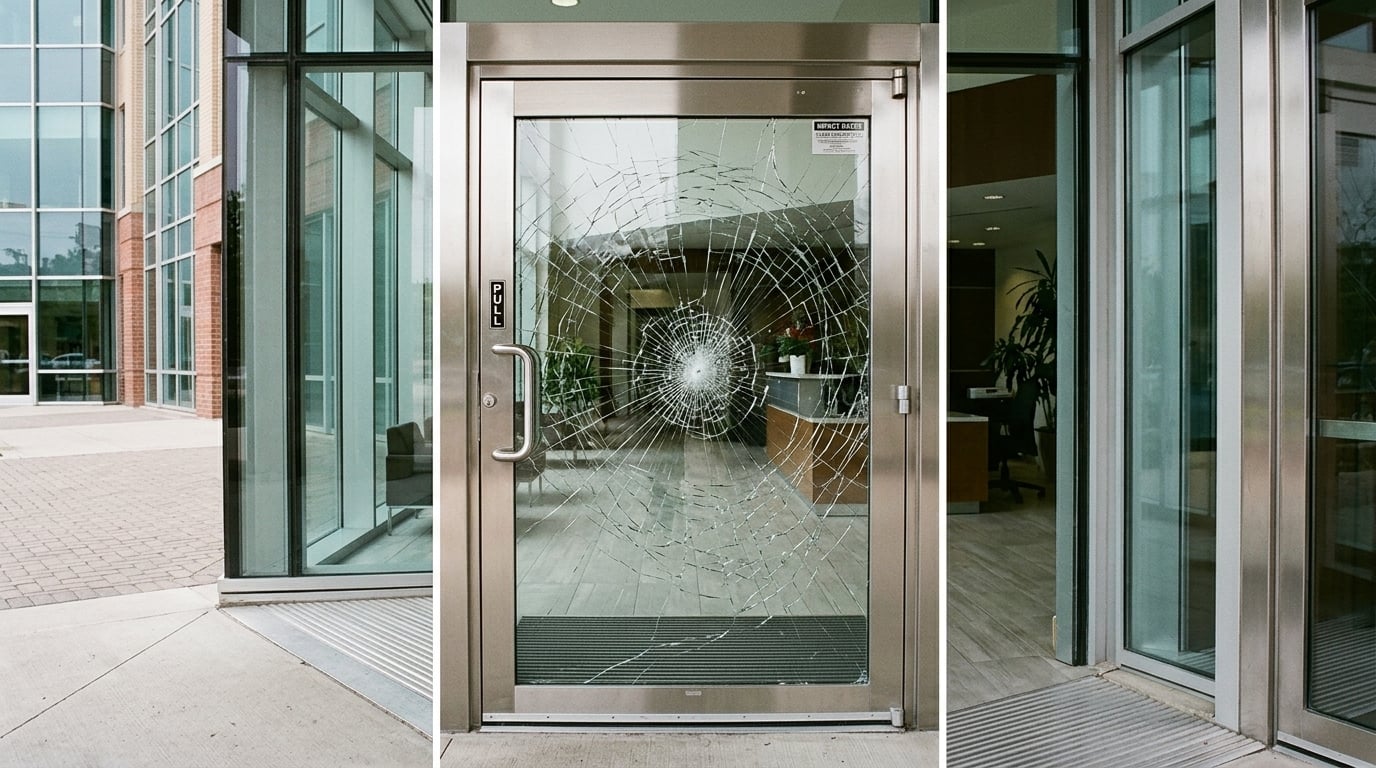
When glass is reinforced with 14 mil security film and anchored with structural silicone, the pane remains firmly held inside the window frame after being shot. Multiple bullet holes leave the glass cracked and opaque, yet the physical barrier remains standing.
An attacker cannot simply push through the shattered opening. They must still spend valuable minutes beating through the resilient, bullet-riddled polyester matrix to breach the building.
To understand how high-tensile laminates hold shattered glass together under severe force, read our technical breakdown of how security window film prevents glass shattering.
| Glazing Security Technology | Typical System Thickness | UL 752 Ballistic Rating | Primary Security Purpose |
|---|---|---|---|
| Architectural Security Film (14 Mil) | 0.014 inches | None (No bullet stoppage) | Spall containment, delayed forced entry after gunfire |
| Ballistic Polycarbonate Laminate | 1.0 to 1.25 inches | Level 1 – Level 3 (Handguns) | Stops 9mm, .357 Magnum, and .44 Magnum rounds |
| Glass-Clad Polycarbonate (GCP) | 1.5 to 2.5 inches | Level 4 – Level 8 (Rifles) | Stops high-powered 7.62mm NATO and 5.56mm rifle rounds |
Evaluating these clear distinctions ensures capital budgets match authentic engineering requirements.
Authentic ballistic resistance in the United States is certified under Underwriters Laboratories (UL) Standard 752 or National Institute of Justice (NIJ) Standard 0108.01. These rigorous testing protocols fire specific firearm calibers and ammunition grains directly at test glazing samples from measured distances.
To achieve a UL 752 rating, the target panel must stop the bullet completely without permitting spall fragments to penetrate cardboard witness panels placed behind the glass.
UL Level 1 certifies resistance against 9mm handgun rounds traveling at eleven hundred and seventy-five feet per second. UL Level 3 certifies protection against powerful .44 Magnum rounds, requiring thick composite panels exceeding one inch in depth.
High-threat rifle defense, such as UL Level 8, tests against multiple strikes from 7.62mm military rifle rounds. No surface-applied window film can meet any of these UL ballistic ratings on standard building glass.
Property managers seeking perimeter physical security must weigh performance capabilities against project budgets and structural building limitations. Understanding the differences between retrofit film and true ballistic glazing clarifies the right choice for each facility.
True bullet-resistant glass-clad polycarbonate panels weigh between fifteen and twenty-five pounds per square foot. Retrofitting existing storefronts with true ballistic glass requires ripping out existing aluminum frames and engineering heavy reinforced steel supports.
A complete ballistic glazing replacement routinely costs between $300 and $800 per square foot installed. This extraordinary expense places full-building ballistic replacement out of reach for most public school districts and commercial properties.
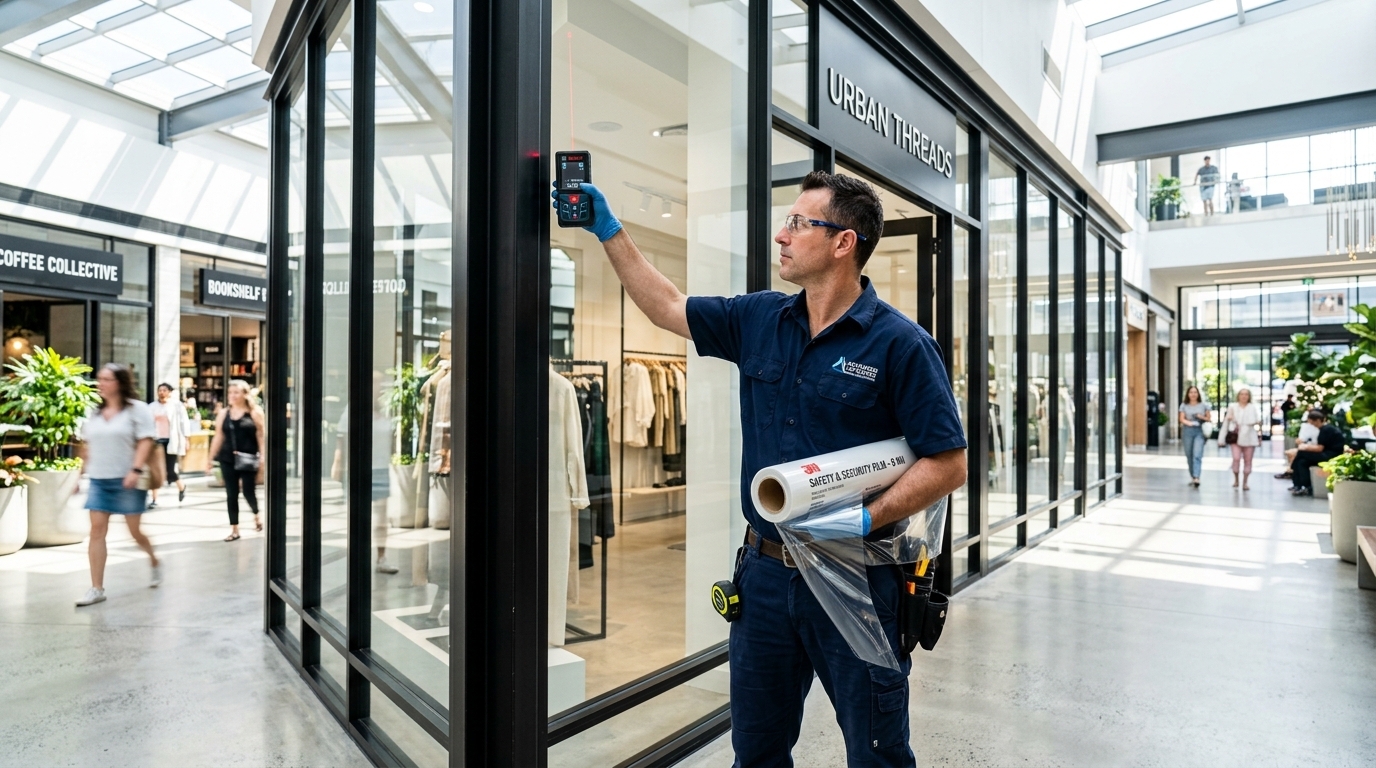
Architectural security film costs between $9 and $18 per square foot installed with structural wet-glaze anchoring. While it does not stop bullets, it delivers crucial forced entry delay and blast fragmentation protection at a fraction of the cost.
Institutions balancing these specification parameters can read our complete comparison of security window film thickness specifications.
In active shooter scenarios, time is the single most precious commodity. Law enforcement response times across North America average between three and six minutes from the initial emergency call.
Security window film serves as an integral layer within a comprehensive physical security strategy.
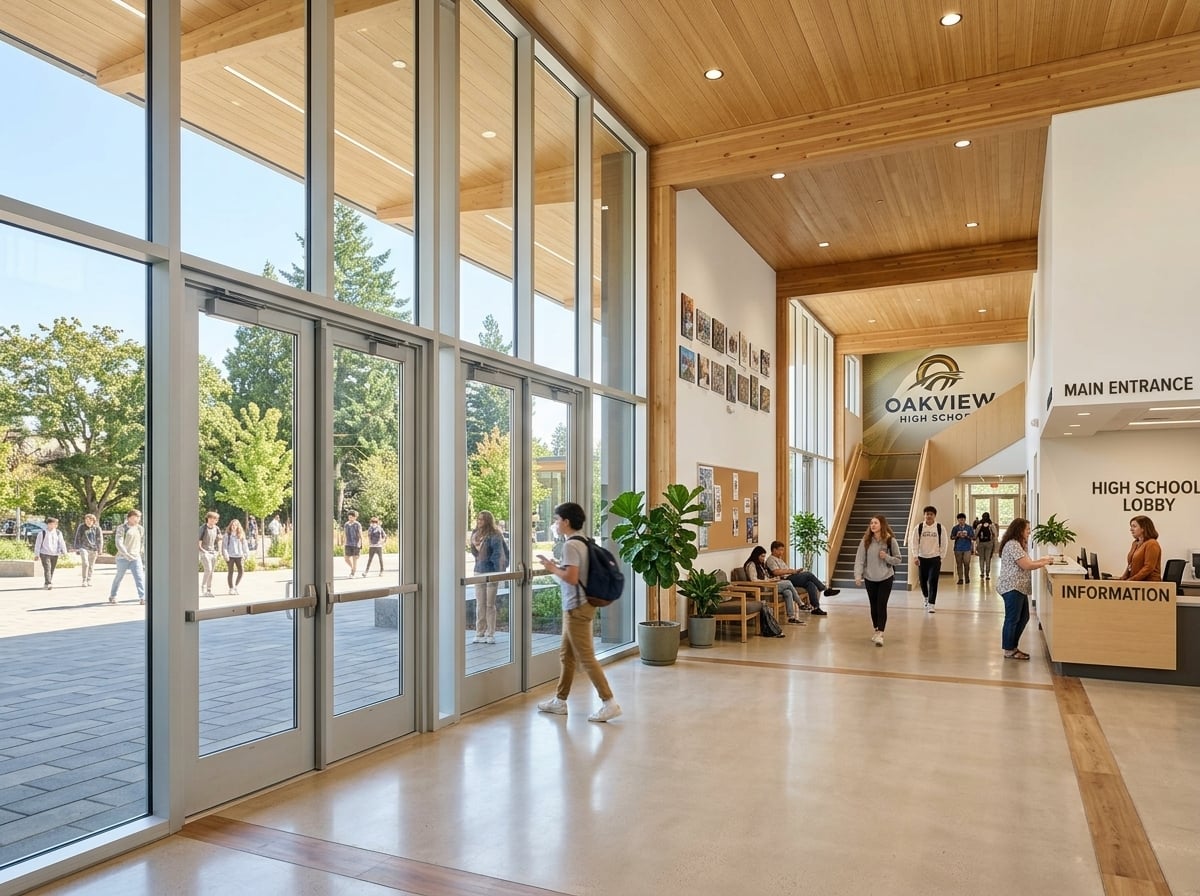
When an armed perpetrator shoots at glass entrance sidelights or classroom doors, the filmed glass shatters but stays intact. The attacker cannot quickly reach their hand through the glass to turn the door handle or depress the emergency crash bar.
Forced to spend minutes hammering against the stubborn, reinforced film barrier, the intruder is delayed outside the secure envelope. This vital delay allows occupants to execute lockdown procedures and gives armed first responders time to arrive.
Federal agencies recommend retrofitting school entrance glass with anchored security film to mitigate rapid entry threats. By pairing security film with access control locks and surveillance cameras, facilities establish robust defensive depth.
Federal and state educational authorities have established stringent physical security standards for public and private schools. The Cybersecurity and Infrastructure Security Agency (CISA) specifically identifies unprotected glass entrance doors as primary vulnerabilities in school active shooter incidents.
CISA recommends layering perimeter defenses by installing security window film on all ground-floor vision panels and entrance vestibules. This passive hardening measure prevents quick breaching while maintaining bright, welcoming educational environments.
Several states have enacted Alyssa's Law, mandating silent panic alarm systems linked directly to local law enforcement. Pairing rapid emergency notification with security film forced-entry delay creates an effective dual defense.
While panic buttons notify dispatchers instantly, reinforced glass prevents attackers from breaching interior safe zones before police arrive. Educational facilities can review our in-depth report on school security window film CISA guidelines.
Here are answers to the most common questions security directors, architects, and school administrators ask regarding ballistic claims and window film performance.
These answers clear up common points of confusion before project scoping begins.
No, 3M does not manufacture or sell bulletproof window film. 3M manufactures world-class safety and security window films, including the patented 3M Scotchshield Ultra Series.
These high-performance films are engineered for forced entry mitigation, blast shard containment, and severe storm protection. 3M explicitly states in its technical documentation that these films are not bulletproof.
Yes, security window film significantly delays an armed intruder even after multiple gunshots penetrate the glass. The bullet holes pierce the pane, but the surrounding glass remains bonded to the tear-resistant polyester matrix.
The intruder cannot simply step through the opening or reach an arm through to unlock the door. Breaking through the bullet-damaged filmed glass requires substantial, prolonged physical exertion, buying vital response time.
Glass spalling refers to razor-sharp fragments and glass dust that eject from the rear face of a window pane when struck by a projectile or blast shockwave. Even if a bullet strikes at an angle and does not enter a room directly, severe spalling can cause devastating injuries to nearby occupants.
Applying heavy-duty security window film directly to the interior glass surface prevents spalling by trapping fragments firmly against the adhesive layer.
Security professionals generally specify 8 mil to 14 mil security film paired with structural silicone wet-glaze anchoring for school entrances and commercial storefronts. A 14 mil multi-ply laminate provides maximum tear resistance and tensile strength under repeated physical assault.
The structural anchoring ensures the filmed glass pane remains firmly seated in the window frame even under violent attack.
While no surface-applied window film can stop bullets, architectural security film represents one of the most effective, affordable perimeter defenses available for schools, municipal buildings, and commercial facilities. By eliminating dangerous glass spall and delaying forced entry, security film protects human life during critical emergency situations.
Experienced security glazing specialists provide comprehensive site audits, threat evaluations, and certified 3M Scotchshield installations tailored to your property. To discuss your physical security objectives with certified professionals, contact American Window Film.
No Comments Yet
Let us know what you think