

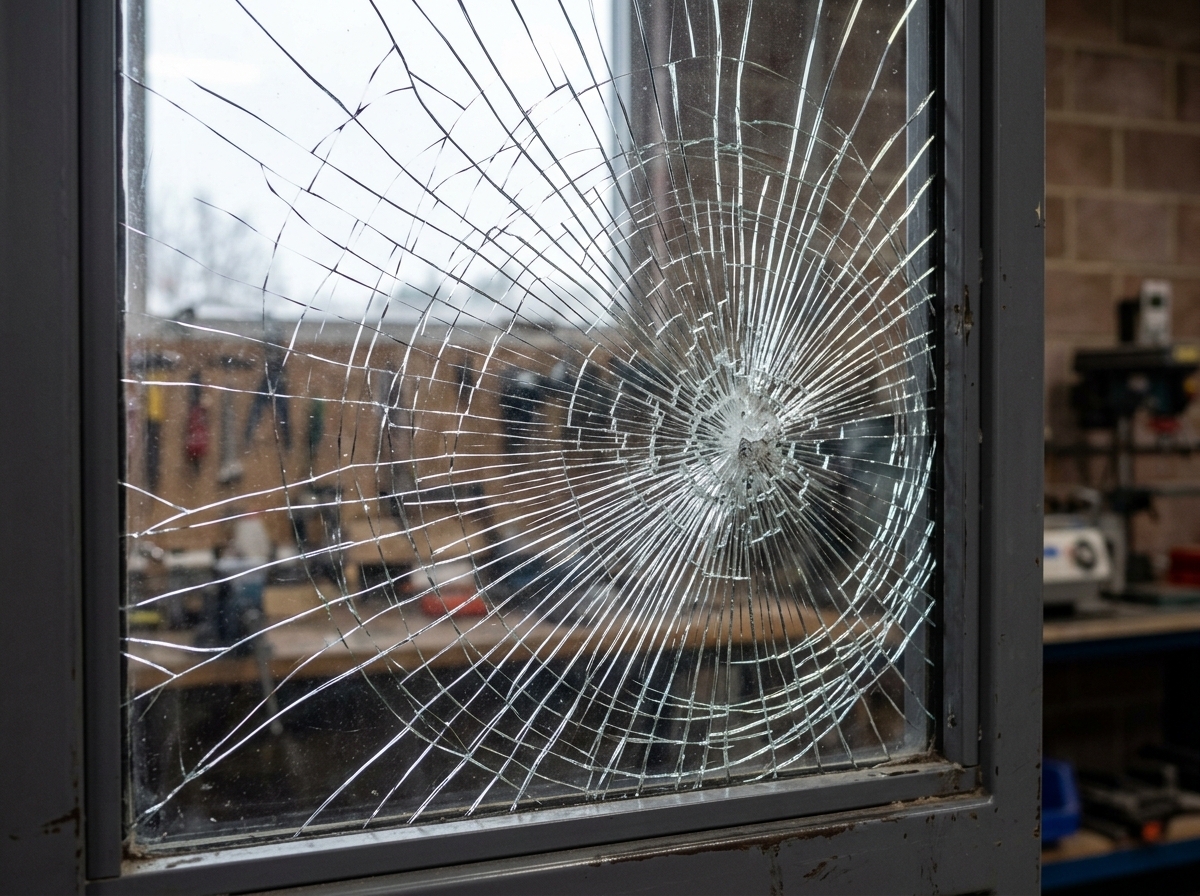
School safety directors and educational facility managers face an urgent obligation to protect students and staff from emergency security threats. Unreinforced glass doors, vision panels, and entrance sidelights represent the single most vulnerable entry point on any K-12 campus.
Unprotected window glass shatters in seconds when struck by heavy objects or gunfire, allowing immediate unauthorized access. Installing heavy-duty school security window film reinforces existing building glass, creating an impact-resistant barrier that delays forced entry and gives law enforcement critical time to respond.
Primary entrance vestibules and ground-floor classroom windows are designed to let in natural light. However, untreated architectural glass presents a catastrophic security vulnerability during an active shooter event.
Standard commercial window glass offers zero structural resistance to kinetic impact. When an intruder strikes or shoots untreated glass, it shatters instantly into sharp, dangerous fragments.
Standard 3/16-inch or 1/4-inch annealed window glass breaks into large, knife-like shards upon impact. Even tempered glass, which disintegrates into small safety cubes, crumbles out of the door frame entirely once compromised.
An intruder can easily shoot or break a glass vision panel, reach through the opening, and unlatch locked door handles from the inside in under five seconds. Without physical glass hardening, exterior perimeter doors equipped with commercial locks remain vulnerable.
Educational facilities contain multiple glass access points that require physical security hardening. Main entrance vestibules, administrative reception doors, and ground-floor classroom sidelights present immediate target locations for unauthorized entry.
Isolated cafeteria exit doors, courtyard glass corridors, and gymnasium emergency exits also feature single-pane or double-pane glass assemblies. Leaving any perimeter glass unreinforced compromises the security integrity of the entire school facility.
| Glass Type | Impact Behavior | Time to Breach (Unforced) | Vulnerability Level |
|---|---|---|---|
| Standard Annealed Glass (1/4") | Shatters into dangerous dagger shards; falls out immediately | 1 to 3 seconds | Extreme Vulnerability |
| Tempered Safety Glass (1/4") | Disintegrates into small cubes; completely leaves frame | 2 to 5 seconds | High Vulnerability |
| Security Film (14 Mil + Attachment) | Fractures but stays bound together inside window frame | 45 seconds to 2+ minutes | Hardened Barrier |
Heavy-duty security window film works by bonding micro-layered polyester material directly to existing architectural glass panes. When heavy impact strikes the window, the glass fractures, but the heavy-duty polymer layer holds the broken pieces firmly together inside the frame.
The primary mechanism of active shooter glass protection is fragment retention. High-tensile security film prevents broken glass from falling out of the aluminum framing system.
Even after multiple physical blows or firearm strikes, the glass pane remains intact as a flexible, webbed barrier. Because the broken glass stays anchored inside the door assembly, an intruder cannot simply reach through to unlock the door or step through the opening.
For comprehensive technical background on fragment retention physics, read about how security window film prevents glass shattering.
In an active threat emergency, security is measured in seconds. Hardening glass entrances slows down intruders, buying vital time for automated alarm notifications and emergency responder arrivals.
When glass remains intact after an initial attack, an intruder must spend significant time and effort trying to force their way inside. This delay allows school administrators to activate emergency lockdown protocols, initiate automated door closures, and alert local law enforcement.
Federal security agencies and school safety coalitions recommend physical window retrofits for K-12 educational infrastructure. The Cybersecurity and Infrastructure Security Agency (CISA) and the Partner Alliance for Safer Schools (PASS) both emphasize window security film as an essential component of a layered security strategy.
The PASS Guidelines for K-12 School Safety serve as an industry standard for physical security planning. PASS classifies security window film as a Tier 1 essential requirement for ground-floor building perimeters, classroom vision panels, and main entrance vestibules.
The PASS framework explicitly mandates that security films applied to door sidelights and classroom door vision panels should meet minimum thickness standards of 8 mil to 14 mil (200 to 350 microns). Installing thin solar films without security backing fails to meet these school safety standards.
CISA guidance highlights the importance of creating defensive security layers starting at the outer perimeter. Hardening exterior entrance glass ensures that the physical building shell acts as the first line of defense.
Integrating security film with electronic access control systems creates an effective physical barrier. This combination prevents rapid breach attempts while staff execute lockdown procedures.
Modern school security retrofits are evaluated under rigorous testing frameworks, including ASTM F3561 (Standard Test Method for Forced-Entry Resistance of Fenestration Systems After Simulated Active Shooter Attack). This standard subjects glass assemblies to multiple firearm rounds followed by severe mechanical impact blows.
Professional security window film retrofits engineered with high-tensile polyester layers and structural edge retention successfully pass ASTM F3561 testing protocols. This certification proves their ability to resist sustained forced entry attacks.
Selecting the correct security film thickness and anchoring method determines whether a window retrofit will hold under aggressive physical attack. Installing security film without a structural attachment system leaves the perimeter vulnerable to complete frame detachment.
Security films range in thickness from 4 mil (100 microns) up to 14 mil (350 microns) or thicker. While 4 mil film offers adequate protection against accidental glass impact and flying debris, school entrance hardening requires heavy-duty 8 mil to 14 mil multi-layer films.
Multi-layer security films feature cross-laminated polyester layers that resist tearing under severe shear stress. These heavy-grade films absorb high kinetic energy without puncturing, keeping the glass structure intact even when shattered.
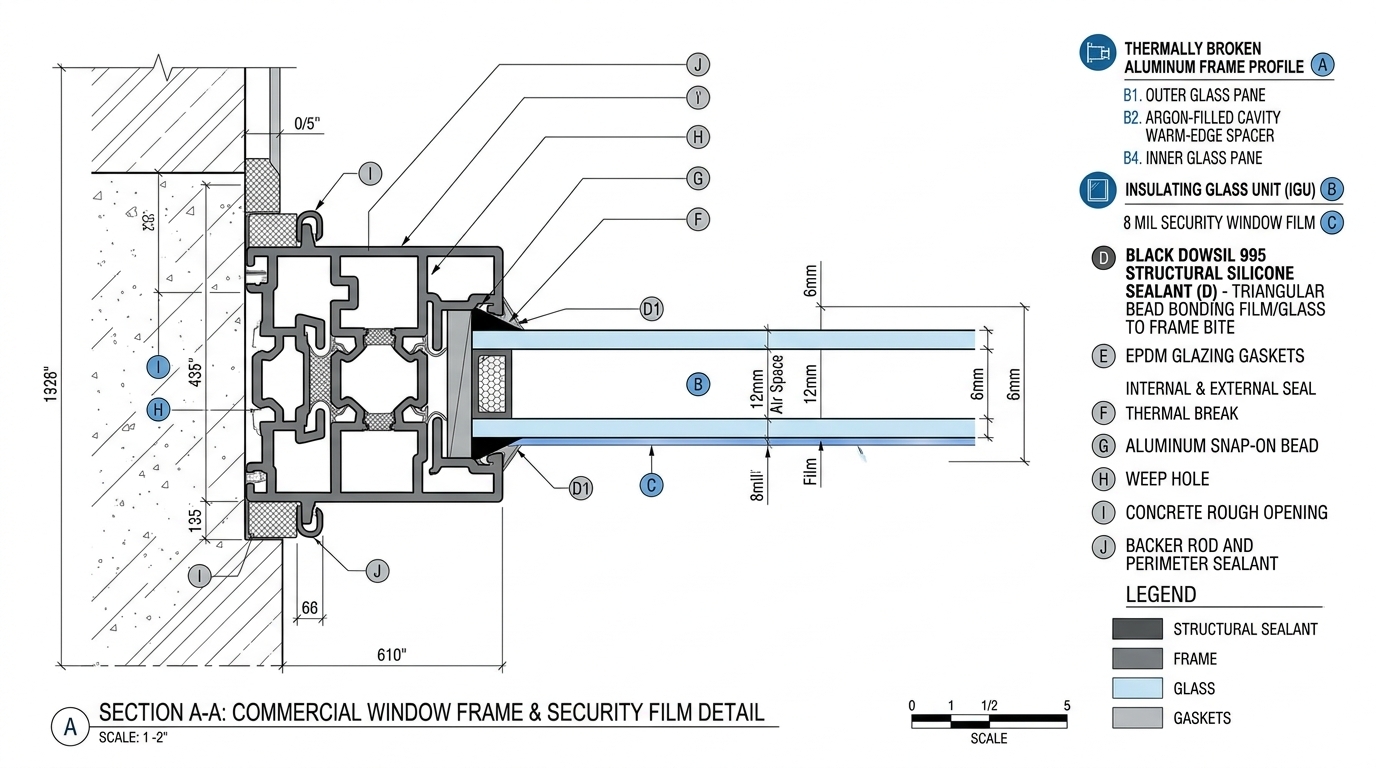
Applying security film only to the visible daylight area of a glass pane is insufficient for active shooter protection. Without a perimeter attachment system, severe impact will pop the entire filmed glass pane out of its aluminum frame as a single unit.
To create an effective physical barrier, installers must anchor the film to the window frame using a high-strength structural silicone sealant, such as Dow Corning 995. This wet glaze attachment creates a continuous bond between the film and the structural frame, preventing the shattered glass assembly from dislodging under heavy force.
To explore detailed attachment engineering options, review security window film attachment systems.
In addition to wet glaze silicone sealants, mechanical attachment systems utilize aluminum anchoring profile bars to clamp film edges into the window mullion. Mechanical anchoring provides extreme mechanical hold for high-velocity blast environments or severe forced entry risks.
However, wet glaze structural silicone remains the primary choice for K-12 school retrofits due to its seamless aesthetic appearance and high structural hold. Professional installers ensure proper bead sizing and surface preparation during application.
| Film Spec & Grade | Thickness (Mil / Micron) | Attachment Required | Recommended K-12 Application |
|---|---|---|---|
| Standard Safety Film | 4 Mil (100 Micron) | Daylight installation optional | Interior corridor partitions; accidental impact protection |
| Heavy Security Film | 8 Mil (200 Micron) | Dow 995 Wet Glaze recommended | Ground-floor classroom windows and administrative glazing |
| Max Security Hardening | 14 Mil (350 Micron) | Dow 995 Wet Glaze Mandatory | Main entrance vestibules, exterior door vision panels, sidelights |
A critical misconception among school safety boards is confusing forced entry security window film with bulletproof glass. Setting accurate expectations ensures proper security planning across educational facilities.
No window security film is bulletproof. Bullets fired from handguns or rifles will penetrate polyester security film and architectural glass.
Security film does not stop projectile velocity or prevent bullets from passing through the window assembly. School authorities must understand that film is designed for delay and fragment containment, not ballistic stopping power.
However, security film changes how glass behaves after bullet impact. While untreated glass shatters completely upon bullet entry, filmed glass stays bound together inside the frame.
An intruder cannot reach through or enter without spending extensive time physically breaking through the webbed glass panel. Discover more general advantages of physical glass protection by viewing the benefits of window security film.
Upgrading school window security requires systematic planning, site assessments, and professional installation. School administrators should evaluate physical perimeter vulnerabilities across campus before selecting security window film products.
A comprehensive campus security review identifies high-priority glass zones that require immediate physical hardening. Primary entryways, office reception sidelights, ground-floor classroom windows, and isolated cafeteria glass doors represent critical target areas.
Professional security installation teams inspect existing glass types, aluminum framing conditions, and gasket seals. This analysis determines the ideal film thickness and attachment system for every window assembly.
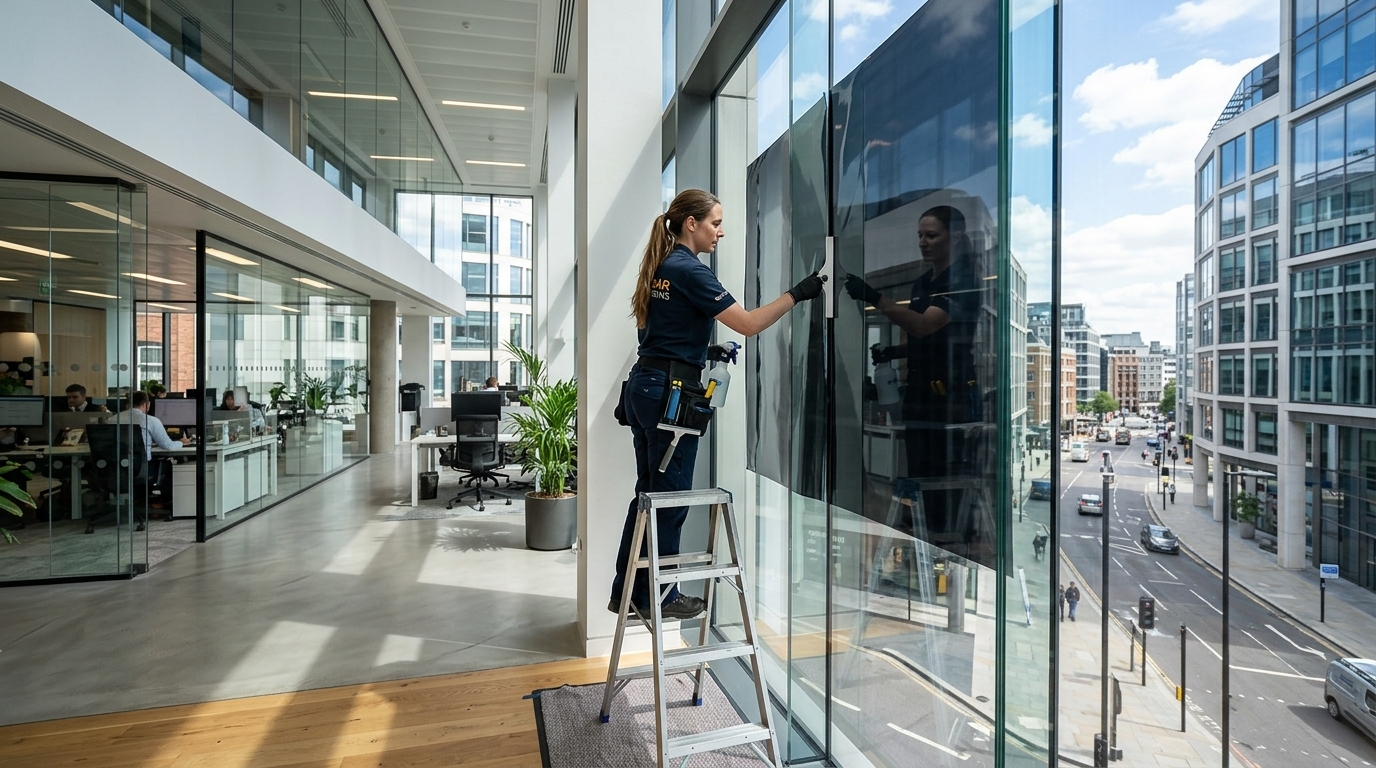
Installing heavy-duty security window film requires skilled installation technicians to avoid air bubbles, distortion, or edge peeling. Installers clean the glass surface thoroughly before applying pressure-sensitive adhesives.
Following film installation, wet glaze silicone attachment joints cure over a 7 to 28 day period, depending on ambient humidity and temperature. Once cured, the silicone bond delivers maximum structural holding power.
School districts can fund security window film retrofits using state and federal security grants. Many state departments of education offer physical security improvement grants specifically intended for door hardening and glass retrofits.
At the federal level, programs like the COPS School Violence Prevention Program (SVPP) and Homeland Security Grant Programs provide funding for physical security upgrades. Implementing window film provides high protection value per dollar spent compared to total window replacement.
Protecting students and staff requires securing vulnerable glass entryways against physical forced entry. Installing heavy-duty 8 mil to 14 mil security window film paired with structural attachment systems transforms standard glass into a formidable barrier that delays intruders and buys vital time for emergency responders.
For expert guidance on hardening your educational facility's glass entrances, contact the commercial security specialists at American Window Film.


No Comments Yet
Let us know what you think