


Commercial facility managers and building owners face continuous challenges balancing occupant thermal comfort, energy efficiency, and visual aesthetics. Large exterior glass windows provide expansive views and natural daylight, but unmanaged solar heat gain drives up summer HVAC cooling costs and creates uncomfortable hot spots.
Selecting the right architectural solar control film requires understanding key performance metrics, optical properties, and financial return on investment.
Commercial window films split into two primary technology categories: spectrally selective window film and dual-reflective window film. Both film types significantly reduce solar heat gain and ultraviolet radiation, but they rely on entirely different optical engineering.
Evaluating visible light transmittance, exterior reflectivity, installed cost per square foot, and HVAC energy savings helps property managers select the optimal solar control retrofit for their facility.
Solar radiation entering a commercial building consists of three distinct bands: ultraviolet light, visible light, and infrared radiation. Ultraviolet rays cause interior fading, visible light illuminates interior spaces, and infrared radiation creates radiant heat felt by occupants.
Traditional tinted glass attempts to block heat by absorbing visible light, which darkens interior work areas and increases glass thermal stress. Modern architectural window films manipulate the solar spectrum, reflecting or filtering heat while maintaining desired interior light levels.
Infrared light accounts for over 50 percent of the solar heat entering through commercial window glass. Standard clear glass allows near-infrared solar energy to pass directly into interior building spaces, where surfaces absorb the radiation and convert it into heat.
This process traps thermal energy inside perimeter office zones, driving up interior temperatures to 85°F or higher during peak summer afternoons. Solar control window films reflect or absorb specific infrared wavelengths before heat penetrates the glass envelope.
Evaluating window film specification sheets requires understanding core optical energy metrics. Visible Light Transmittance (VLT) measures the percentage of visible light passing through the glass assembly.
A high VLT value indicates high natural daylight transmission, allowing property owners to reduce electric interior lighting loads.
Total Solar Energy Rejected (TSER) measures the total percentage of solar energy blocked, including UV, visible, and infrared light.
Solar Heat Gain Coefficient (SHGC) measures the fraction of incident solar radiation admitted through the window. Lower SHGC numbers mean less solar heat enters the building envelope.
Spectrally selective window film represents advanced optical engineering designed to target specific wavelengths of the solar spectrum. Utilizing multi-layer nano-ceramic or optical technology, these films isolate and reject invisible infrared heat while allowing high levels of visible light to pass through.
Property managers select spectrally selective film when maintaining natural daylight and unobstructed views is essential. This technology delivers substantial heat reduction without altering the architectural appearance of the building glass.
Spectrally selective films feature dozens of microscopic optical polymer or ceramic layers engineered to reflect infrared heat rays specifically. By targeting infrared wavelengths between 780 and 2500 nanometers, the film blocks solar heat without relying on dark dyes or metallic mirrors.
This selective filtration stops up to 97 percent of infrared heat while rejecting 99 percent of harmful ultraviolet rays. Occupants enjoy a significant reduction in radiant sun heat without losing natural ambient lighting.
Traditional solar films darken window glass, creating a tinted appearance from the outside. Spectrally selective window films maintain high VLT levels ranging from 50 percent to over 70 percent.
Because these films carry negligible exterior reflectivity, they preserve the original appearance of historic facades, luxury high-rises, and retail storefronts. Glass retains its clear visual transparency from both interior and exterior viewpoints.
Spectrally selective films excel in high-end commercial office towers, luxury hotels, museum display galleries, and retail storefronts. Retail properties rely on spectrally selective film to protect interior merchandise from solar fading while keeping window displays clearly visible to street foot traffic.
Historic buildings restricted by local preservation guidelines or strict lease agreements also benefit from spectrally selective retrofits. To discover more about maximizing energy efficiency without replacing window glass, explore how energy saving window films benefit office buildings.
Dual-reflective window film uses dual-layer metalized construction to achieve maximum solar heat rejection and effective daytime glare control. Designed with a reflective outer metal coating and a low-reflectivity inner layer, dual-reflective film provides high performance with superior optical comfort.
Commercial building engineers choose dual-reflective technology for severe solar heat gain challenges, particularly on unshaded south-facing and west-facing glass curtain walls.
Dual-reflective film combines an exterior vapor-deposited metallic layer with an interior anti-reflective coating. The exterior metalized layer acts as a solar shield, bouncing incoming solar heat away from the building before energy passes into the glass.
The interior layer features a neutral, non-reflective coating that absorbs internal light reflections. This construction delivers high TSER performance, rejecting up to 75 percent of total solar energy.
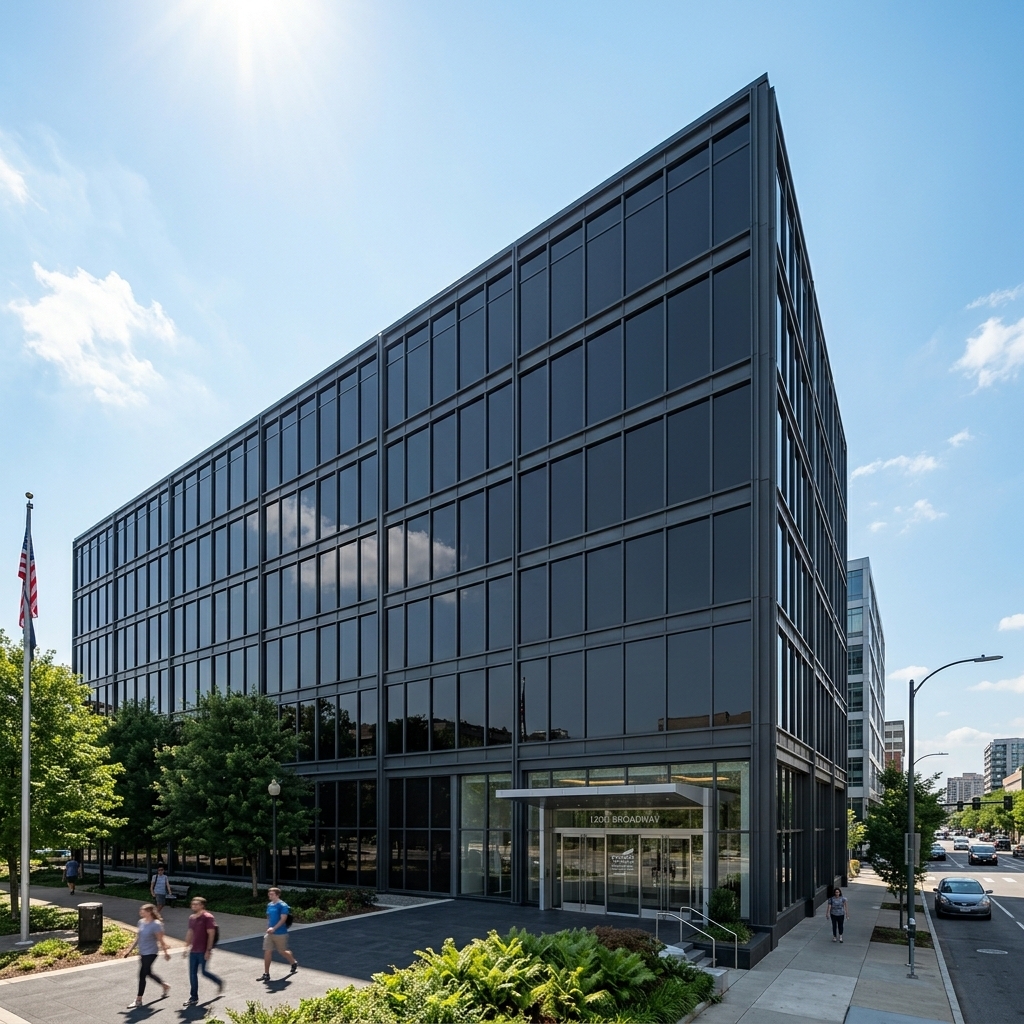
Older reflective window tints created a mirrored finish on both sides of the glass, causing internal mirror reflections at night. Dual-reflective film solves this issue by maintaining low interior reflectivity, usually between 6 percent and 15 percent.
During daylight hours, the mirrored exterior provides total daytime privacy, blocking exterior views into corporate offices or ground-floor conference rooms. At night, occupants maintain clear views outside without seeing their own reflection inside lit offices.
Dual-reflective window film is ideal for commercial office parks, educational campuses, government facilities, and industrial warehouses. Facilities experiencing severe sun glare on computer screens benefit immediately from dual-reflective glare reduction.
Property managers targeting rapid CapEx payback favor dual-reflective window film due to its lower installed cost per square foot. Learn more about residential and commercial heat reduction options by reviewing the best residential window film for heat reduction.
Comparing spectrally selective and dual-reflective window films requires matching technical capabilities against specific building operational goals. Both film categories deliver 99 percent UV protection, but their visual transparency, glare control, and heat rejection characteristics differ significantly.
Dual-reflective films generally achieve higher overall TSER ratings because they reflect energy across the entire solar spectrum, including visible light. Dual-reflective options achieve TSER ratings between 60 percent and 75 percent.
Spectrally selective films achieve impressive TSER ratings between 50 percent and 62 percent while maintaining much higher VLT levels. Spectrally selective film delivers higher heat rejection relative to its visual clarity.
Sun glare on computer monitors causes eye strain, headaches, and reduced worker productivity in perimeter office zones. Dual-reflective films reduce glare by 50 percent to 85 percent by controlling visible light transmission.
Spectrally selective films reduce heat effectively but allow higher visible light transmission, resulting in lower glare reduction. Facilities with intense direct sun exposure often prefer dual-reflective film to manage visual glare.
| Performance Metric | Spectrally Selective Film | Dual-Reflective Film |
|---|---|---|
| Visible Light Transmittance (VLT) | High (50% to 70%+) | Moderate to Low (15% to 35%) |
| Total Solar Energy Rejected (TSER) | 50% to 62% | 55% to 75% |
| Infrared Heat Rejection (IR) | Up to 97% | 65% to 85% |
| Exterior Appearance | Virtually clear / Non-reflective | Soft mirrored / Reflective privacy |
| Interior Nighttime Reflectivity | Very Low (8% to 12%) | Low (6% to 15%) |
| Glare Reduction Rating | Low to Moderate (20% to 45%) | High (50% to 85%) |
| Installed Cost per Sq. Ft. | $12.00 to $18.00+ | $7.00 to $12.00 |
Evaluating financial return on investment involves analyzing material costs, installation labor, utility rate structures, and annual HVAC cooling load reductions. Solar window film retrofits cost significantly less than replacing insulated glass units (IGUs).
Commercial property managers utilize energy modeling software to calculate expected payback timelines before approving capital expenditures.
Dual-reflective window films offer cost-effective pricing, averaging between $7.00 and $12.00 per square foot installed for commercial projects. The metalized manufacturing process keeps material costs manageable for multi-story office buildings.
Spectrally selective window films carry premium pricing, ranging from $12.00 to $18.00 or more per square foot installed. Advanced multi-layer optical technology increases production costs, but delivers superior clarity and heat performance.
Installing solar window film reduces cooling loads by up to 15,000 BTUs per 100 square feet of exposed glass. Lower heat gain reduces central chiller runtimes, lowers peak demand kW charges, and extends commercial HVAC equipment lifespan.
Dual-reflective window film retrofits typically achieve full financial payback within 2 to 4 years through electric utility savings. Spectrally selective film projects achieve full payback within 3 to 6 years, while protecting tenant comfort and interior architectural design.
For additional insight into commercial privacy and decorative glass options, read about commercial privacy window film for office spaces.
Commercial retrofits using high-performance solar films contribute directly to LEED v4 certification points under Energy & Atmosphere credits. Lower overall energy consumption improves Energy Star scores, boosting property asset valuation.
Building Owners and Managers Association (BOMA) 360 performance designation programs also recognize window film envelope upgrades. Improving thermal performance enhances overall commercial leasing competitiveness.
Selecting between spectrally selective and dual-reflective window film depends on specific facility priorities, budget parameters, and architectural requirements.
Building orientation dictates solar heat exposure. West-facing and south-facing glass elevations experience heavy heat gain and glare, making dual-reflective film highly effective for thermal relief.
Properties with clear architectural guidelines, historic designations, or strict HOA rules often prohibit reflective window coatings. In these situations, spectrally selective window film provides maximum solar heat reduction while complying fully with aesthetic covenants.
Window glass compatibility must also be verified. Professional installers evaluate single-pane, dual-pane, tinted, and Low-E glass assemblies to prevent thermal stress breakage.
Choosing between spectrally selective and dual-reflective window film depends on your facility's priorities regarding clarity, glare control, daytime privacy, and budget.
Spectrally selective film offers high heat rejection while maintaining maximum natural light and original glass appearance. Dual-reflective film provides high solar heat rejection, glare control, and daytime privacy at an economical price point.
For professional assistance selecting and installing the ideal commercial window film retrofit, contact the architectural glass specialists at American Window Film.



No Comments Yet
Let us know what you think