

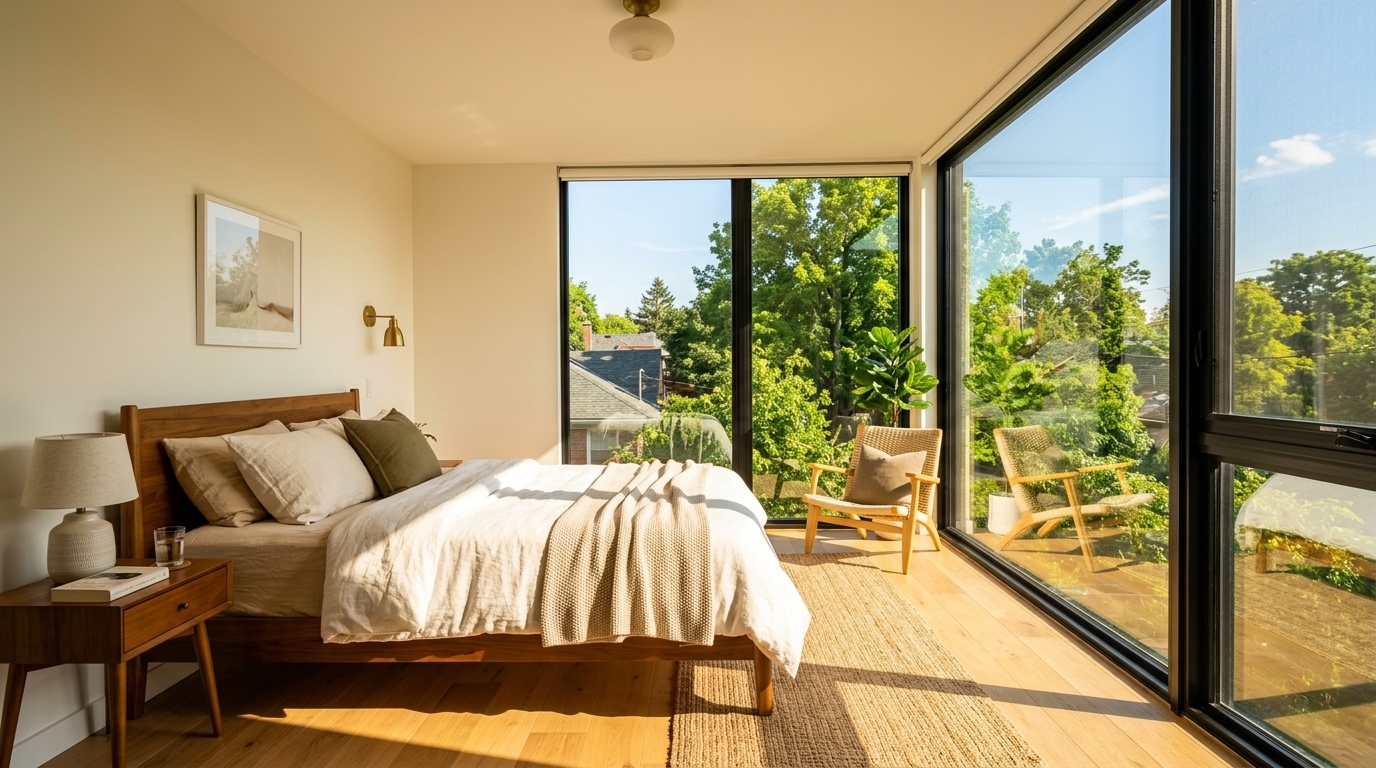
Almost every home has one stubborn room that feels like a sauna during warm summer afternoons. Whether it is an upstairs corner bedroom, a home office, or a finished bonus room over the garage, this space remains uncomfortably warm even when the central air conditioner runs constantly.
Understanding why localized temperature imbalances occur allows homeowners to resolve the root cause permanently without replacing expensive heating and cooling equipment.
Stepping from a comfortable 72°F living room into a sweltering 84°F bedroom is a frustrating experience shared by millions of homeowners. Standard residential HVAC systems are controlled by a single central thermostat, usually situated in a shaded first-floor hallway.
Because the thermostat measures temperatures in the coolest, most central part of the home, it satisfies its setpoint and cycles off long before peripheral rooms reach a comfortable temperature.
When a specific bedroom or home office overheats, the instinctive reaction is to crank down the central thermostat setting to 68°F or 65°F. While this forces the central air conditioner to run longer, it creates severe temperature imbalances throughout the rest of the house.
Family members in downstairs living areas and basement dens begin freezing, bundling up in blankets during mid-July. Meanwhile, the problem room barely drops two degrees because radiant solar energy continues pouring through the windows faster than air ducts can remove it.
This continuous overcooling strains the central cooling compressor and inflates monthly electric bills without solving the underlying discomfort.
Forcing an entire air conditioning system to run continuously to treat a single hot room is financially and mechanically wasteful. Central cooling systems consume tremendous electricity during peak afternoon hours when utility rates are highest.
Running compressors under continuous heavy load accelerates mechanical wear, leading to premature blower motor burnout, frozen evaporator coils, and costly system breakdowns.
Homeowners can examine broader residential energy dynamics in our guide on why home AC bills are so high in summer with double-pane windows.
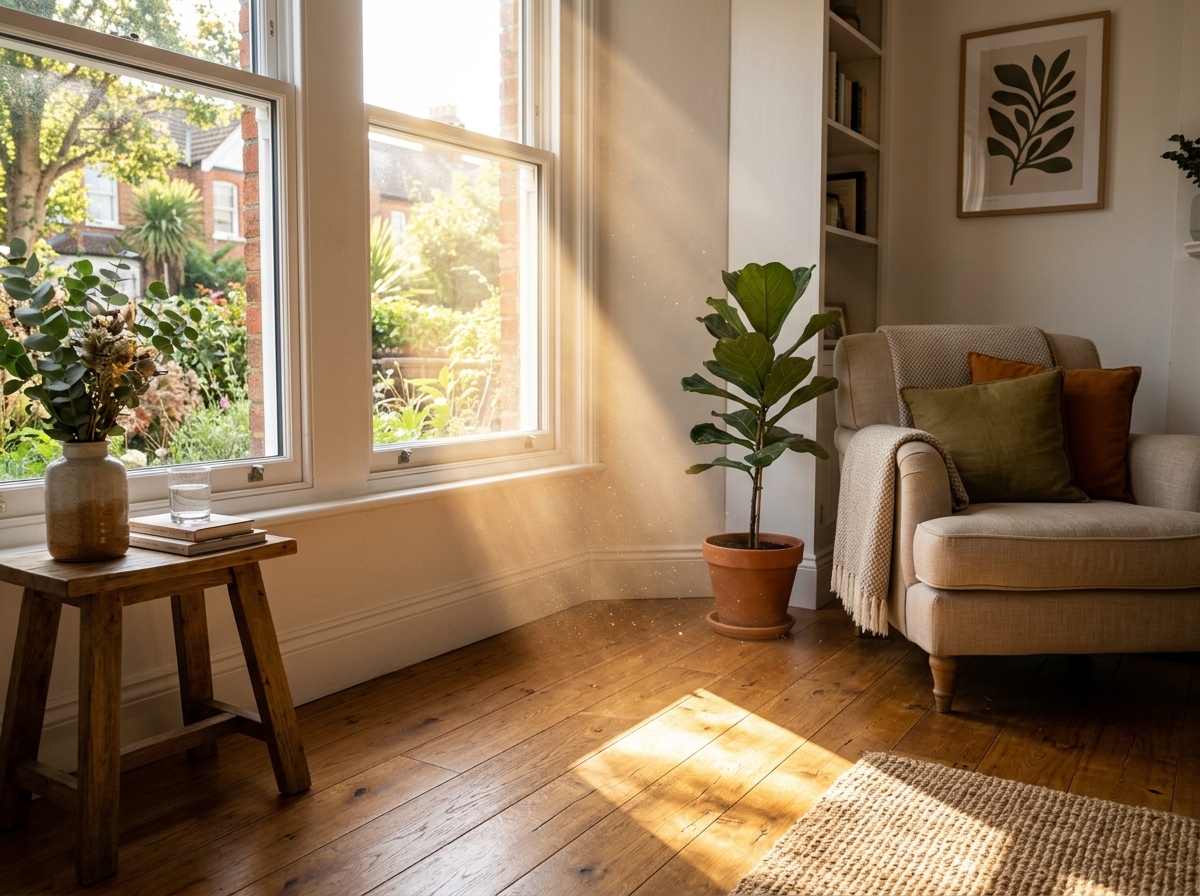
Pinpointing why one room overheats requires analyzing the home thermal envelope systematically. While mechanical contractors often blame ductwork sizing, the actual culprit is usually intense solar radiation entering through glass.
Evaluating these three core factors helps you diagnose your specific home layout.
In over eighty percent of residential hot room cases, window solar heat gain is the primary driver of localized heat spikes. Standard double-pane residential windows allow substantial amounts of solar infrared energy to penetrate directly into living spaces.
Rooms featuring west-facing or south-facing windows receive intense, direct afternoon sun precisely when outdoor ambient temperatures are at their highest. Sunlight streams through the glass, heating floors, walls, and furniture, which in turn warm the surrounding air like an oven.
Even if cooling airflow is technically adequate, the constant influx of radiant heat easily overwhelms the room cooling supply. Homeowners can read our report on best residential window film for heat reduction to understand solar heat gain metrics.
The second contributing factor involves physical airflow distribution through ductwork. Rooms located furthest from the central air handler, particularly upstairs bedrooms, suffer from natural airflow resistance and static duct friction.
If the room lacks a dedicated return air register, closing the bedroom door creates positive pressure that restricts incoming chilled air. Warm air becomes trapped inside the room with nowhere to escape back into the central circulation system.
Balancing dampers and checking duct registers helps ensure conditioned air reaches distant zones.
The third factor involves conductive heat transfer through surrounding wall and ceiling assemblies. Rooms located directly beneath poorly ventilated attics absorb downward radiant heat radiating through drywall ceilings.
Bonus rooms situated above unconditioned garages face a double thermal burden. Hot garage air beneath the subfloor warms the room from below, while unshaded roof slopes heat it from above.
Adding fiberglass or cellulose insulation slows down conductive transfer, though it does not address radiant window heat.
| Corrective Solution | Typical Cost Range | Targeted Root Cause | Overall Home Comfort Impact |
|---|---|---|---|
| Solar Control Window Film | $300 – $700 per room | Stops solar infrared heat at the glass | Lowers room temp 8°F to 15°F; zero ongoing energy cost |
| Ductless Mini-Split Heat Pump | $3,500 – $6,500 installed | Supplements cooling capacity directly | Independent zone control; high equipment cost |
| HVAC Ductwork Redesign | $2,000 – $5,000 | Increases CFM airflow delivery | Improves airflow; invasive ceiling demolition |
| Portable Floor AC Unit | $400 – $700 | Temporary localized cooling | Noisy; unsightly window exhaust hoses; high electric draw |
Comparing these options demonstrates why treating the window glass provides the most practical and affordable long-term fix.
Before spending thousands on unnecessary mechanical repairs, homeowners can conduct a simple diagnostic assessment to determine the true source of room heat.
Following these practical steps pinpoints whether solar gain or airflow issues are driving the temperature rise.
First, check the temperature of your window glass on a sunny afternoon using an infrared thermometer. If the glass surface or interior floor near the window measures above 95°F, solar radiation is overwhelming the room.
Second, feel the airflow coming out of the ceiling or floor supply register while the AC runs. If strong cold air is discharging steadily yet the room remains hot, cooling capacity is not the problem; radiant solar influx is simply outpacing cooling supply.
Third, verify that bedroom doors allow air circulation when closed. If temperature spikes only occur when doors are shut, installing an undercut door or a jumper duct will relieve positive pressure.
When addressing a single overheating room, homeowners evaluate several potential fixes ranging from simple DIY attempts to major mechanical overhauls.
Portable floor air conditioners are loud, take up valuable floor space, and require unsightly plastic exhaust hoses that vent out open windows. They also consume significant electricity, adding $40 to $80 to monthly utility bills.
Ductless mini-split systems provide excellent localized cooling, but installation costs between $3,500 and $6,500 per room. Installing a mini-split also requires drilling through exterior walls and mounting an unsightly outdoor condenser unit.
Architectural window film resolves the issue at the source for a fraction of the cost, usually between $300 and $700 for a typical bedroom or home office. Film installs cleanly in a few hours without demolition, noise, or ongoing electricity bills.
Homeowners can review our analysis on dark reflective vs clear spectrally selective window film to select the perfect aesthetic match.
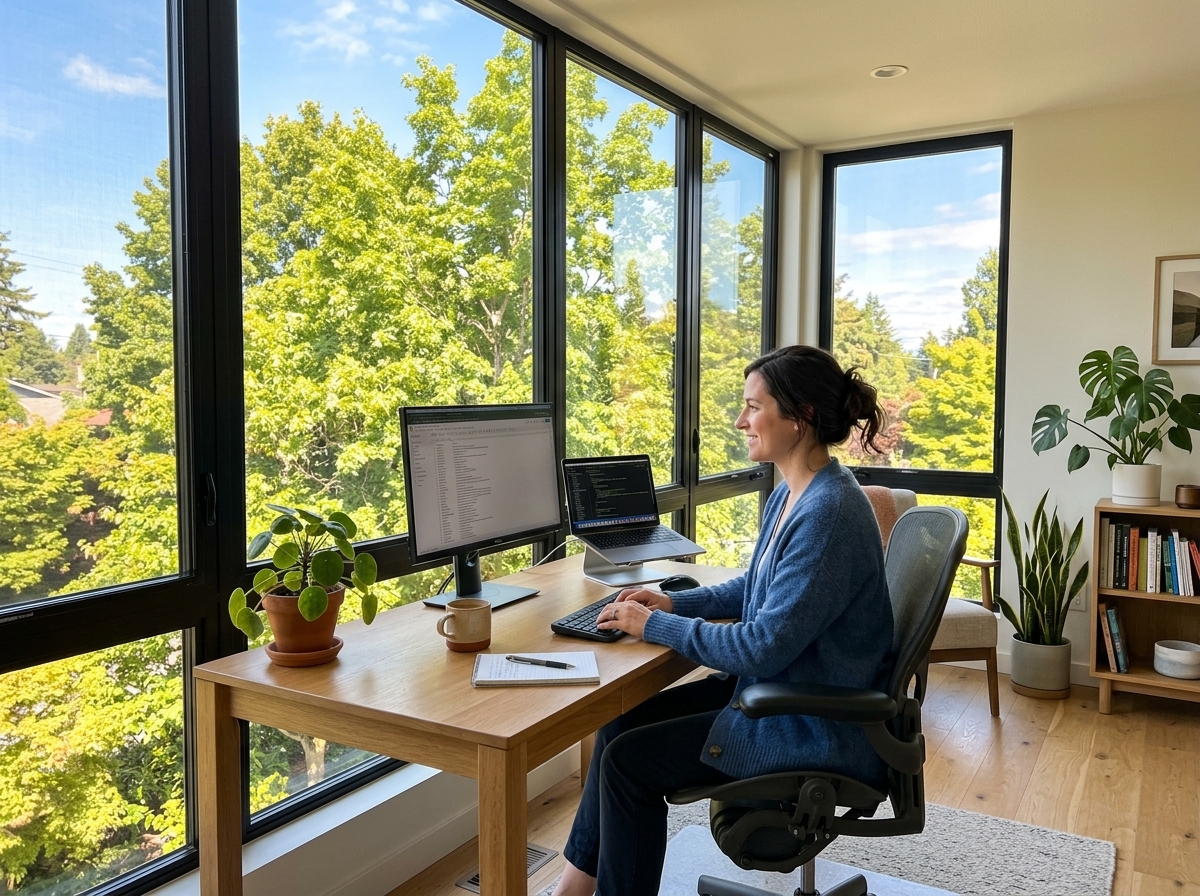
Architectural solar control window film acts as a permanent thermal barrier applied directly to the interior glass surface. Rather than trying to cool down an already overheated room, the film stops solar energy from ever crossing the threshold.
This passive retrofit delivers remarkable temperature stabilization throughout the entire day.
Advanced ceramic and spectrally selective window films are engineered to isolate and reflect the invisible infrared spectrum, which contains over fifty percent of solar heat. The film reflects this heat back outdoors into the atmosphere before it can warm interior drywall and flooring.
By eliminating localized radiant heat buildup, the room cooling load drops by as much as sixty percent. The existing central air conditioning system can now easily maintain a steady 72°F environment without straining.
Because modern ceramic films remain virtually clear, the room stays naturally bright without the gloomy, cave-like feeling caused by closed draperies.
The most dramatic benefit of solar window film is the complete elimination of late afternoon heat spikes. Rooms that previously surged to 85°F between 2 PM and 6 PM stay consistently comfortable all day long.
Children and adults can sleep comfortably at night without waiting hours for bedroom walls to cool down after sunset. Home office spaces remain productive work environments even during peak midday sun exposure.
Whole-house temperatures harmonize, allowing the central thermostat to regulate the entire home efficiently.
Here are answers to common questions homeowners ask when trying to solve chronic room overheating problems.
These practical answers help clarify everyday performance expectations.
Upstairs bedrooms face a double thermal burden: rising warm air and direct solar exposure. Warm air naturally rises through stairwells, accumulating in upper-floor living spaces through the stack effect.
Upper-floor windows typically receive unfiltered sunlight with zero shade from surrounding trees or neighboring buildings. Installing heat-blocking window film on upper-floor windows neutralizes this severe solar gain.
No, closing interior blinds will not prevent a room from overheating. Blinds sit inside the living space, meaning solar heat has already penetrated the window glass before striking the shade.
The blinds absorb this heat and release it into the room air through natural convection, functioning like an interior radiator. True thermal protection requires stopping heat at the window pane with architectural film.
Window film begins rejecting solar heat the second installation is completed. As soon as the film is squeegeed onto the glass, incoming infrared heat is immediately reflected back outside.
Homeowners notice an immediate difference in comfort within minutes of afternoon sunlight striking the filmed window.
No, professionally specified architectural window films will not damage double-pane residential windows. Certified technicians calculate glass absorption rates to select films that maintain safe thermal stress margins.
Premium window film installations include comprehensive manufacturer warranties that protect both the film and the underlying glass unit against thermal shock or seal failure.
You do not have to abandon your favorite bedroom, home office, or sunroom during sweltering summer months. High-performance architectural window film eliminates frustrating hot spots, restores whole-house temperature balance, and lowers cooling bills without costly HVAC alterations.
Experienced residential specialists evaluate your window sizes, glass orientation, and comfort needs to specify the perfect solar control solution. To schedule a complimentary in-home thermal evaluation and free estimate, contact American Window Film.

No Comments Yet
Let us know what you think