

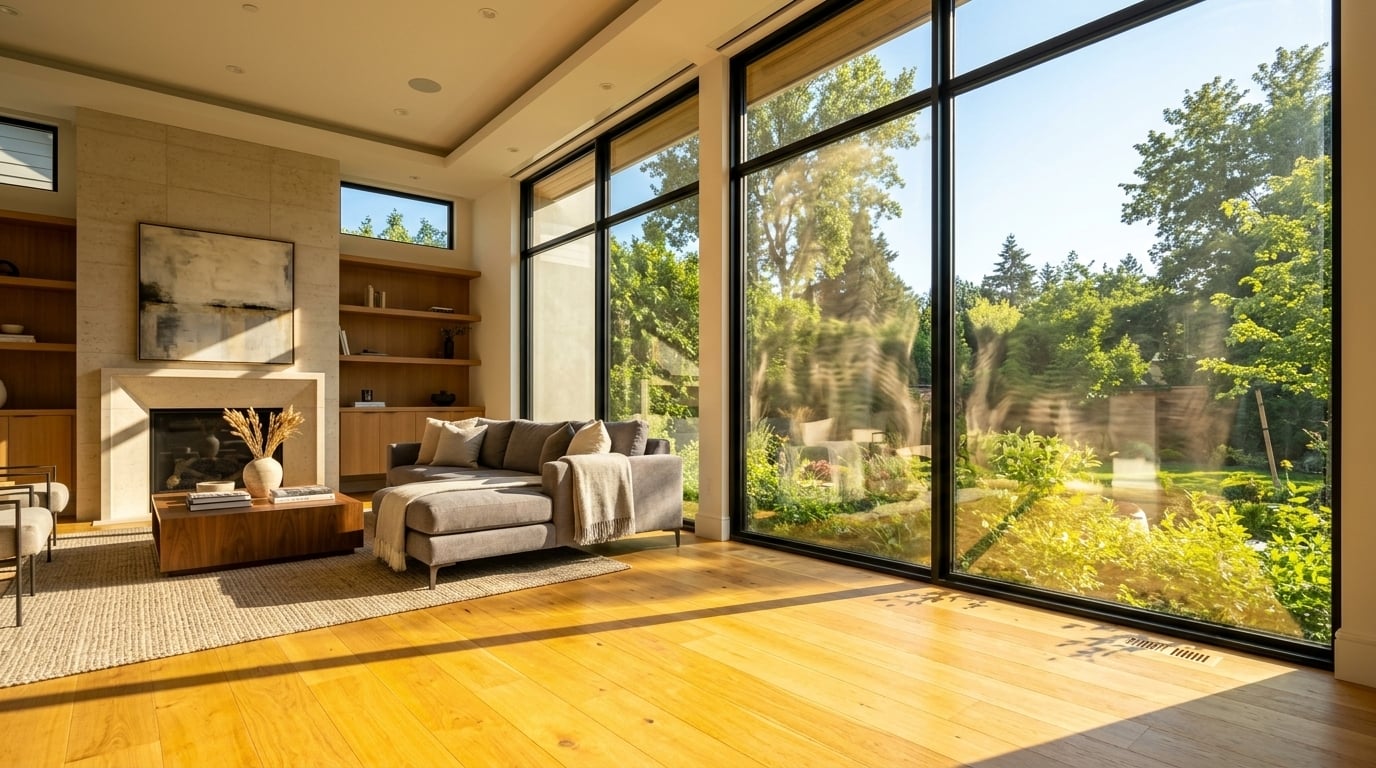
Many homeowners experience sticker shock when opening their summer utility statements. Your air conditioning runs without stopping during peak afternoon hours, yet your monthly electric bill continues to climb higher.
This financial frustration feels especially confusing if your home has modern double-pane insulated glass. Most property owners assume two panes of glass provide an impenetrable shield against outdoor summer weather.
Unfortunately, high electric bill summer air conditioning running constantly remains one of the most common complaints among suburban homeowners. Even recently built properties with dual-pane windows experience blistering indoor hot spots.
The root problem stems from how insulated glass units manage different types of heat transfer. Understanding the exact mechanical breakdown between glass and sunlight is the key to lowering your cooling expenses.
When your cooling system runs non-stop, it consumes thousands of kilowatt-hours trying to compensate for unwanted solar energy. You do not need to endure high electric bills or sweltering living spaces every summer.
Solar thermal energy interacts with residential window glass through two distinct thermodynamic mechanisms. Recognizing the difference between conducted thermal energy and radiant solar energy reveals why your rooms stay uncomfortably hot.
U-factor measures the rate of non-solar heat flow conducted through a window assembly. Lower U-factor numbers indicate superior resistance to conductive heat escaping or entering your living space.
Standard double-pane windows excel at stopping winter conductive heat loss because the sealed air or argon gas pocket acts as an insulator. That same sealed insulating space does very little to stop direct electromagnetic solar rays in the summer.
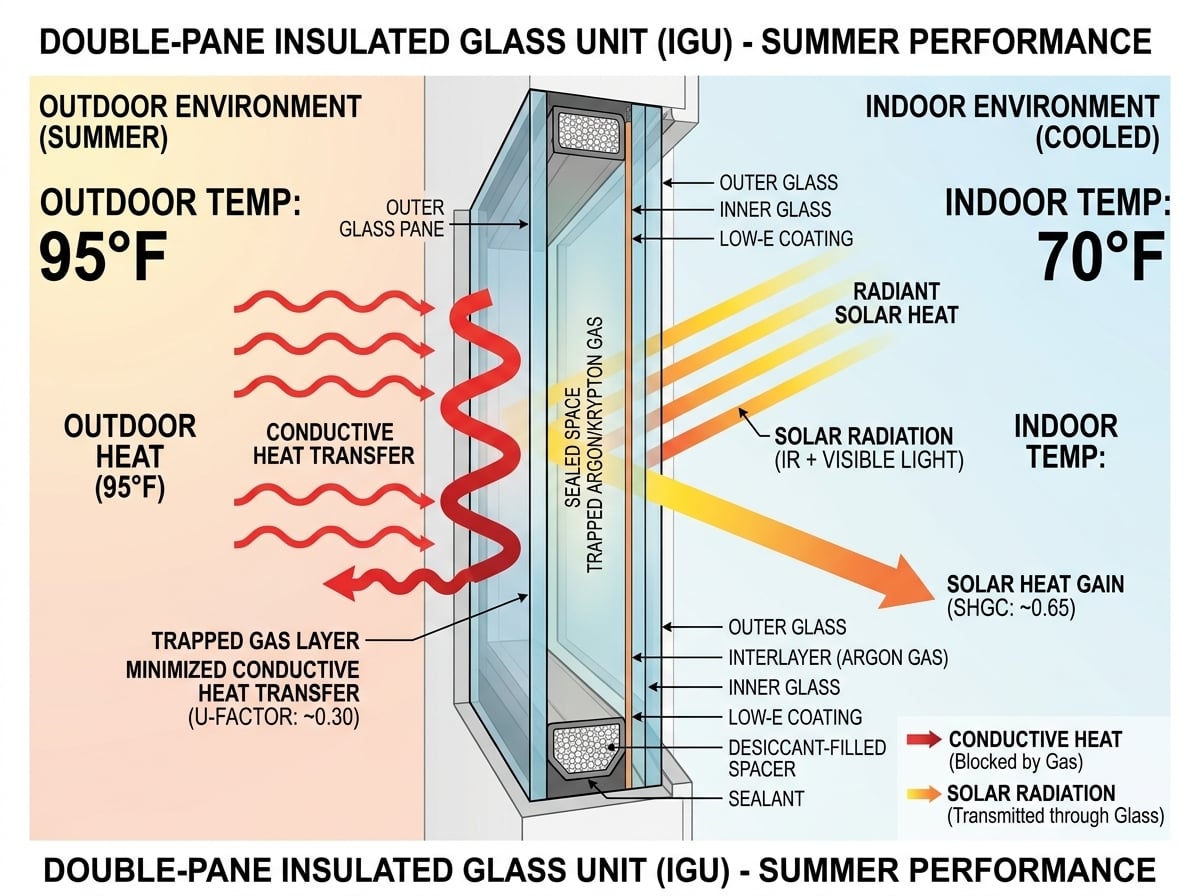
Solar Heat Gain Coefficient, or SHGC, measures the fraction of incident solar radiation admitted through a window. This rating ranges between 0 and 1, with lower numbers representing less solar heat transmitted inside.
Clear double-pane windows typically carry an SHGC rating between 0.70 and 0.76. This means more than 70 percent of raw solar heat passes straight through the glass into your home.
Infrared light accounts for roughly half of all solar energy striking your glass exterior. Standard double-pane glass remains almost completely transparent to these invisible, heat-carrying infrared wavelengths.
Shortwave solar radiation passes freely through clear dual-pane glass and strikes your interior floors, rugs, and walls. These dense interior surfaces absorb the incoming solar energy and rapidly rise in temperature.
Once warmed, your floors and furniture re-radiate that energy outward as longwave infrared heat. Double-pane insulated glass units are specifically engineered to trap longwave heat inside the building envelope.
This physical phenomenon creates a literal greenhouse trap inside your living room or master bedroom. Your air conditioning unit must expend enormous electrical power to remove this trapped thermal energy from your living space.
Standard dual-pane windows are designed primarily for winter thermal insulation rather than aggressive summer sun defense. Examining the optical properties of clear residential glass explains why afternoon indoor temperatures climb rapidly.
Standard double-pane units reduce conducted heat by roughly 50 percent compared to antique single-pane windows. Their ability to block direct radiant solar heat shows only a modest 10 to 15 percent improvement over plain glass.
Homeowners who invest thousands of dollars into replacement windows often feel misled when rooms remain hot. The glass stops drafts and outdoor humidity, but solar radiant heat still pours through unrestricted.
| Glazing Configuration | Visible Light (VLT) | U-Factor (Conduction) | SHGC (Solar Heat) | Total Solar Energy Rejected |
|---|---|---|---|---|
| Single-Pane Clear Glass | 90% | 1.04 | 0.86 | 14% |
| Standard Double-Pane Clear IGU | 82% | 0.48 | 0.76 | 24% |
| Double-Pane With Standard Low-E | 70% | 0.30 | 0.40 | 60% |
| Double-Pane + Solar Control Window Film | 55% - 70% | 0.28 | 0.22 - 0.28 | 72% - 84% |
As the data illustrates, standard clear double-pane glass rejects only 24 percent of incoming solar energy. That leaves 76 percent of external heat free to enter your home and overtax your air conditioning compressor.
Installing modern solar films allows homeowners to upgrade their existing glass to reject up to 84 percent of heat. Learning how solar control window films regulate indoor temperature helps property owners eliminate uncomfortable temperature spikes.
Window glass serves as the largest thermal weak point in your residential building envelope. Several secondary architectural and environmental variables compound the heat gain entering your home.
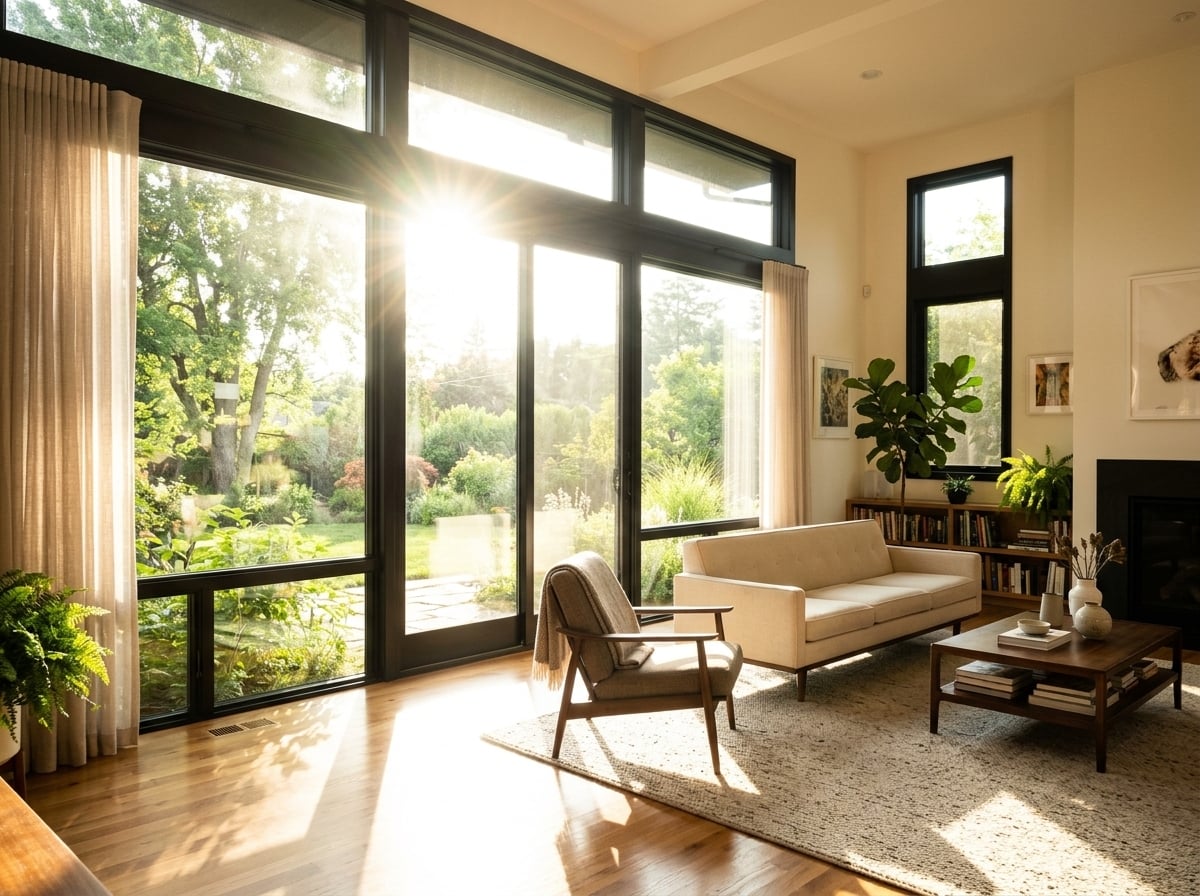
West-facing windows present the most severe cooling challenge for residential air conditioners. The afternoon sun drops to a low angle, striking vertical glass directly when outdoor ambient temperatures reach their daily peak.
During summer months, afternoon temperatures frequently surpass 90°F outdoors between 2:00 PM and 6:00 PM. Blinding solar radiation entering west-facing glass during these peak hours overwhelms HVAC zones and spikes electricity demand.
South-facing windows receive intense solar radiation throughout midday hours. Without dedicated solar protection, south-facing glass turns living rooms and kitchen breakfast nooks into thermal collection centers.
Double-pane windows depend on an airtight perimeter seal to hold dry air or argon gas between the lites. Thermal cycling causes the glass and spacer frames to expand and contract, eventually stressing perimeter sealants.
When an insulated glass seal fails, insulating argon gas leaks out and moisture-laden outdoor air enters. This seal compromise degrades the unit U-factor and forces cooling equipment to work harder to maintain set temperatures.
Visible condensation or hazy fog between two panes confirms a failed perimeter seal. While failed seals reduce thermal insulation, solar radiant heat remains the overwhelming driver of summer cooling expenses.
Window performance depends heavily on the structural seal between window frames and exterior rough openings. Settling foundations and aging wood casings create invisible perimeter gaps around window perimeters.
Hot outdoor air infiltrates through frame crevices, introducing sensible heat and unwanted humidity into conditioned spaces. Humid indoor air forces air conditioners to run extended cycles to wring out atmospheric moisture.
Applying exterior commercial-grade caulk and renewing worn sash weatherstripping stops drafts effectively. Sealing physical perimeter cracks must be paired with glass surface protection to solve summer overheating completely.
Homeowners battling runaway summer energy bills typically evaluate three primary remediation options. Each approach differs substantially in upfront cost, aesthetic impact, and overall cooling efficiency.
Replacing existing dual-pane windows with new high-performance glazing is the most expensive path available. Full-frame window replacement costs between $1,200 and $2,500 per opening, including professional installation labor.
A full residential window replacement project across twenty windows easily reaches $25,000 to $50,000 in total out-of-pocket costs. Recovering that massive capital investment through monthly electric bill savings often requires 20 to 30 years.
Discarding structurally sound window frames simply to improve solar heat rejection creates unnecessary landfill waste. Evaluating retrofit solutions allows homeowners to achieve superior energy efficiency while preserving their existing framing.
Many families attempt to combat intense afternoon heat by closing heavy fabric draperies, wood blinds, or motorized solar shades. While window coverings stop blinding glare, their thermal performance remains fundamentally flawed.
Sunlight passes through your double-pane glass before striking the interior surface of your closed blinds. The blinds absorb the solar radiation, heat up to over 110°F, and radiate that heat directly into your living room.
Closing shades during beautiful sunny days forces you to live in dark, cave-like conditions. Homeowners sacrifice their outdoor views and natural daylighting while their air conditioning continues to struggle against trapped heat.
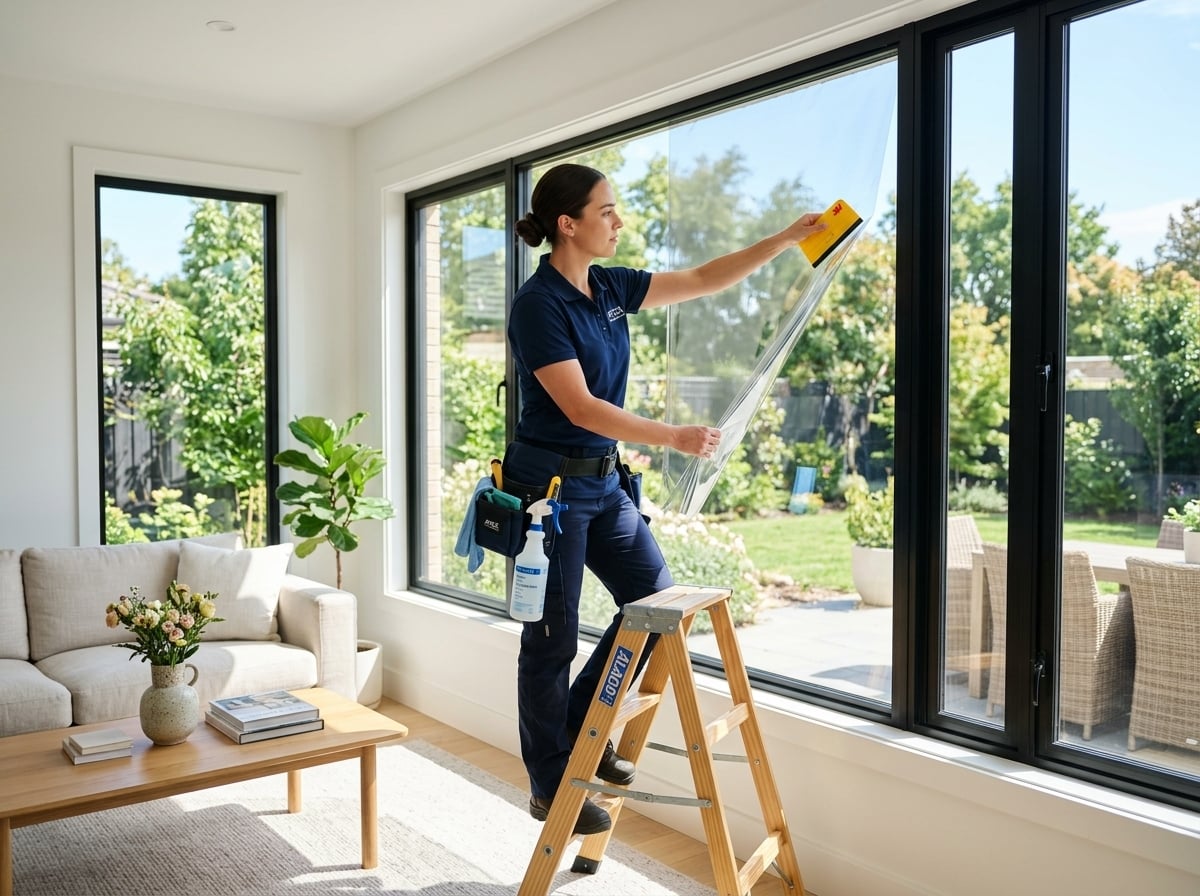
Architectural solar control window film mounts directly to the interior surface of your existing glass. These micro-thin polyester and ceramic coatings intercept solar radiation before it ever enters your living space.
High-performance films reflect and absorb up to 84 percent of radiant solar heat while allowing natural daylight to illuminate your rooms. You preserve clear views of your yard and landscape without suffering through oppressive indoor heat.
Solar film retrofits cost roughly 80 to 90 percent less than full window replacements. Most homeowners recoup their entire installation investment within 2 to 4 years through lower electric bills, as documented in guides on how effective is solar window film.
A frequent concern among homeowners is whether applying window film to double-pane windows causes glass breakage or voids manufacturer warranties. This misunderstanding stems from improper film selection rather than the technology itself.
Double-pane insulated glass requires window films specifically formulated for dual-pane thermal absorption tolerances. Specialized architectural films reflect incoming solar energy away from the exterior pane rather than absorbing heat into the glass core.
Professional installers utilize spectrally selective ceramic films and dual-reflective films that balance heat rejection and glass absorption. These precision coatings keep the temperature of the insulated glass unit well within factory safety margins.
Leading architectural film manufacturers provide comprehensive warranty coverage that matches or replaces your original window manufacturer warranty. Partnering with certified installation professionals guarantees your double-pane windows perform safely and efficiently for decades.
Choosing the best residential window film for heat reduction ensures your home receives tailored solar control without risking thermal stress damage. You enjoy a cooler home and protected windows backed by comprehensive manufacturer coverage.
Property owners frequently ask technical questions regarding home cooling, window performance, and energy efficiency upgrades. Here are straightforward answers to the most common inquiries.
Standard clear double-pane windows allow approximately 76 percent of incoming solar radiant heat to penetrate into your home. While the sealed air pocket prevents outdoor hot air from conducting inward, solar infrared rays pass freely through both sheets of clear glass.
Warm air rises naturally through your home due to convective stack effect, accumulating on upper levels. Second-floor windows also receive more unshaded solar exposure from higher sun angles, compounding heat gain in upstairs bedrooms.
Modern spectrally selective ceramic window films provide exceptional heat rejection while remaining virtually clear on your glass. These advanced coatings filter invisible infrared heat and ultraviolet rays without giving your windows a dark, shiny, or mirror-like appearance.
Most residential solar window film installations pay for themselves within two to four years through reduced air conditioning electricity consumption. Homes with extensive south-facing and west-facing glass often experience monthly cooling bill reductions between 15 and 30 percent.
High summer cooling bills do not have to be an inevitable reality for homeowners with double-pane windows. Uncontrolled solar radiant heat entering through your glass is the true source of your home cooling problems.
Upgrading your existing glass with architectural solar control window film delivers immediate thermal comfort and permanent monthly energy savings. You protect your furnishings from sun fading, eliminate hot spots, and relieve stress on your air conditioning equipment.
To schedule an expert architectural glass evaluation and discover the ideal solar control solution for your home, contact the specialists at American Window Film today.
No Comments Yet
Let us know what you think