

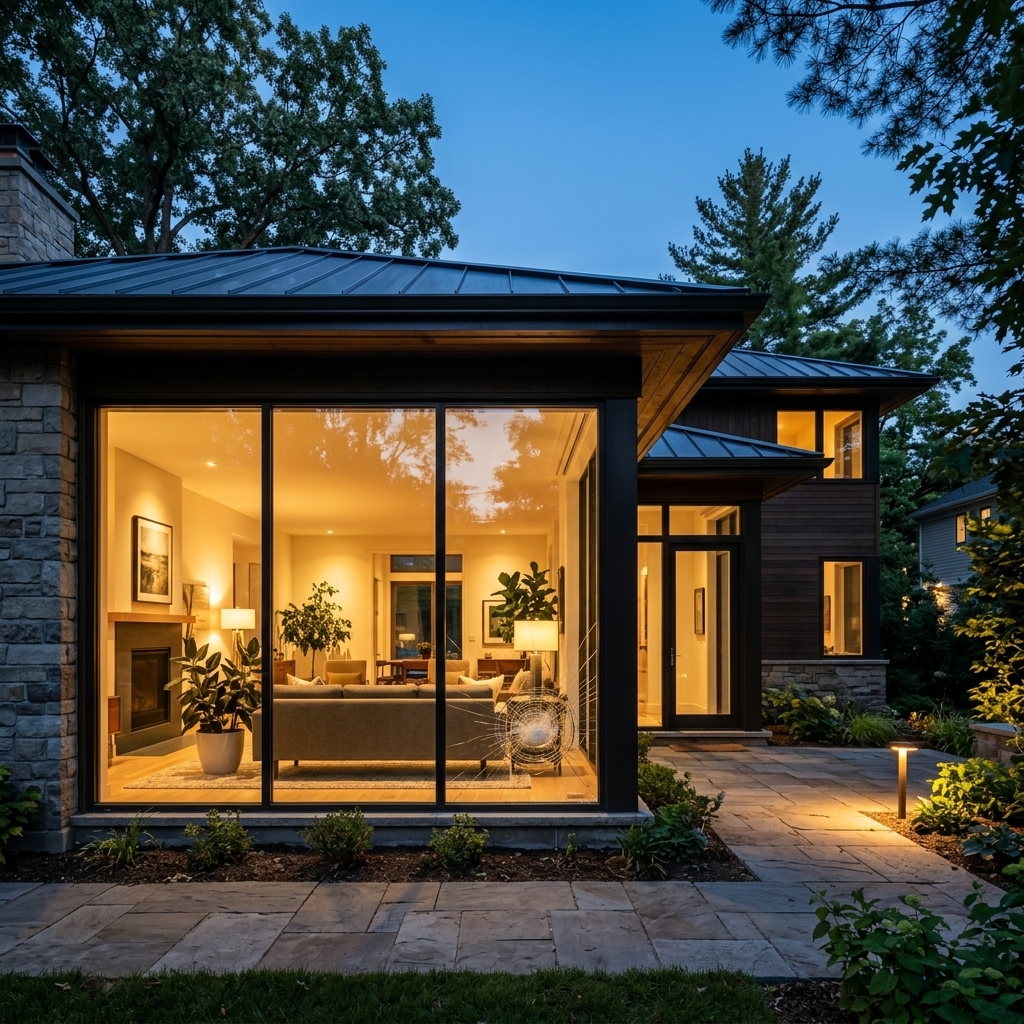
According to the FBI Uniform Crime Report's Crime Clock, a burglary occurs every 25.7 seconds in the United States. And the most common entry point? A window.
Your front door has a deadbolt. Your alarm is armed. But that plate-glass window in your living room? It takes less than three seconds to smash through it.
Security window film changes that equation entirely, and most homeowners have never heard of it.
Your windows look solid. They're not.
This section covers why standard residential glass fails against forced entry and how burglars choose their targets.
Standard residential glass is engineered to break cleanly. A single strike with a rock or hammer creates an opening large enough to climb through in under 10 seconds.
Burglars count on speed. Most smash-and-grab break-ins are completed in under 60 seconds, and glass is targeted first because it yields faster than any door.
When glass breaks cleanly, it falls away from the frame immediately. That clearance is all an intruder needs.
There is no resistance, no delay, and no noise beyond the initial shatter. The window becomes an open door in an instant.
Security window film is a thick, multi-layered polyester film that bonds directly to the interior surface of your existing glass. This section explains the science and mechanics behind it.
The film is constructed from multiple layers of optically clear polyester bonded with industrial-grade adhesive. Those layers act as a cohesive membrane that absorbs and distributes impact energy across the entire pane.
It does not make glass unbreakable. What it does is far more effective: it holds shattered glass together.
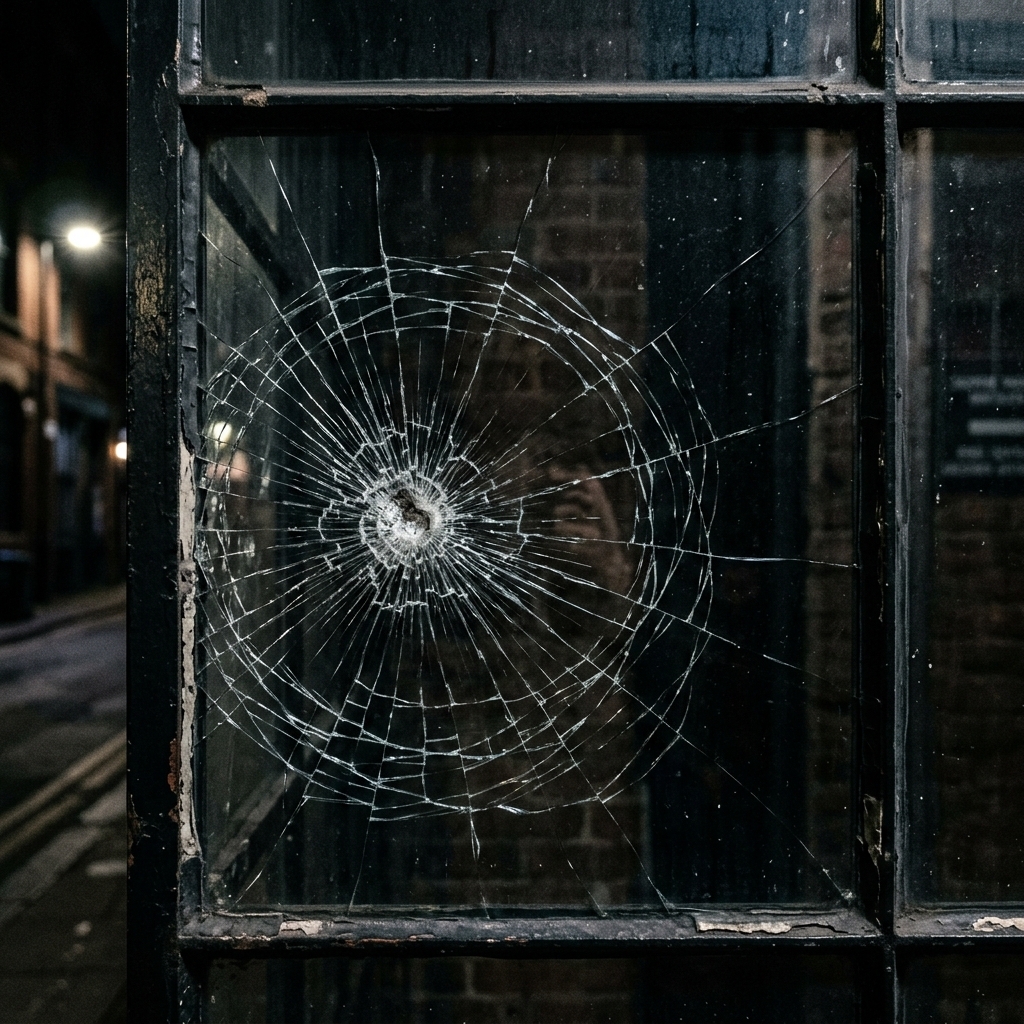
When an intruder strikes a treated window, the glass cracks, but the film keeps every fragment bonded in place. Instead of falling away to create an easy opening, the glass stays in the frame.
The would-be intruder is left hammering a cracked, rubbery barrier that refuses to give way. That resistance creates time, and time is a burglar's worst enemy.
Studies and field tests show that forcing entry through security-filmed glass takes anywhere from 2 to 7 minutes of sustained effort, compared to under 10 seconds for untreated glass.
That window of time is critical for three reasons:
Security window film doesn't guarantee your home is impenetrable. It makes your home the least convenient target on the street. That's how deterrence works.
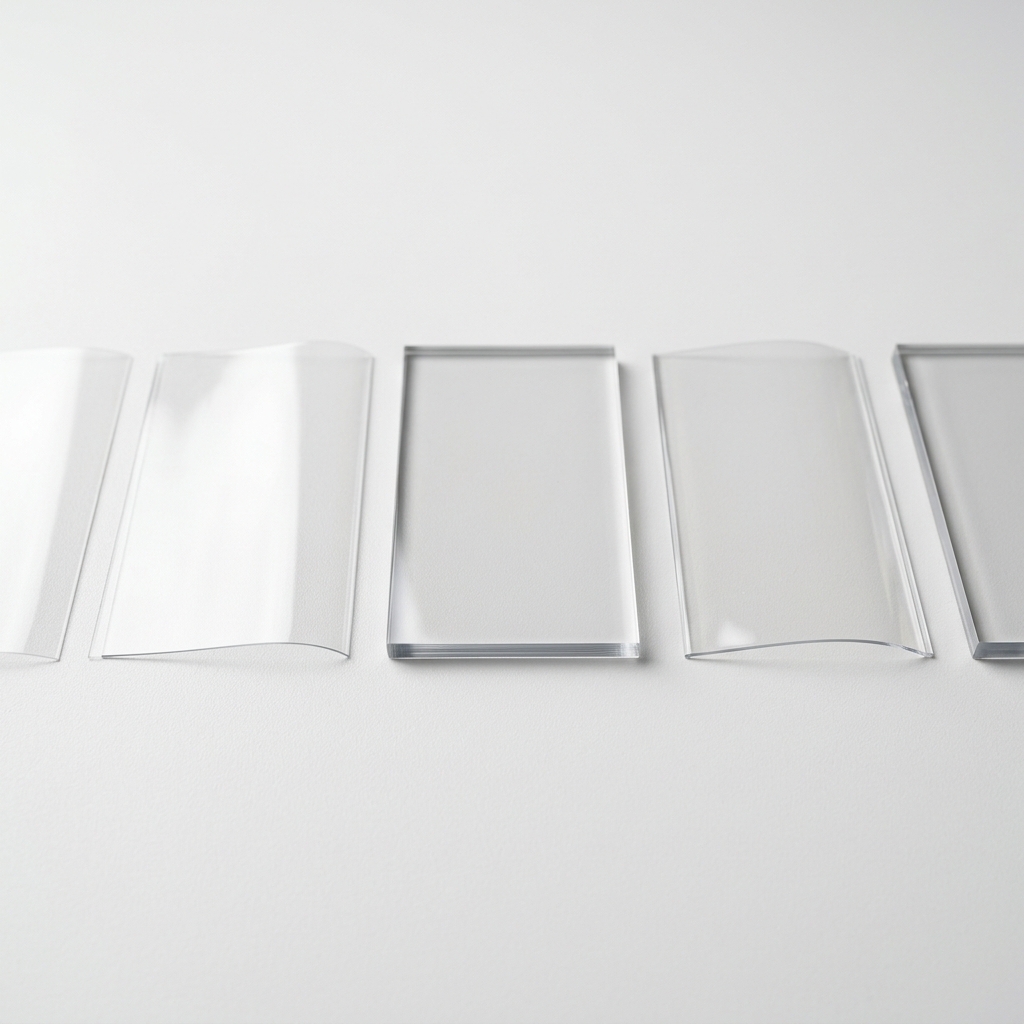
Security window film is measured in mils, which are thousandths of an inch. Thickness directly correlates to impact resistance, and choosing the right mil rating for your situation is the most important purchasing decision you'll make.
This is the most common range for residential homes and covers the vast majority of real-world smash-and-grab threats.
| Thickness | Best For |
|---|---|
| 4 to 6 mil | Low-risk areas; basic smash-and-grab deterrence |
| 7 to 8 mil | Standard residential protection; most popular choice |
For most homeowners, 7 to 8 mil film hits the sweet spot between cost and protection. It's optically clear, virtually invisible, and rated to withstand repeated blunt-force strikes.
Thicker films are designed for properties with larger windows, elevated risk profiles, or higher contents value.
| Thickness | Best For |
|---|---|
| 10 to 12 mil | High-value homes, ground-floor windows, sliding glass doors |
| 14 mil and above | Maximum security applications; paired with attachment systems |
If you have large picture windows, a ground-floor open-plan layout, or live in a higher-crime area, stepping up to 10 to 12 mil is a smart investment.
Film thickness alone is not enough. The single most important upgrade to any security film installation is an edge attachment system.
This anchors the film directly to the window frame rather than relying solely on glass adhesion. In independent testing, edge-attached installations require dramatically more force and time to breach than film-only applications.
A strong security upgrade that also improves your home's comfort is rare. Security window film delivers on both fronts.
Security window film provides several secondary benefits that homeowners genuinely value:
You're not just hardening your windows against intrusion. You're upgrading every function your glass performs.
Not every window carries equal risk. Prioritize these locations first, working from highest to lowest vulnerability.
Ground-floor windows are the primary target in the vast majority of residential break-ins. They're accessible, often partially hidden by landscaping, and easy to surveil without drawing attention.
Sliding glass doors deserve special attention. Their large glass panels are easy to shatter, and their locking mechanisms are notoriously weak against forced entry. Security film significantly improves both the impact resistance of the glass and the time required to breach the door.
Side and rear windows are out of direct street view, which makes them the preferred choice for experienced burglars. Garage entry windows and basement windows fall into the same category.
Start with any window that cannot be seen clearly from the street or a neighboring property. These are the entry points burglars specifically choose because passersby can't observe them working.
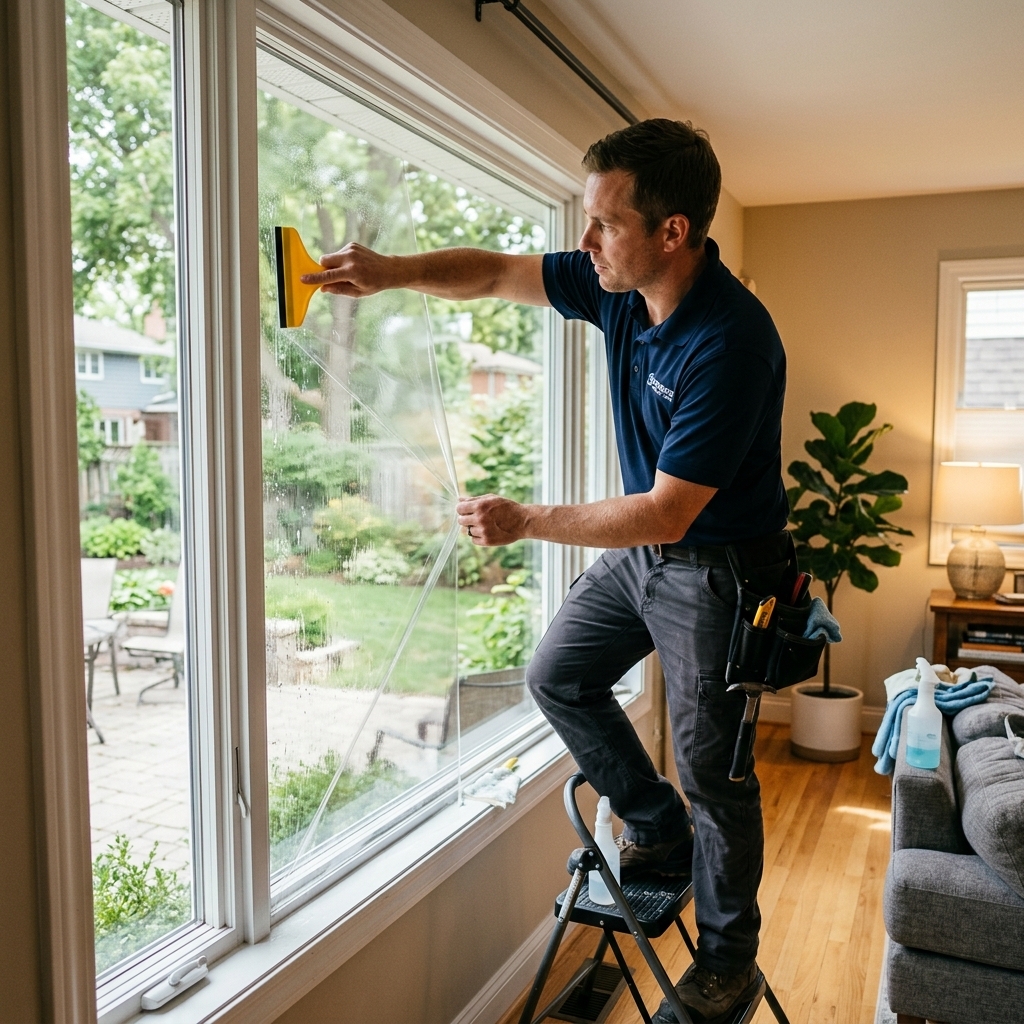
You can find security film kits online. For security applications specifically, professional installation is strongly recommended over DIY.
Proper adhesion is everything in a security film installation. A single bubble, lifted edge, or misapplied corner dramatically reduces the film's ability to hold glass together under impact.
Professionals use calibrated application solutions and tools that guarantee full glass contact across the entire pane surface. This level of consistency is nearly impossible to achieve with a DIY kit.
A professional installation includes precise measurement, surface preparation, film application, and edge attachment fitting. Most residential jobs are completed in a single day with no disruption to the window's appearance.
Quality professional installations carry manufacturer-backed warranties of 10 to 15 years and are designed to perform across temperature extremes, humidity cycles, and repeated cleaning.
Security film is low maintenance, but a few simple habits keep it performing at its best for the full life of the warranty.
Properly maintained film remains clear, effective, and warranty-compliant for over a decade.
Security window film is one layer in a broader system. Layers are how real home security works, and film fills a gap that most alarm systems and door locks completely ignore.
Film protects your glass. It performs best when combined with:
Think of your home as having multiple defensive rings. Security window film closes the gap at the glass itself.
For more on how window film supports broader building security goals, read our guide on Safety and Security Film for Business. Many of the same principles apply to residential properties.
A lot of misinformation exists about what security film can and cannot do. Here are the most common myths, corrected.
No. Standard decorative or solar-control tint is typically 1.5 to 2 mil thick and is designed purely for aesthetics, heat, or glare reduction. Security film starts at 4 mil and uses specialized polyester formulations engineered specifically for impact resistance. They are fundamentally different products.
No, and any installer who claims otherwise is not being truthful. Glass will crack on impact. Security film prevents the cracked glass from failing as a barrier. That distinction matters when evaluating any product claim.
High-quality clear security films are virtually invisible once installed. Optically clear 7 to 8 mil films maintain the appearance of untreated glass while providing full impact resistance. Tinted variants are available if privacy or heat rejection is also a goal.
Clear security films have no measurable impact on visible light transmission. Your rooms will look identical after installation. Only tinted or reflective variants affect how much light enters the space.
Professional installation typically ranges from $8 to $20 per square foot, depending on film thickness, window size, edge attachment systems, and your location. For an average home with 10 to 15 ground-floor windows, expect a total investment of $1,500 to $4,000. That is a fraction of the cost of replacing windows or the financial and personal cost of a break-in.
Quality films installed professionally carry warranties of 10 to 15 years. With proper care and ammonia-free cleaning, film often performs well beyond its warranty period.
Security film works on most standard residential glass types including single-pane, double-pane, and tempered glass. Consult a professional before applying film to specialty glass, as some types have thermal expansion characteristics that require specific film formulations to avoid seal damage.
No product provides a 100% guarantee. Security film significantly raises the time, effort, and noise required to breach a window. This is enough to deter the vast majority of opportunistic burglars, who rely on speed and silence.
Security film does not interfere with glass-break sensors. Sensors detect the acoustic frequency of breaking glass, and film-treated glass still breaks and still produces that frequency. The combination of film and a sensor creates a highly effective deterrent-plus-detection system.
For most residential applications, 7 to 8 mil clear security film with an edge attachment system provides the optimal balance of protection, aesthetics, and cost. High-value or high-risk properties should consider 10 to 12 mil film.
To understand how film thickness affects protection, see our detailed breakdown in Best Security Film Thickness for Storefronts. The same thickness logic applies directly to residential glass.
Your windows are your home's most inviting entry point for intruders. Security window film converts that vulnerability into an active deterrent: one that holds glass together, buys critical time, and sends burglars to an easier target.
The investment is modest. The protection is real. Unlike a loud alarm that wakes the neighborhood after the fact, security film stops the intrusion before it starts.
If you're serious about protecting your home from glass break-ins, the next step is a professional assessment of your windows. The right film, properly installed, can harden every pane of glass in your home.
Contact American Window Film today to schedule a free residential security film consultation. Our specialists will assess your home's specific vulnerabilities and recommend the right film system for your needs.
For a broader look at protecting your home with window film solutions, explore our complete Home Safety Checklist.
No Comments Yet
Let us know what you think