

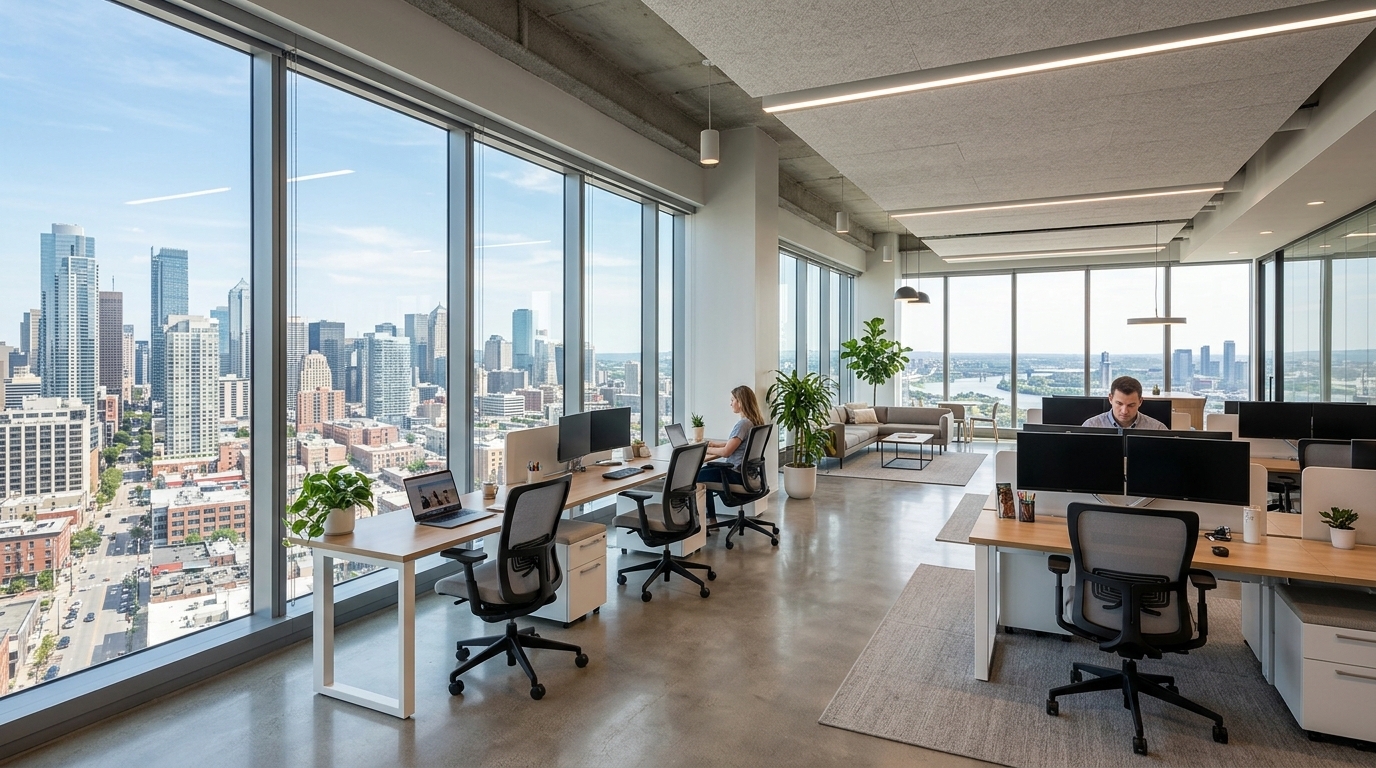
Stepping into a modern office building often reveals a silent productivity war. Employees sitting near perimeter windows swelter under afternoon sun, while team members in the interior building core shiver in winter coats.
This thermal imbalance is not merely a annoyance for office staff. It represents a fundamental building physics breakdown known as a microclimate zone failure.
Commercial heating, ventilation, and air conditioning systems struggle to maintain uniform comfort across expansive floor plates. When exterior glass walls absorb intense solar radiation, localized hot spots overwhelm standard airflow design.
Property managers and facility directors frequently waste thousands of dollars attempting mechanical adjustments. Understanding why perimeter workspaces suffer temperature extremes is the first step toward stabilizing your building envelope.
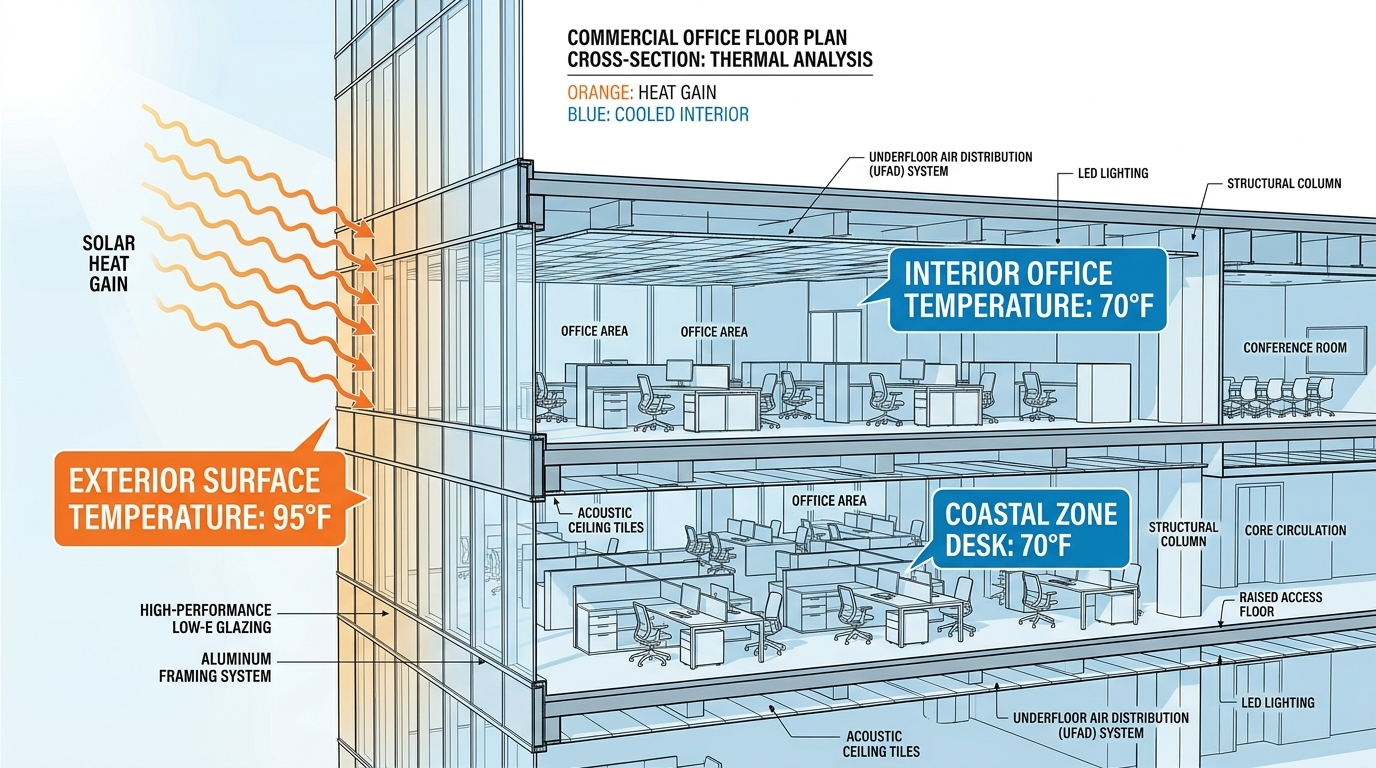
Perimeter office microclimates develop when the outer boundary of a floor plan experiences radiant energy loads completely isolated from central building controls.
Standard commercial HVAC zones typically encompass perimeter areas within fifteen feet of exterior glass walls. These exterior zones absorb massive solar energy surges throughout the work day.
Unprotected commercial window glass acts as an open gateway for direct solar radiation. High Solar Heat Gain Coefficient rating glass allows raw infrared energy to pass directly into interior workspaces.
As sunlight strikes perimeter desks, shortwave solar radiation converts into longwave heat energy upon impacting furniture, floors, and equipment.
This localized heat generation creates an thermal spike that standard variable air volume diffusers cannot quickly offset.
Meanwhile, interior building zones operate without direct solar exposure. Central thermostats serving both zones read ambient temperatures that fail to reflect perimeter heat intensity.
Perimeter temperature instability is not limited to summer cooling challenges. During colder months, cold exterior window panes create severe perimeter window chill.
Warm air within the office contacts cold glass surfaces and cools rapidly. This dense, cold air drops toward the floor, producing continuous convective drafts across desk levels.
This winter heat loss phenomenon forces building automation systems to run heating loops longer, raising overall energy consumption across the facility.

Building occupants frequently complain about temperature discomfort even when wall-mounted thermostats display a steady seventy-two degrees.
This contradiction occurs because air temperature is only one component of human thermal comfort.
The American Society of Heating, Refrigerating and Air-Conditioning Engineers establishes thermal standards through ASHRAE Standard 55. This standard emphasizes Mean Radiant Temperature as a primary driver of human heat exchange.
Mean Radiant Temperature measures the uniform surface temperature of surrounding enclosures transferring radiant heat to the human body.
$$\text{Operative Temperature} \approx \frac{T_{\text{air}} + \text{MRT}}{2}$$
When an employee sits beside a solar-heated window pane operating at ninety-five degrees, their body absorbs intense radiant heat.
Even if cool seventy-two degree air blows from ceiling vents, the elevated Mean Radiant Temperature makes the occupant feel uncomfortably hot.
Conversely, sitting near a freezing glass wall in winter pulls heat from human skin regardless of ambient room air temperature.
Thermostats are typically mounted on interior drywall columns or core corridor walls. These sensors measure ambient air temperature far away from direct solar radiation.
When perimeter occupants experience intense solar heat gain, they manually lower regional thermostat setpoints.
This manual intervention forces the central air handler to pump excessive chilled air throughout the entire floor plate.
This cycle demonstrates why traditional air balancing methods fail when glass surfaces remain unmanaged.
Facility managers often respond to tenant temperature complaints by commissioning mechanical HVAC adjustments.
While air balancing and mechanical maintenance are important, mechanical tools alone cannot solve building envelope radiation issues.
Adjusting Variable Air Volume dampers to supply more chilled air to perimeter zones creates significant mechanical trade-offs.
High-velocity airflow increases noise levels in perimeter offices, disrupting phone calls and focused work.
Rebalancing air delivery simply moves thermal problems around the building layout rather than stopping heat entry.
Lowering fabric shades or window blinds is the most common attempt to eliminate sun spots near perimeter windows without blinds.
However, internal window coverings act as secondary radiators rather than true solar heat barriers.
When solar radiation passes through exterior window glass, it strikes the dark or textured surface of interior blinds. The blinds absorb this energy and heat up significantly.
That absorbed heat remains trapped inside the building envelope, slowly radiating into perimeter office air.
While blinds eliminate visual glare, they fail to reduce total thermal load entering the HVAC zone.
Closed blinds also block natural daylighting benefits, forcing facilities to run artificial overhead lights and increasing lighting energy consumption.
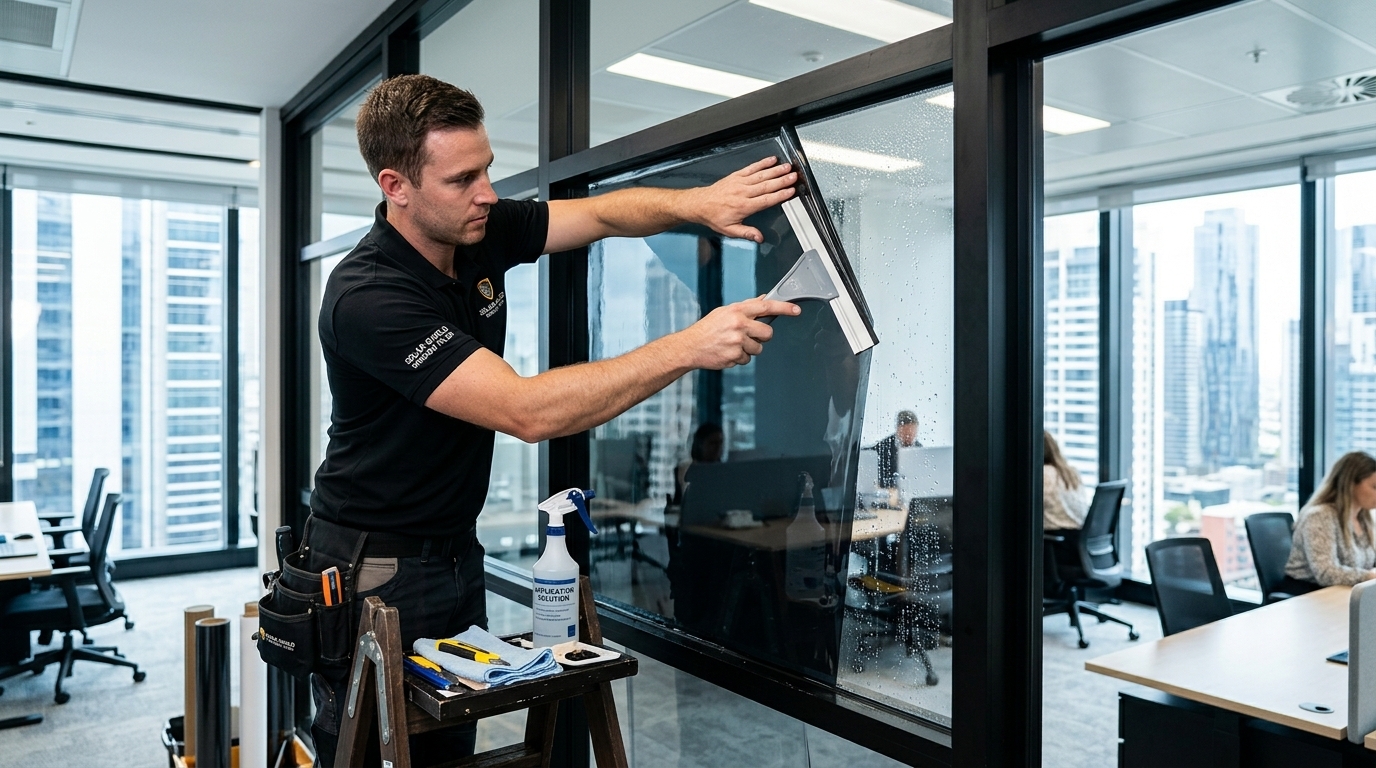
Solving office microclimates requires stopping solar heat energy before it penetrates the building interior.
Applying high-performance spectrally selective solar control film transforms standard architectural glass into an intelligent thermal shield.
Spectrally selective technology separates the solar spectrum into visible light and invisible heat-producing infrared radiation.
These advanced solar control window films reflect up to eighty-six percent of solar infrared rays while allowing high levels of natural visible light to pass through.
By rejecting heat at the outer glass surface, window film stabilizes surface temperatures across perimeter glass walls.
This insulation performance drastically lowers Mean Radiant Temperature variations, establishing consistent comfort for perimeter occupants.
Installing solar control film provides direct mechanical benefits to commercial HVAC systems.
Lowering perimeter solar heat gain reduces peak cooling demand across exterior building zones.
Facility managers can explore detailed energy performance metrics by reading our guide on how solar window film reduces heat in commercial buildings.
Reducing solar peak loads allows central air handlers to operate at balanced fan speeds without surging during afternoon sun exposures.
Buildings experience reduced electrical demand charges during peak summer billing cycles, resulting in substantial annual energy savings.
Property managers can review full commercial utility savings analysis in our article on energy-saving window films for office buildings.
Commercial office properties across North America face strict tenant retention targets in modern leasing environments.
Unstable indoor temperatures and uncomfortable perimeter workspaces rank among the top reasons corporate tenants refuse lease renewals.
Multi-story office towers with expansive curtain walls frequently experience severe east-to-west solar load shifts throughout the day.
Morning sun scorches eastern offices, while afternoon sun shifts heat loads entirely to western perimeter zones.
Facility teams seeking to optimize mechanical efficiency should consult our resource on resolving an HVAC system struggling with summer solar heat gain.
Stabilizing glass performance creates uniform cooling conditions across all office orientations, protecting long-term tenant satisfaction.
Offices near windows absorb direct solar heat gain through architectural glass. Sunlight converts into thermal energy when it strikes interior surfaces, creating localized hot spots that central HVAC systems struggle to cool without over-cooling interior building zones.
Solar window film complements HVAC systems by removing the primary driver of thermal load imbalance. By rejecting solar heat at the glass surface, window film allows standard air distribution systems to maintain consistent temperatures without requiring constant mechanical damper adjustments.
Commercial solar window film installations typically pay for themselves within three to five years through reduced HVAC energy consumption, lower peak electrical demand charges, and extended mechanical equipment lifespans.
Eliminating office microclimates requires addressing thermal energy entry at the exterior glass envelope.
Adjusting mechanical thermostats and closing internal blinds leaves perimeter workspaces vulnerable to intense solar radiation and winter cold drafts.
Spectrally selective window films block solar heat gain, stabilize Mean Radiant Temperature, and lower HVAC energy consumption while preserving natural daylight.
Our team of architectural film experts works directly with facility managers, building owners, and commercial property developers to engineered tailored window film solutions.
Ready to resolve perimeter temperature complaints and optimize your commercial building energy performance? Contact the specialists at American Window Film today by visiting American Window Film Contact Us.
No Comments Yet
Let us know what you think