

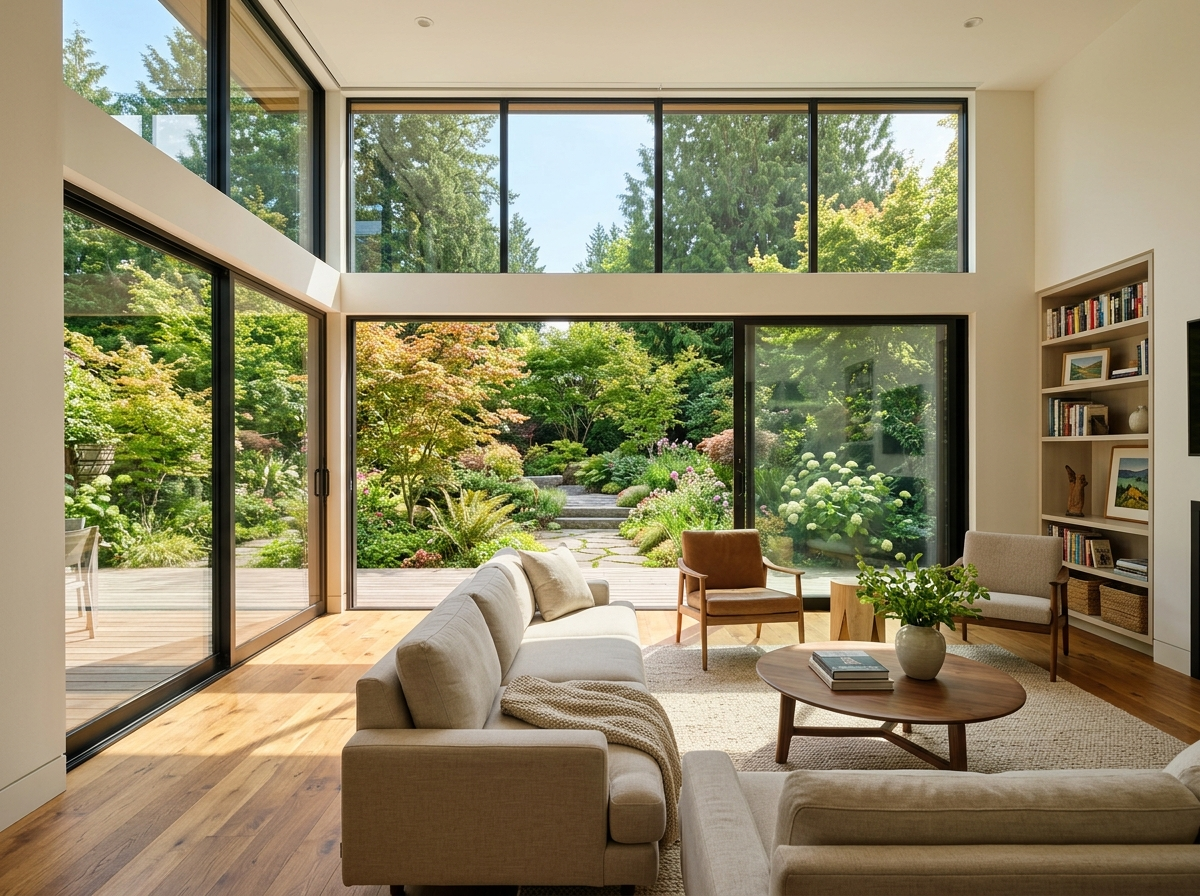
Architectural glass is one of the most aesthetically pleasing elements of modern residential and commercial design. Large windows invite natural daylight and open panoramic exterior views that make indoor spaces feel expansive.
However, standard glass is notoriously poor at thermal insulation. Inefficient windows account for massive heating loss in winter and overwhelming radiant heat gain in summer, driving utility bills higher every season.
Standard solar control window films are engineered specifically for warm climates to reject incoming solar radiation. Low-emissivity (Low-E) window films are designed to provide complete four-season thermal performance.
Low-E architectural film transforms ordinary glass into an active radiant barrier. It reflects interior heat back inside during freezing winter months while simultaneously repelling exterior solar heat during hot summers.
The secret to this dual-action performance lies in the physics of surface emissivity. Emissivity measures a material's ability to absorb and emit radiant thermal energy on a scale from 0 to 1.
Standard architectural clear glass possesses an emissivity rating of approximately 0.84, meaning it absorbs interior heat and rapidly radiates it outside. Advanced Low-E coatings drop glass surface emissivity to as low as 0.05.
Applying a microscopic Low-E layer to interior window glass prevents thermal energy from escaping into the colder outdoor atmosphere. Building owners gain the insulating benefits of an extra pane of glass without the expense of window replacement.
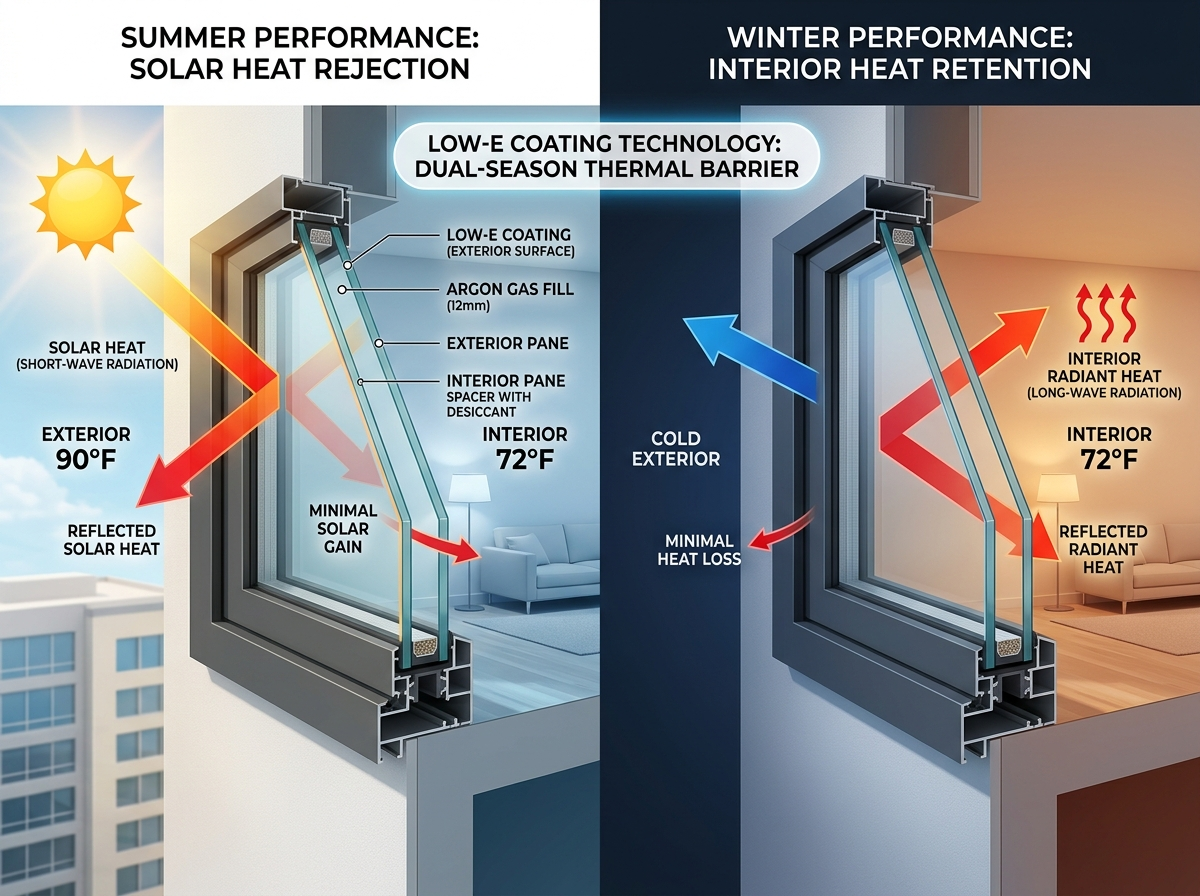
True year-round energy efficiency requires an optical coating engineered to manage two distinct wavelengths of radiant energy.
Solar energy arriving from the sun travels in short-wave near-infrared radiation. Radiant heat produced by interior furnaces, radiators, and human bodies exists as long-wave far-infrared energy.
During cold winter weather, heating systems work continuously to warm the interior air and solid surfaces within a building. As this warmth strikes untreated window panes, the cold glass absorbs the long-wave radiant heat and conducts it directly outdoors.
Low-E window film incorporates microscopic precious metal and ceramic layers that act as a thermal mirror. When rising indoor radiant heat approaches the glass, the Low-E coating reflects up to 40% of that far-infrared energy back into the room.
Retaining this radiant heat stabilizes indoor room temperatures and dramatically lowers heating fuel consumption. Boilers and heat pumps cycle on less frequently, preserving indoor comfort throughout freezing winter nights.
When summer arrives, the primary thermal challenge reverses. Intense solar radiation penetrates standard vision glass, creating severe interior hot spots and driving air conditioning systems to capacity.
Low-E architectural window films utilize spectrally selective filtering to target the sun's short-wave near-infrared spectrum. The film reflects up to 73% of total solar energy before it can penetrate the glass and heat up your living or work space.
This dual-wavelength control ensures that your building envelope actively fights heat loss in January and heat gain in July. Installing residential window film for heat reduction protects homeowners from volatile seasonal power bills.
Many property owners mistake cold radiant draft sensations near windows for air leakage around the sash. In reality, large cold glass surfaces absorb radiant heat directly from human bodies, creating the perception of an icy draft.
By reflecting room heat back into the interior, Low-E film raises the surface temperature of the indoor glass pane by up to 15°F during winter. Elevating the glass surface temperature eliminates cold convective downdrafts and keeps perimeter seating areas comfortable.
During peak summer afternoons, the same film prevents intense radiant heat spikes from turning perimeter offices into unbearable greenhouses. Achieving balanced perimeter comfort allows occupants to utilize all available square footage year-round.
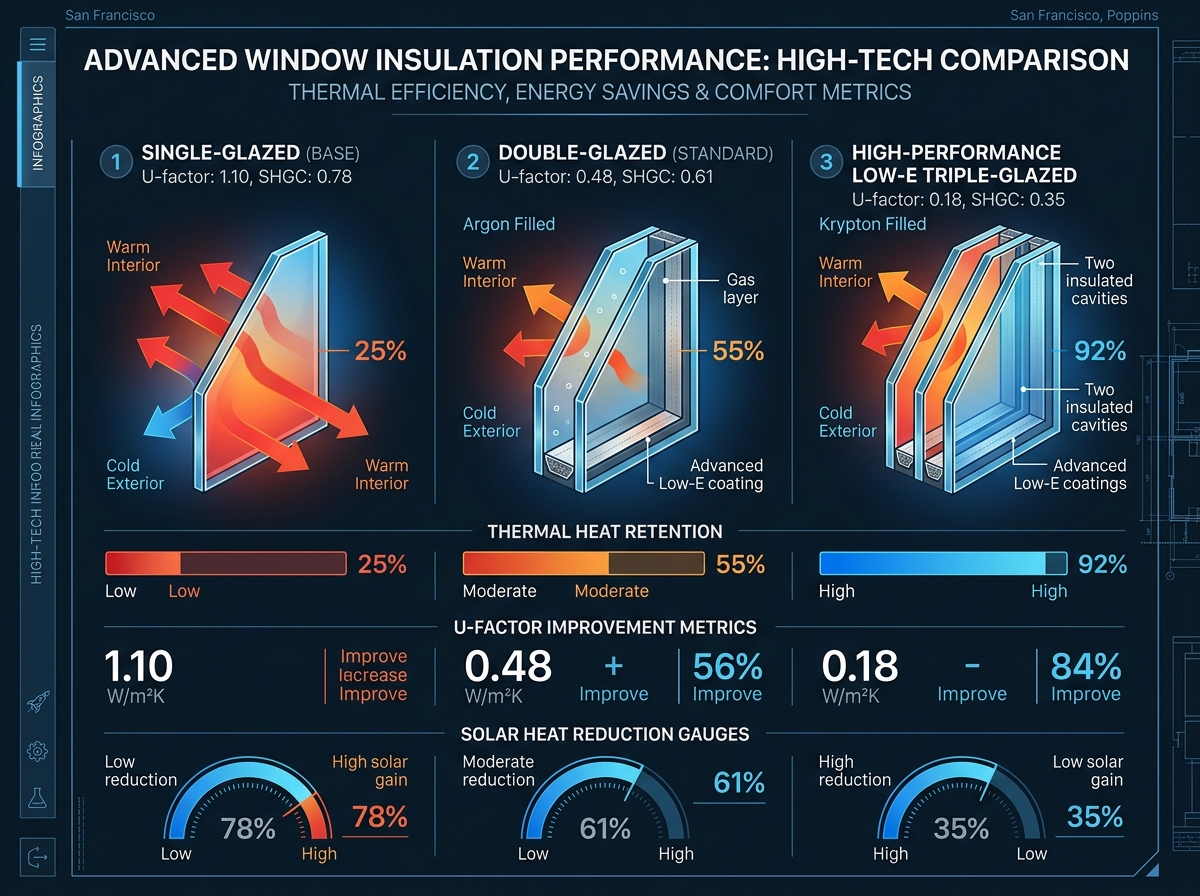
Choosing the right window upgrade requires comparing optical and thermal metrics across multiple retrofit options.
Standard solar films offer excellent summer cooling relief but provide virtually zero winter insulation. Total window replacement offers high insulation but demands substantial capital investment and extensive construction downtime.
| Glazing Configuration | Summer SHGC Rating | Winter U-Factor (BTU/hr-ft²-°F) | Winter Insulation Improvement | Visible Light Transmission (VLT) |
|---|---|---|---|---|
| Clear Single-Pane Glass (Baseline) | 0.86 | 1.04 | 0% (Baseline) | 89% |
| Single-Pane + Standard Solar Film | 0.28 | 0.98 | ~6% (Negligible) | 35% - 50% |
| Single-Pane + Low-E Insulating Film | 0.33 | 0.62 | 40% Improvement | 70% - 75% |
| Standard Clear Double-Pane IGU | 0.76 | 0.48 | 54% vs Single Pane | 79% |
| Double-Pane IGU + Low-E Film | 0.29 | 0.36 | 25% Boost to Existing IGU | 65% - 70% |
As the data shows, applying Low-E film to single-pane windows elevates their thermal insulating performance close to that of a factory double-pane unit. Applying it to existing double-pane glass provides near-triple-pane thermal performance without replacing window frames.
Building owners achieve measurable green building benefits while avoiding the steep financial costs and landfill waste of full window replacement.
Understanding how Low-E films perform requires examining the two core fenestration engineering metrics: U-factor and SHGC.
U-factor measures the rate of non-solar heat transfer through a window assembly. A lower U-factor indicates superior insulating capability against winter heat loss.
The Solar Heat Gain Coefficient (SHGC) measures the fraction of solar radiation admitted through a window. A lower SHGC signifies greater protection against summer solar heat gain.
Single-pane commercial windows are common in older office buildings, educational facilities, and historical properties. With a baseline U-factor of 1.04, these single glass panes offer almost no resistance to conductive and radiant heat flow.
Installing a commercial Low-E film reduces the center-of-glass U-factor down to 0.62. This substantial reduction cuts winter heat loss through the glass by approximately 40%.
For commercial properties facing strict municipal carbon caps, this non-invasive upgrade delivers immediate energy compliance. Deploying energy saving window films for office buildings allows property managers to enhance thermal performance while keeping tenants in place.
Modern commercial buildings constructed in recent decades typically feature dual-pane insulated glass units (IGUs). While dual-pane glass outperforms single-pane units, standard clear IGUs still permit significant radiant heat loss during extreme cold snaps.
Applying Low-E film to the interior surface of a standard double-pane window improves its U-factor from 0.48 down to 0.36. This performance upgrade bridges the gap between double-pane and costly triple-pane glazing.
The enhanced insulation reduces boiler runtime during freezing mornings while maintaining lower interior glass condensation risks. Protecting the building envelope on both sides ensures long-term operational resilience.
Historic thermal retrofits often forced occupants to accept heavy, mirror-like exterior reflections and dark interior rooms. Dark tinting reduces natural light levels, increasing reliance on artificial lighting and causing seasonal affective discomfort.
Modern Low-E films maintain high Visible Light Transmission (VLT) ratings between 65% and 75%. The film remains virtually invisible on the glass, preserving clear natural views and architectural authenticity.
Occupants enjoy bright, daylight-filled rooms while benefiting from advanced infrared and ultraviolet filtration. The optical neutrality makes Low-E film an ideal choice for both luxury residences and landmark commercial facades.
The financial return on investment for Low-E window film depends on geographic climate zones and local utility rate structures.
In regions characterized by high Heating Degree Days (HDD) such as New England, the Midwest, and the Mid-Atlantic, winter heating constitutes the largest share of annual energy expenses. In these mixed and cold climates, Low-E film delivers continuous financial savings every month of the year.
During summer, the film reduces cooling kilowatt-hour consumption by rejecting intense solar heat. In winter, it reduces therms of natural gas or kilowatt-hours of electric heat by locking radiant warmth indoors.
This dual-season savings model compresses the investment payback period to between 2 and 4 years for most commercial and residential applications. When compared to full window replacements that take 20 to 30 years to break even, Low-E film represents an exceptionally high-yield building upgrade.
Incentives such as utility energy efficiency rebates and federal tax deductions further accelerate project payback. Property owners capture fast, predictable returns while increasing the long-term capital value of their real estate assets.
Here are concise answers to common questions regarding Low-E window film technology and performance capabilities.
Yes, Low-E window film functions 24 hours a day regardless of cloud cover or sunlight. Because it targets internal far-infrared radiant heat produced by indoor heating systems and room objects, it continues reflecting warmth back inside through the darkest, coldest winter nights.
3M Thinsulate Climate Control 75 is one of the industry-leading Low-E window films on the market. It utilizes advanced smart-layer construction to deliver a 0.60 U-factor on single-pane glass and a 0.36 U-factor on double-pane glass, while maintaining a high 75% Visible Light Transmission.
When properly specified and professionally installed, Low-E window films are completely safe for double-pane insulated glass units. Professional installers conduct thorough glass-to-film compatibility assessments to ensure the selected film matches the glass thickness, tint, and framing type.
Professionally installed Low-E architectural window film has an expected lifespan of 15 to 20+ years. High-grade films are protected by durable scratch-resistant hardcoats and backed by comprehensive commercial and residential manufacturer warranties.
Upgrading your existing glass with high-performance Low-E architectural window film provides year-round thermal insulation and superior solar heat rejection. You can transform cold, drafty rooms and overheated perimeter zones into comfortable, energy-efficient spaces without the disruption and cost of window replacement.
Whether managing a commercial office building seeking lower operating costs or a homeowner looking to balance room temperatures, professional installation ensures maximum energy savings and optical clarity.
To discover how high-performance Low-E window film can upgrade your building envelope, contact the architectural fenestration specialists at American Window Film.

No Comments Yet
Let us know what you think