

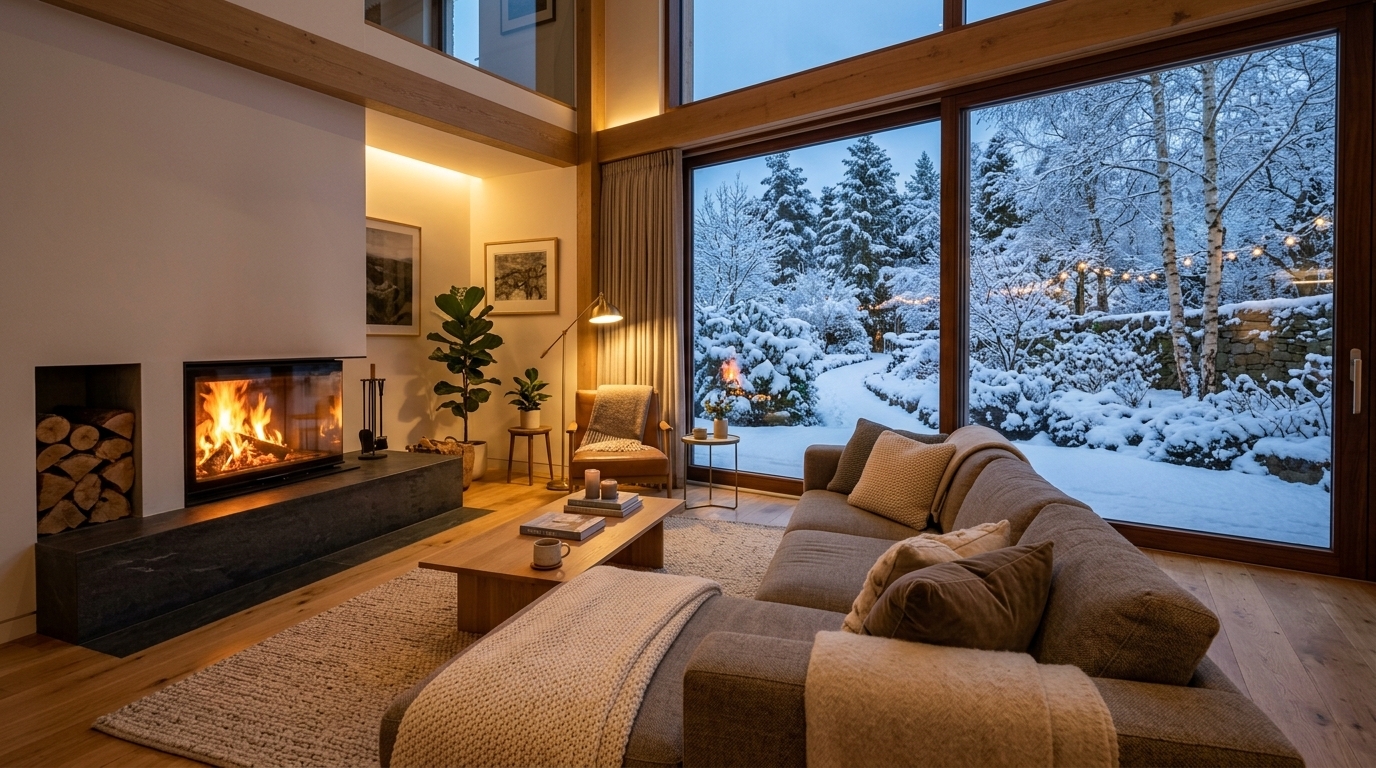
When freezing winter temperatures arrive, cold window glass becomes a major source of residential heat loss and drafty discomfort. Many homeowners crank up their thermostats to 72°F, yet living rooms and bedrooms near exterior windows remain uncomfortably chilly.
While most people associate window film strictly with summer heat rejection, advanced Low-Emissivity (Low-E) architectural window films deliver powerful winter thermal insulation that cuts heating costs significantly.
Windows represent the thinnest, most thermally conductive element of any residential building envelope. Heated indoor air naturally seeks equilibrium with frigid outdoor air, escaping rapidly through untreated glass panes.
Understanding how winter heat loss occurs clarifies why standard windows drive up furnace and heat pump operating costs.
Winter thermal energy escapes through windows via two distinct physical mechanisms: conduction and radiation. Conduction occurs when warm indoor air touches cold window glass, transferring its thermal energy directly through the glass substrate to the outdoors.
Radiant heat loss is even more significant. Indoor furnaces, radiators, furniture, and human bodies emit invisible radiant far-infrared warmth that travels across rooms.
Standard architectural float glass absorbs this radiant heat and radiates it outside into the winter night. This continuous radiant siphon cools interior living spaces rapidly, forcing heating systems to cycle constantly.
Homeowners can explore broader residential insulation retrofits in our guide on achieving an energy-efficient home without major renovation.
Standard solar control window films are engineered specifically for warm climates, utilizing dyed or metallized layers to bounce away summer solar radiation. While effective at blocking solar heat, traditional solar films do very little to prevent indoor furnace heat from escaping during winter.
Low-Emissivity (Low-E) window films are engineered with specialized microscopic metallic layers, often incorporating precious metals like silver or gold. These atomic coatings possess an exceptionally low emissivity rating, meaning they do not emit or radiate absorbed heat outward.
Instead of allowing radiant indoor warmth to escape, Low-E film acts like an invisible thermal mirror, reflecting up to forty percent of radiant furnace heat back into your living space.
To discover the full scientific engineering behind Low-E coatings, read our technical report on how Low-E window film works.
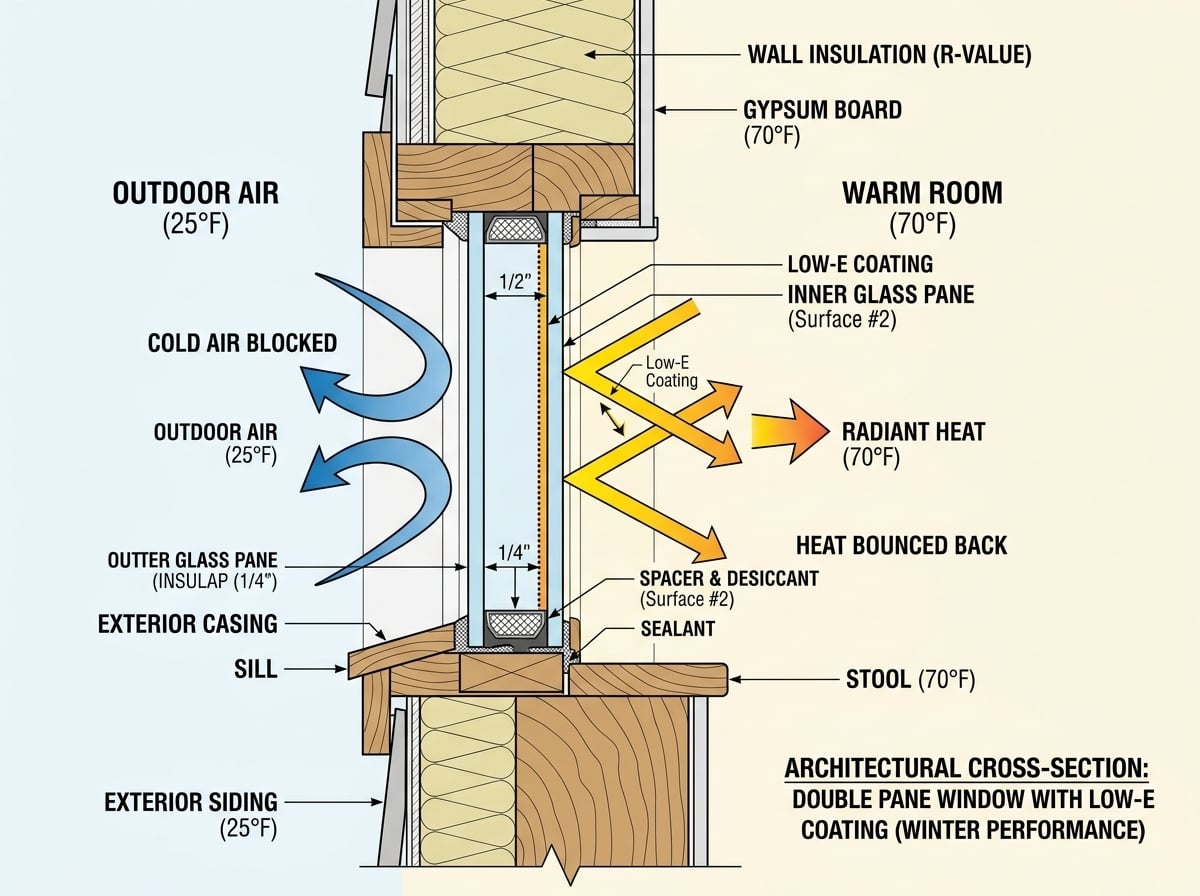
Installing Low-E architectural window film upgrades the insulating capability of existing windows without requiring costly glass unit replacement. The film functions as an invisible thermal blanket permanently bonded to the interior glass pane.
This passive retrofit provides continuous comfort improvements from the moment installation is complete.
Emissivity measures a surface ability to radiate thermal energy compared to a theoretical blackbody. Standard architectural window glass has a high emissivity rating of approximately 0.84, meaning it readily radiates heat to cold outdoor environments.
Premium insulating window films, such as 3M Thinsulate Climate Control Series, reduce the glass surface emissivity down to approximately 0.07.
When radiant heat generated by your heating system travels toward the window, the Low-E layer reflects ninety-three percent of that infrared energy back into the room. Indoor living spaces retain their cozy warmth longer, reducing the runtime of central furnaces, boilers, and heat pumps.
In thermal engineering, window insulation performance is measured by its U-value, which quantifies the rate of non-solar heat transfer through an assembly. A lower U-value signifies superior insulating performance and less heat loss.
A standard clear single-pane window has a poor U-value of approximately 1.04. Applying high-performance Low-E insulating film lowers that U-value to approximately 0.60, effectively matching the insulating performance of a standard double-pane window.
When applied to existing double-pane insulated glass units (IGUs), Low-E film lowers the U-value from 0.48 down to approximately 0.33, delivering thermal insulation comparable to modern triple-pane glazing.
Homeowners achieve the thermal comfort of complete window replacement at a fraction of the cost.
| Insulation Method | Winter Heat Loss Reduction | Visual Clarity & Optics | Service Lifespan | Summer Heat Rejection |
|---|---|---|---|---|
| Low-E Insulating Window Film | Up to 40% radiant heat retained | 100% Optically clear, invisible glass | 15 – 20+ years (Permanent) | Yes (Blocks up to 55% summer heat) |
| Plastic Shrink-Wrap Kits | 10% – 15% (Stops air drafts only) | Wrinkled, cloudy plastic film | Single season (Must remove in spring) | No summer benefit |
| Heavy Thermal Drapes | 10% – 20% (When closed tightly) | Blocks 100% daylight and views | 5 – 10 years (Fabric wear) | Moderate (Darkens room) |
| Full Window Replacement | 35% – 50% heat loss reduction | Clear architectural glazing | 20 – 30 years | Yes (High capital expense) |
Evaluating these comparative metrics reveals why permanent Low-E film represents the most elegant and cost-effective winter envelope improvement.
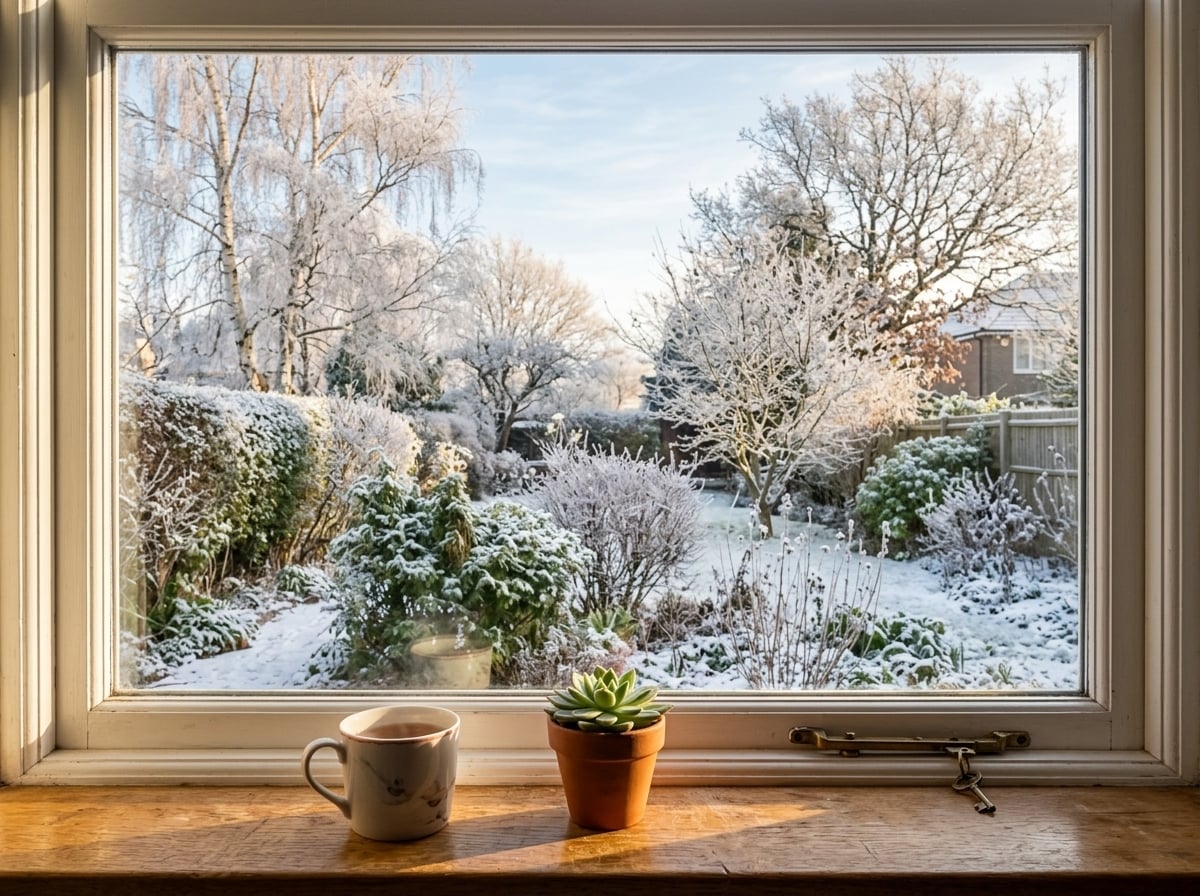
Many homeowners complain about mysterious cold drafts near windows, even when window frames are fully caulked and weather-stripped. In most cases, these drafts are not air leaks, but natural convective currents driven by cold glass.
Low-E insulating window film neutralizes these convective drafts while solving damaging window condensation.
When warm indoor air contacts a freezing, uninsulated window pane, the air chills rapidly. Because cold air is denser than warm air, it drops rapidly toward the floor, pulling more warm air down behind it.
This rapid downward airflow creates a continuous rolling draft along the base of the window, making the room feel like an open window is nearby.
By maintaining higher interior glass surface temperatures, Low-E window film prevents indoor air from cooling upon contact with the pane. The convective cycle stops, eliminating cold floor drafts and restoring comfortable living conditions right next to glass.
Winter condensation occurs when humid indoor air contacts cold window glass that has dropped below the indoor dew point temperature. Water droplets form across the lower edges of the glass, eventually running down into wooden sills and drywall.
Over time, chronic window sweat causes peeling paint, wood rot, and hazardous black mold growth along window casings.
Low-E insulating window film raises the interior glass surface temperature by several degrees. By keeping the glass above the dew point, the film significantly reduces winter moisture formation, protecting historic wood frames and indoor air quality.
Every autumn, millions of homeowners purchase temporary plastic shrink-wrap kits, taping flimsy plastic sheets across window moldings with double-sided tape and shrinking them with hair dryers.
While shrink-wrap creates a dead-air space that slows air infiltration, the plastic film looks wrinkled, obstructs outdoor views, and damages painted wood trim when peeled off in spring.
Professional Low-E architectural window film is a permanent, optically pristine installation that bonds directly to the glass substrate. It never clouds, sags, or wrinkles, and it allows full operation of window sashes throughout the year.
Unlike single-season plastic wrap, architectural Low-E film functions continuously for fifteen to twenty years, providing year-round thermal benefits.
The true beauty of Low-E window film is its dual-season climate intelligence. It works continuously through all four seasons to optimize indoor temperatures and minimize HVAC expenses.
During sweltering summer months, the specialized metallic coating reflects up to fifty-five percent of incoming solar heat, keeping living spaces cool and lowering air conditioning bills.
During freezing winter months, that same coating reflects interior radiant furnace heat back into the home, preventing heat loss and easing the burden on your heating system.
Homeowners enjoy year-round utility savings and superior comfort without ever needing to adjust or maintain the film. Learn more about solar heat reduction strategies in our guide to best residential window film for heat reduction.
Here are answers to common questions homeowners ask when considering Low-E window film for winter thermal insulation.
These practical details help set clear expectations for cold-weather performance.
No, advanced Low-E architectural window films are engineered with high visible light transmittance, typically allowing sixty to seventy percent of natural daylight to enter. The film appears virtually invisible once applied to glass, preserving bright, open outdoor views.
Your rooms will not feel dim or dark during overcast winter days.
Homeowners typically experience annual heating and cooling utility savings between ten and twenty percent after retrofitting windows with Low-E film. In homes with single-pane windows or extensive floor-to-ceiling glass, savings can reach twenty-five percent.
The resulting energy cost reductions deliver complete project payback within three to five winter seasons.
Yes, Low-E window film is an exceptional solution for historic preservation properties. Landmark building regulations strictly forbid replacing original wavy glass or historic wood sashes with modern vinyl double-pane windows.
Applying Low-E film to the interior surface of historic single-pane glass upgrades thermal insulation to modern double-pane standards without altering the historic exterior appearance.
No, indoor houseplants thrive near windows treated with Low-E architectural film. Houseplants primarily utilize red and blue wavelengths within the visible light spectrum for photosynthesis, both of which pass through Low-E film easily.
The film blocks damaging ultraviolet radiation, protecting delicate foliage from leaf scorch while maintaining healthy growing conditions.
You do not have to endure freezing drafts, skyrocketing heating bills, or foggy, sweating windows this winter. High-performance Low-E insulating architectural window film transforms drafty residential glass into high-efficiency thermal barriers that keep your home warm and cozy.
Certified window film technicians evaluate your window construction, analyze thermal performance, and provide precision installations backed by comprehensive manufacturer warranties. To schedule a complimentary in-home thermal evaluation and free estimate, contact American Window Film.

No Comments Yet
Let us know what you think