

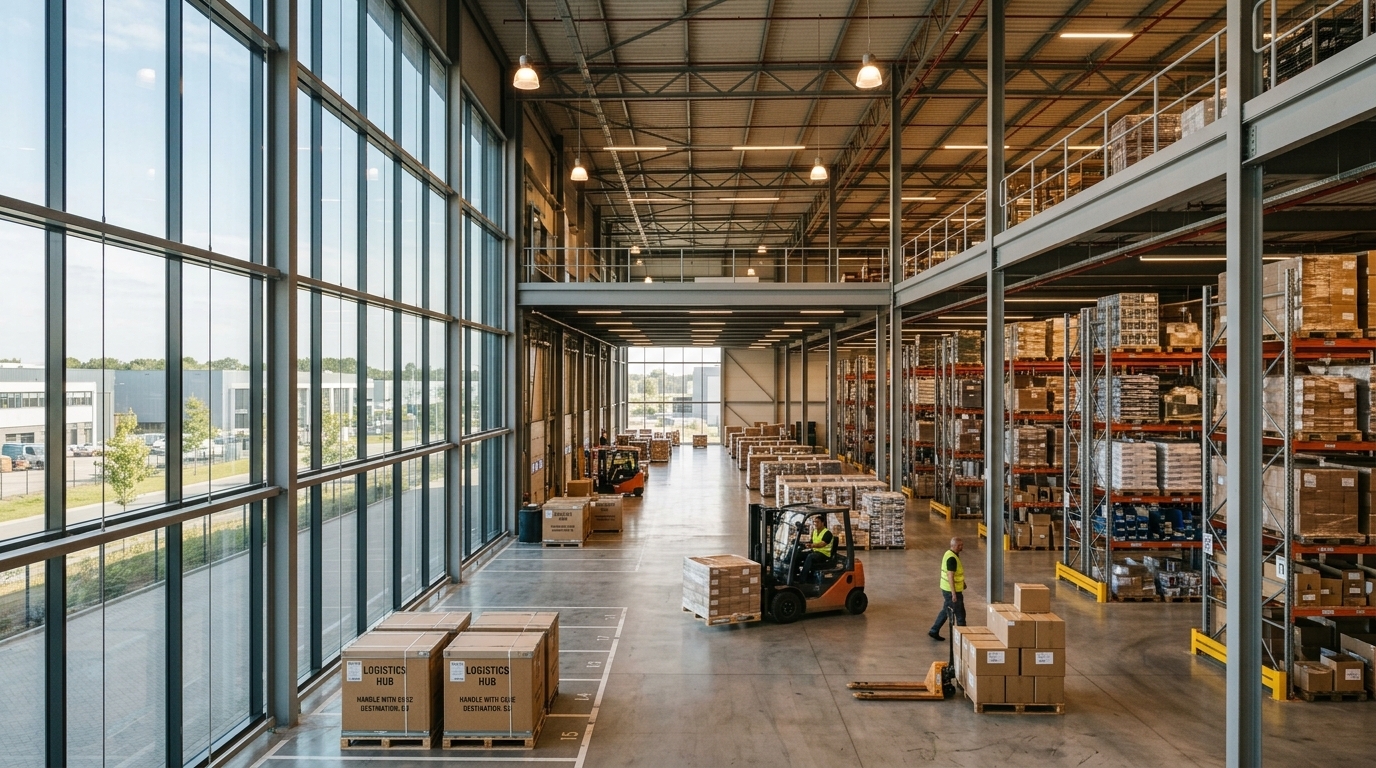
Warehouses with expansive glass walls and skylights face a brutal reality every summer. Those large glass areas that provide natural daylight also act as solar ovens, driving interior temperatures up by 15 to 20 degrees near the windows.
The result is a facility split into two climate zones: scorching hot near the glass and moderately cooled everywhere else. HVAC systems work overtime trying to compensate, and energy bills spike month after month.
For facilities managers juggling employee comfort, inventory protection, and operational costs, the question is urgent. Can you keep the benefits of natural light without the punishing heat gain?
The answer is yes. Solar control window film offers a cost-effective retrofit that rejects solar heat at the glass surface before it floods the workspace.
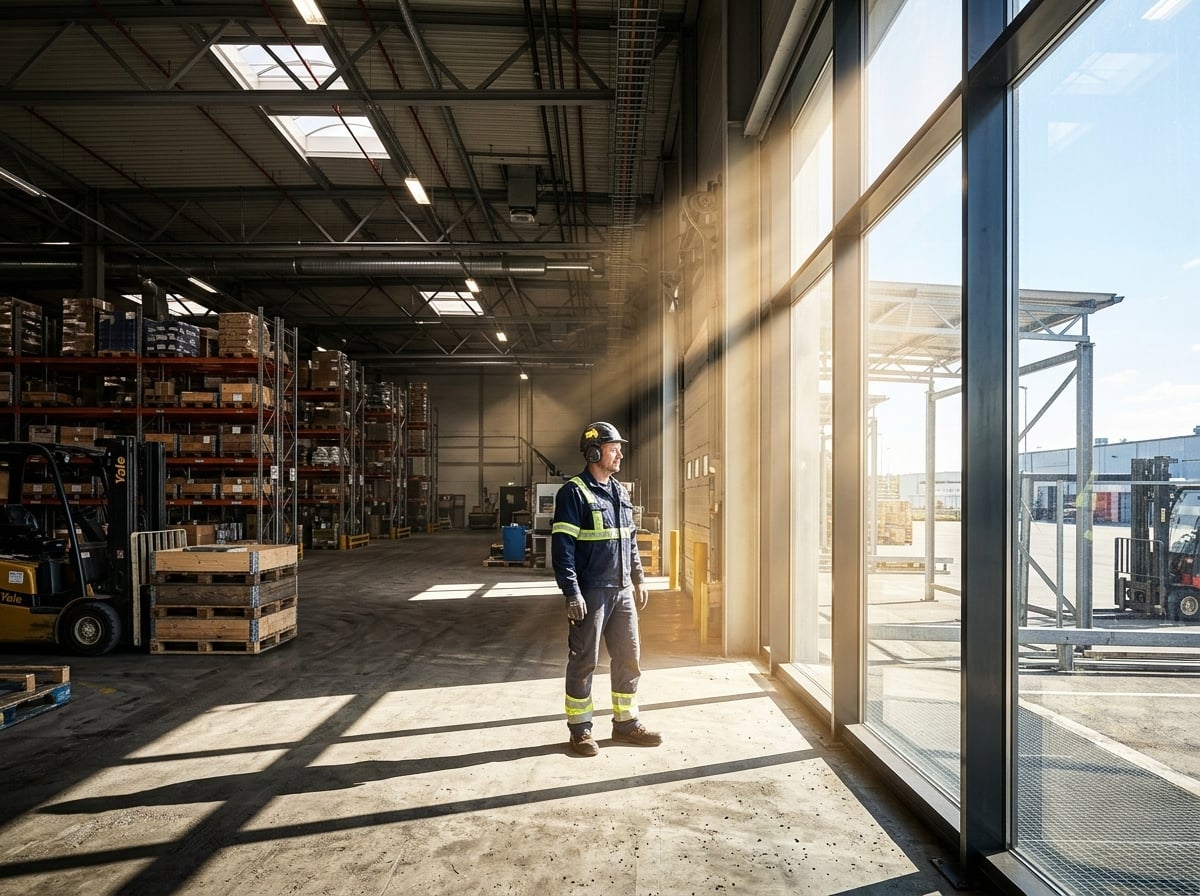
Solar control window film is a multi-layer polyester laminate applied directly to the interior surface of existing glass. It works by reflecting and absorbing infrared solar energy before it enters the building.
High-performance films reject 50% to 79% of total solar energy. That means the glass itself stops radiating heat into the workspace, even on peak summer afternoons.
The key to effective warehouse heat reduction is targeting the infrared spectrum. Infrared radiation accounts for roughly 53% of the sun's energy output, and it is the primary driver of solar heat gain through glass.
Advanced ceramic and spectrally selective films are engineered to block infrared wavelengths while still transmitting visible light. This lets your facility stay bright without the greenhouse effect that makes large glass areas unbearable.
Hot spots are the number one comfort complaint in warehouses with oversized glass. Workers stationed near windows or under skylights can experience temperatures 15 to 20 degrees hotter than colleagues deeper inside the building.
Window film eliminates these hot zones by creating a consistent thermal barrier across every pane. The temperature gradient between the glass perimeter and the interior core of the building narrows dramatically.
Not every film is suited for the demands of a warehouse environment. The right choice depends on your facility's orientation, glass type, and primary pain points.
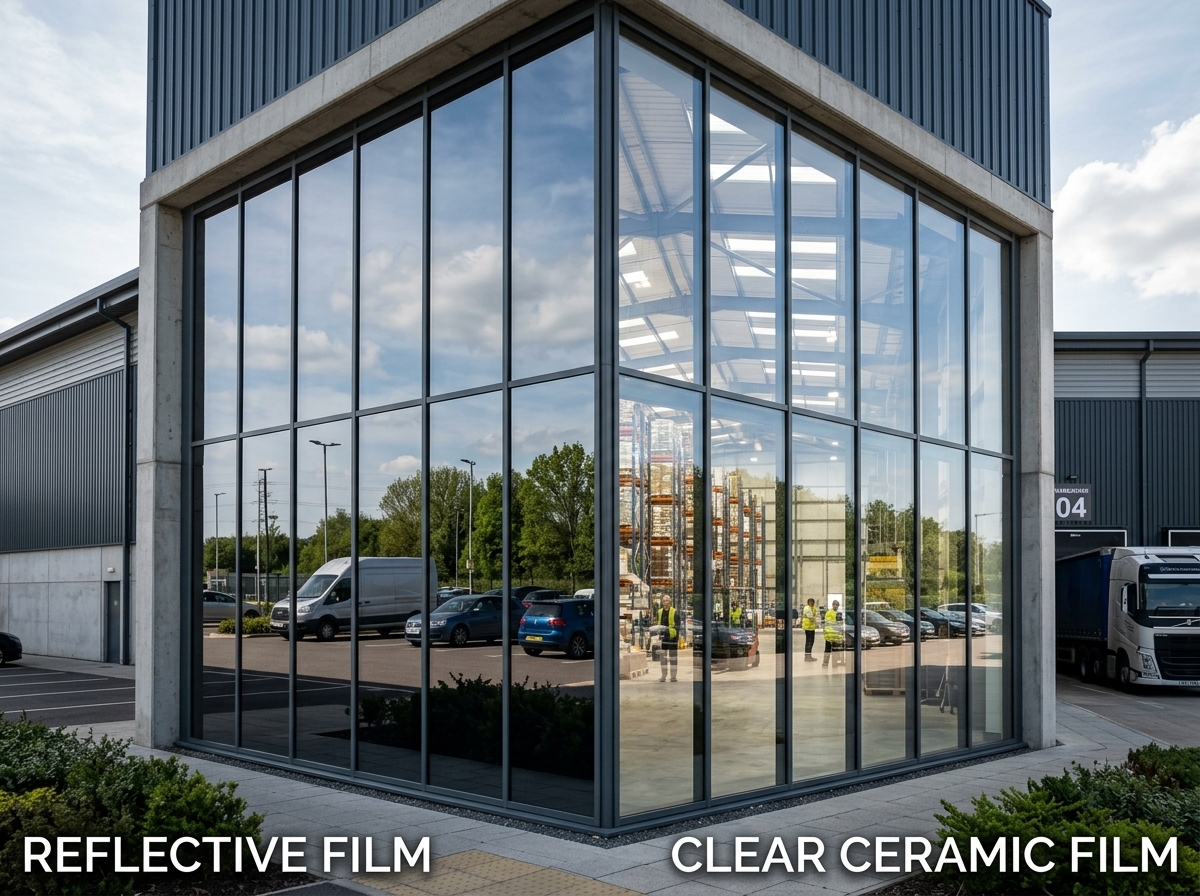
Ceramic films use non-metallic nano-ceramic technology to block infrared heat without adding a reflective or overly tinted appearance. They reject up to 79% of solar heat while maintaining high visible light transmission.
This makes them ideal for warehouses that need to preserve natural daylight for worker safety and operational visibility. They also will not interfere with radio signals, scanners, or electronic equipment, which is a critical consideration for modern logistics facilities.
Warehouses with large south-facing or west-facing glass walls absorb extreme solar loads throughout the day. Reflective films provide the highest level of heat rejection by bouncing solar energy away from the building exterior.
Dual-reflective films take this a step further. They offer a reflective exterior surface for maximum heat rejection during the day while keeping the interior view clear and non-mirrored at night.
Warehouses in climates with extreme seasonal swings benefit from low-emissivity (Low-E) films. These films reject solar heat in summer and retain interior warmth during winter by reflecting radiant heat back into the building.
This year-round performance reduces both cooling and heating costs, making Low-E film a strong choice for warehouses operating in northern states or regions with wide temperature swings.
The financial case for warehouse window film is straightforward. When you reduce the solar heat load entering through glass, your cooling systems do less work.
Most commercial facilities report cooling cost reductions of 15% to 30% after installing solar control film. For a warehouse running industrial HVAC systems across tens of thousands of square feet, those percentages translate into thousands of dollars in annual savings.
The return on investment typically lands between 2 and 5 years, depending on the size of the glass area and local energy rates. After that payback period, every dollar saved on energy is pure operational margin.
Window film also reduces peak demand charges. By flattening the cooling load during afternoon hours, your facility avoids the costly demand spikes that utility companies penalize most aggressively.
Glare is more than a nuisance in a warehouse. It is a safety and productivity problem.
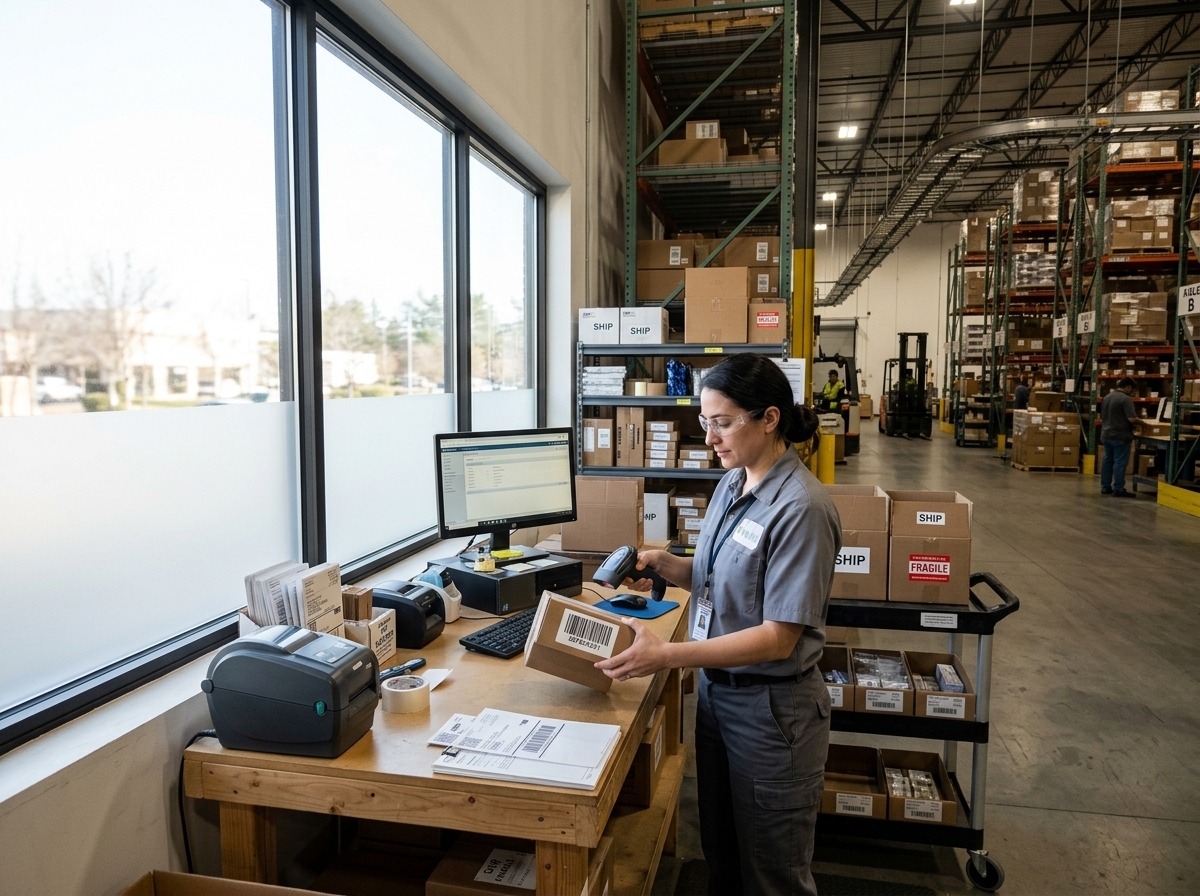
Harsh sunlight streaming through large glass areas creates blinding reflections on warehouse floors, loading docks, barcode scanners, and computer screens. Workers squint, make scanning errors, and slow down during peak sun hours.
Solar control films filter visible light to reduce glare by 40% to 70% without plunging the interior into darkness. The result is an evenly lit workspace where employees can read labels, operate forklifts safely, and use digital equipment without constant screen adjustments.
For warehouses running pick-and-pack operations or quality control stations near windows, glare reduction alone justifies the investment. Fewer scanning errors and faster fulfillment directly impact throughput and accuracy metrics.
Ultraviolet radiation silently destroys inventory. UV rays cause plastics to become brittle, fade printed packaging, degrade adhesive labels, and weaken cardboard containers over time.
High-quality window films block up to 99% of harmful UV radiation. That level of protection is comparable to an SPF rating of over 1,000 on every pane of glass in your facility.
For warehouses storing pharmaceutical products, food packaging, electronics, or any UV-sensitive materials, this protection preserves product quality and reduces shrinkage from sun-damaged goods.
UV blocking also extends the lifespan of interior finishes, epoxy floors, and warehouse equipment. Forklifts, conveyor belts, and safety signage near windows last longer when they are not baking in unfiltered sunlight every day.
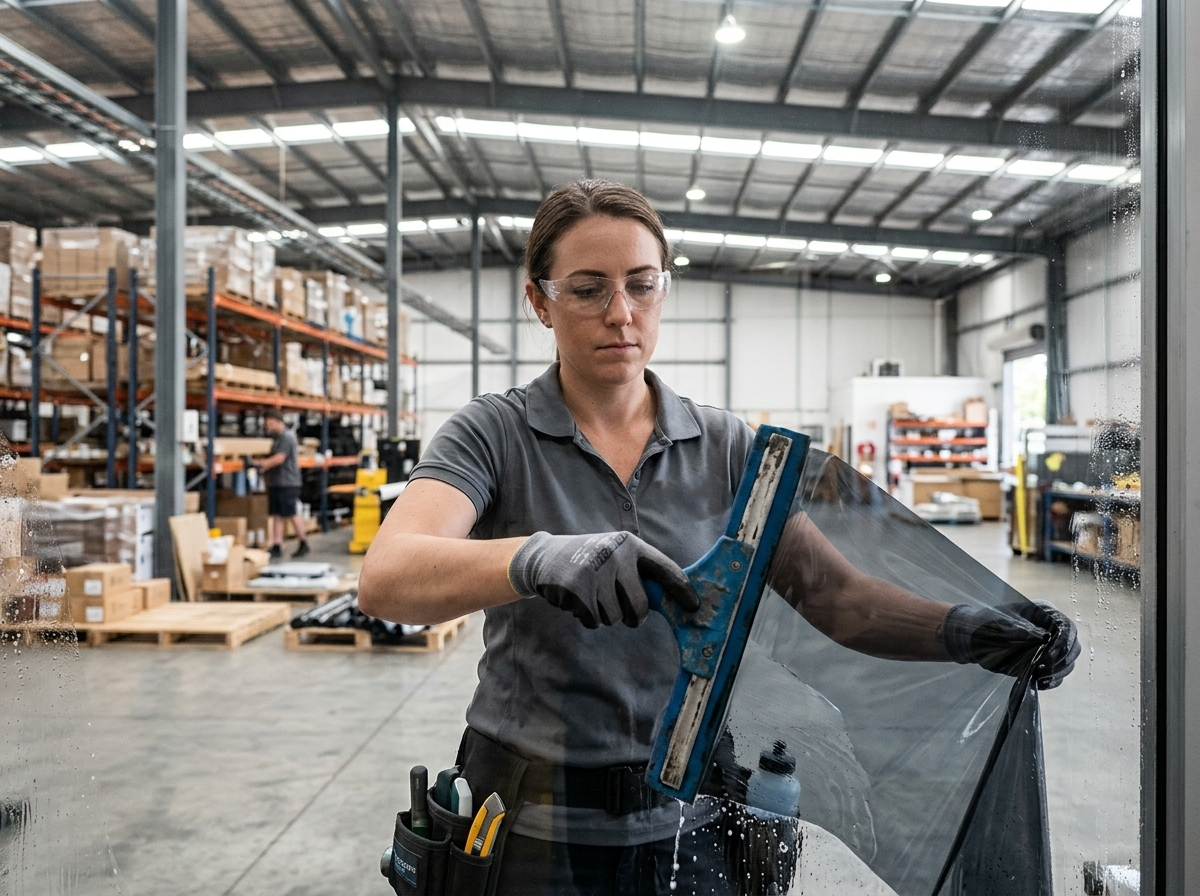
Warehouse window film is not a DIY project. Large commercial panes require professional installation to ensure a clean, bubble-free finish that performs as specified for years.
Warehouse glass panels are often 4 feet wide or larger. Applying film to panes this size requires specialized tools, controlled environments, and trained technicians who can handle continuous film runs without wrinkles or trapped air.
A botched installation creates visible defects and can void manufacturer warranties. Professional installers also evaluate the glass type and condition to ensure compatibility, since certain films can cause thermal stress cracking on older or improperly sealed glass.
One of the biggest advantages of window film is the speed of installation. A professional crew can film an entire warehouse wall in a single shift, and your operations continue without interruption.
There is no construction noise, no scaffolding blocking aisles, and no downtime. Compare that to replacing windows, which takes weeks and disrupts loading dock access, climate control, and security during the process.
Commercial-grade window films are engineered for durability. Most carry manufacturer warranties of 10 to 15 years and feature scratch-resistant coatings that stand up to the dust, fumes, and occasional contact that warehouse environments produce.
Maintenance is minimal. A periodic wipe-down with a soft cloth and mild soap solution keeps the film performing at full capacity. There are no moving parts, no filters to replace, and no annual service contracts required.
Large glass areas in warehouses present a security vulnerability. Standard glass shatters on impact, leaving your facility exposed to break-ins, vandalism, or weather damage.
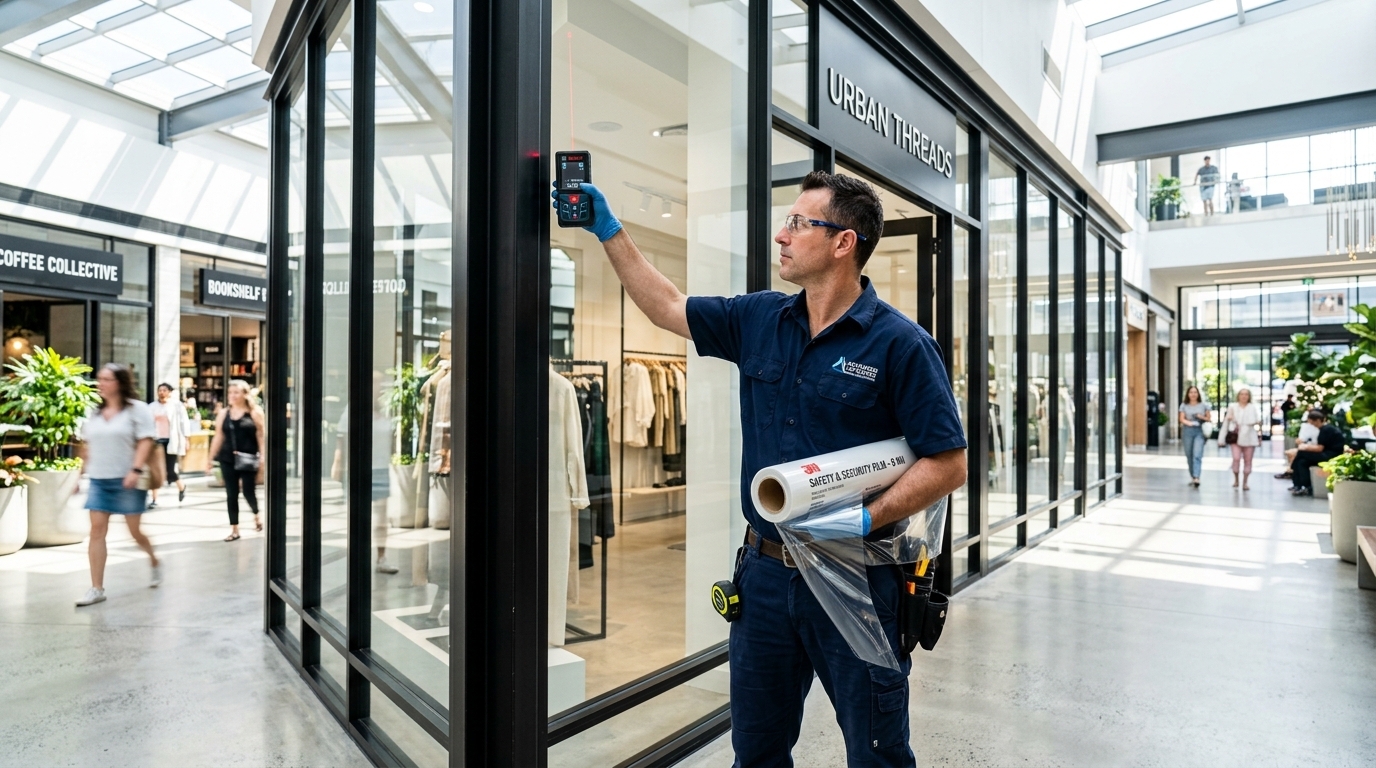
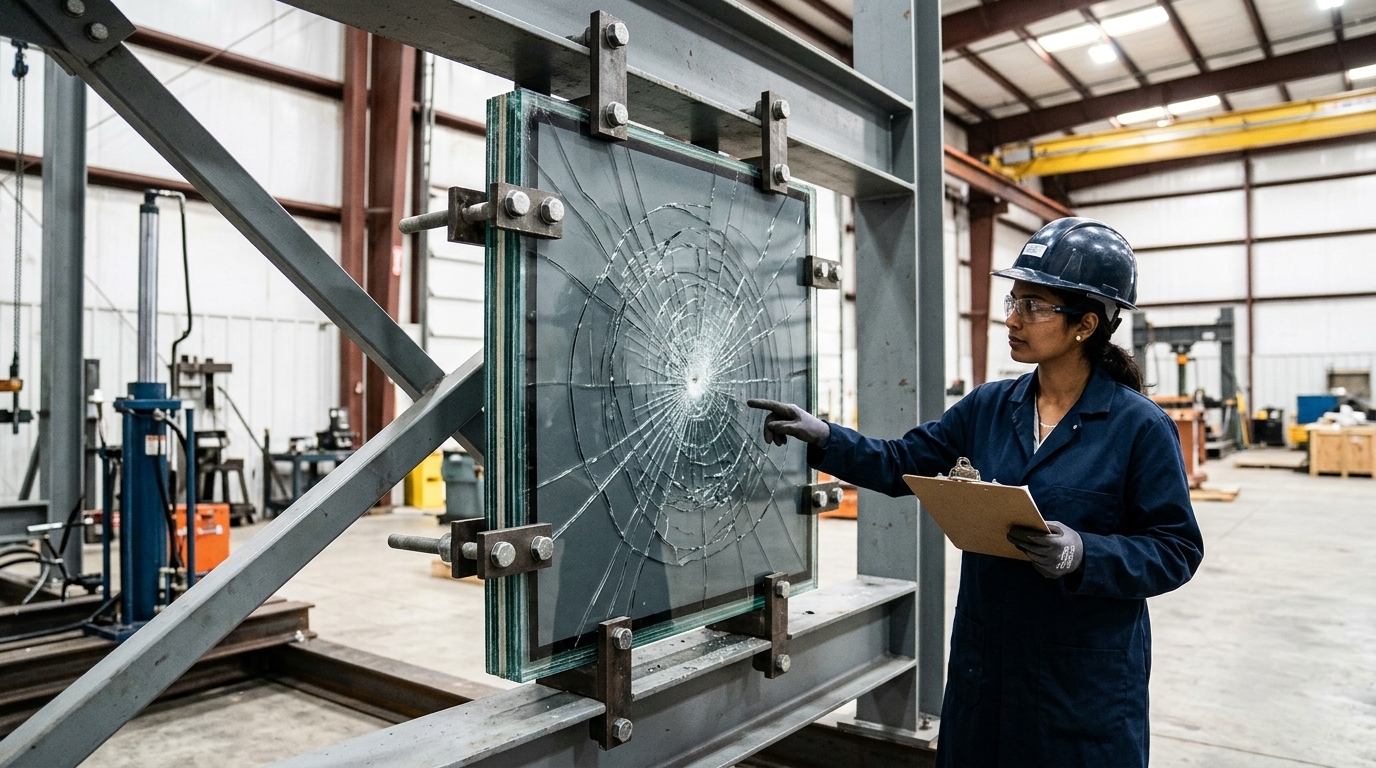
Safety and security window film bonds to glass with a powerful adhesive that holds shattered panes together on impact. Even if the glass cracks, the film prevents it from collapsing inward, blocking forced entry and protecting workers from flying shards.
For warehouses in high-crime areas or regions prone to severe weather, combining solar control film with a security-rated layer provides dual-purpose protection: climate control and physical security in a single application.
Pricing depends on the type of film, the total square footage of glass, and installation complexity. Most warehouse projects fall between $6 and $15 per square foot installed. Given the energy savings and extended equipment life, most facilities recoup the cost within 2 to 5 years.
No. Modern ceramic and spectrally selective films are designed to reject heat without significantly reducing visible light. Films with a visible light transmission (VLT) of 50% to 70% maintain a bright, naturally lit interior while cutting the solar heat load dramatically.
Yes. Skylight film is one of the most impactful applications in a warehouse because skylights transmit solar heat directly downward onto workers and inventory. Films designed for overhead glass use specialized adhesives that handle the unique thermal stresses of skylight installations.
Commercial-grade films typically last 15 to 20 years with proper care. Most reputable manufacturers back their products with warranties of 10 to 15 years, covering defects in materials and adhesion.
Ceramic and spectrally selective films do not contain metals, so they will not interfere with Wi-Fi signals, RFID scanners, barcode readers, or radio communications. Metallic reflective films can cause signal interference, so discuss your facility's technology needs with your installer before selecting a product.
Window film transforms warehouses with large glass areas from energy-draining hot zones into comfortable, efficient workspaces. The combination of heat rejection, glare reduction, UV protection, and security makes it one of the highest-ROI upgrades a facilities manager can make for a commercial building.
Stop losing money to excessive cooling costs and compromised worker comfort. Contact American Window Film today for a free consultation and learn how quickly your warehouse can start performing at its best.

No Comments Yet
Let us know what you think