

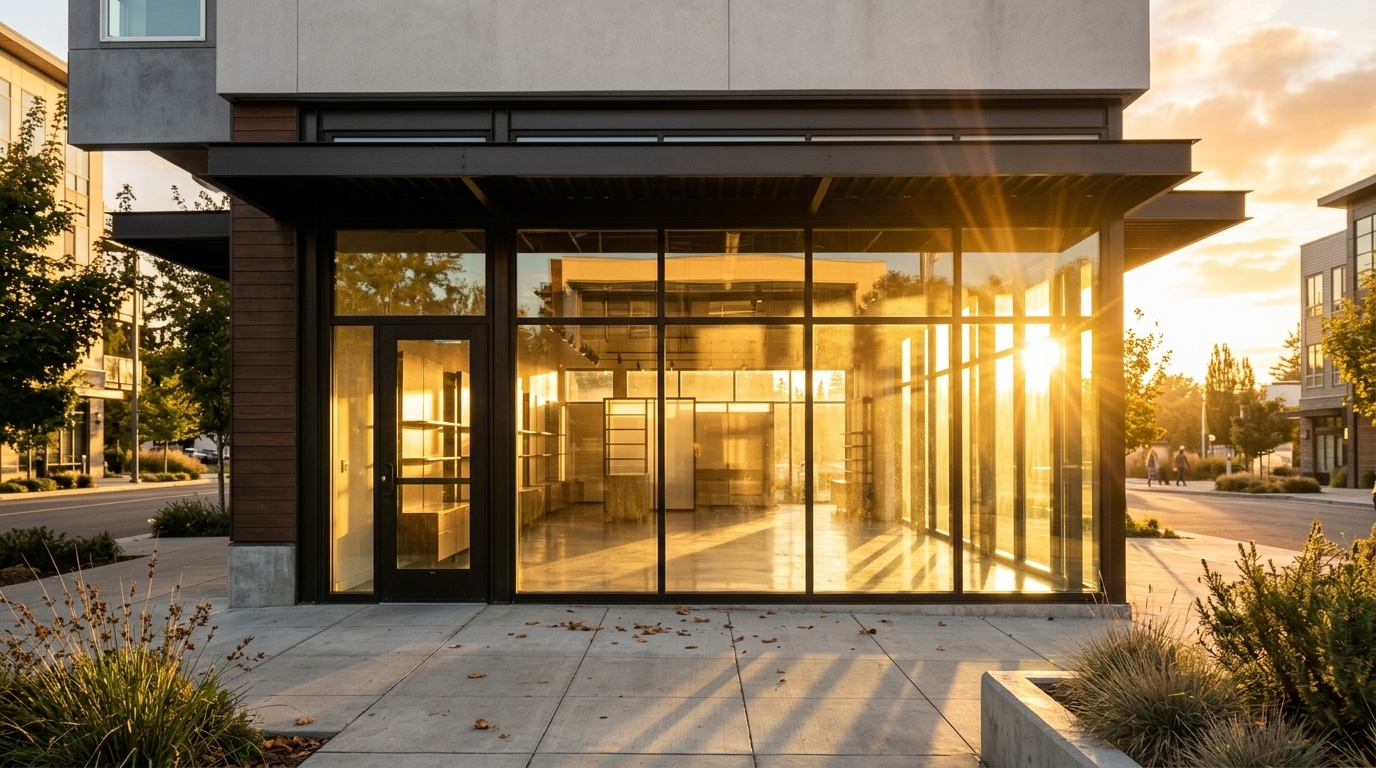
Every retail store owner or manager has felt it. The morning starts fine, maybe even pleasant. Then the clock hits 1 PM and your storefront turns into a greenhouse.
Customers fidget. Employees complain. Your air conditioner sounds like it is fighting for its life.
The culprit is hiding in plain sight: your windows. Untreated commercial glass lets in a massive amount of solar radiation, especially during the afternoon when the sun drops lower in the sky and strikes your storefront at a direct angle.
This is not a minor annoyance. It affects your energy bills, your customer experience, and even your merchandise.
Let's break down exactly why this happens, what the science looks like, and how to solve it permanently without blocking your storefront visibility.
Solar heat gain is the process where sunlight passes through glass and gets absorbed by surfaces inside your space. Those surfaces (floors, walls, product displays, countertops) convert that light energy into heat.
Here is the problem: that heat cannot escape back through the glass easily. Your storefront essentially becomes a sealed box of rising temperatures.
Standard clear commercial glass has a Solar Heat Gain Coefficient (SHGC) of around 0.86. That means 86% of the sun's heat energy passes directly through the glass and into your store.
During morning hours, the sun angle is steep and indirect. By afternoon, the sun is lower and the rays hit west-facing and south-facing glass nearly head-on. That shift is the reason the same storefront that felt comfortable at 10 AM becomes unbearable by 2 PM.
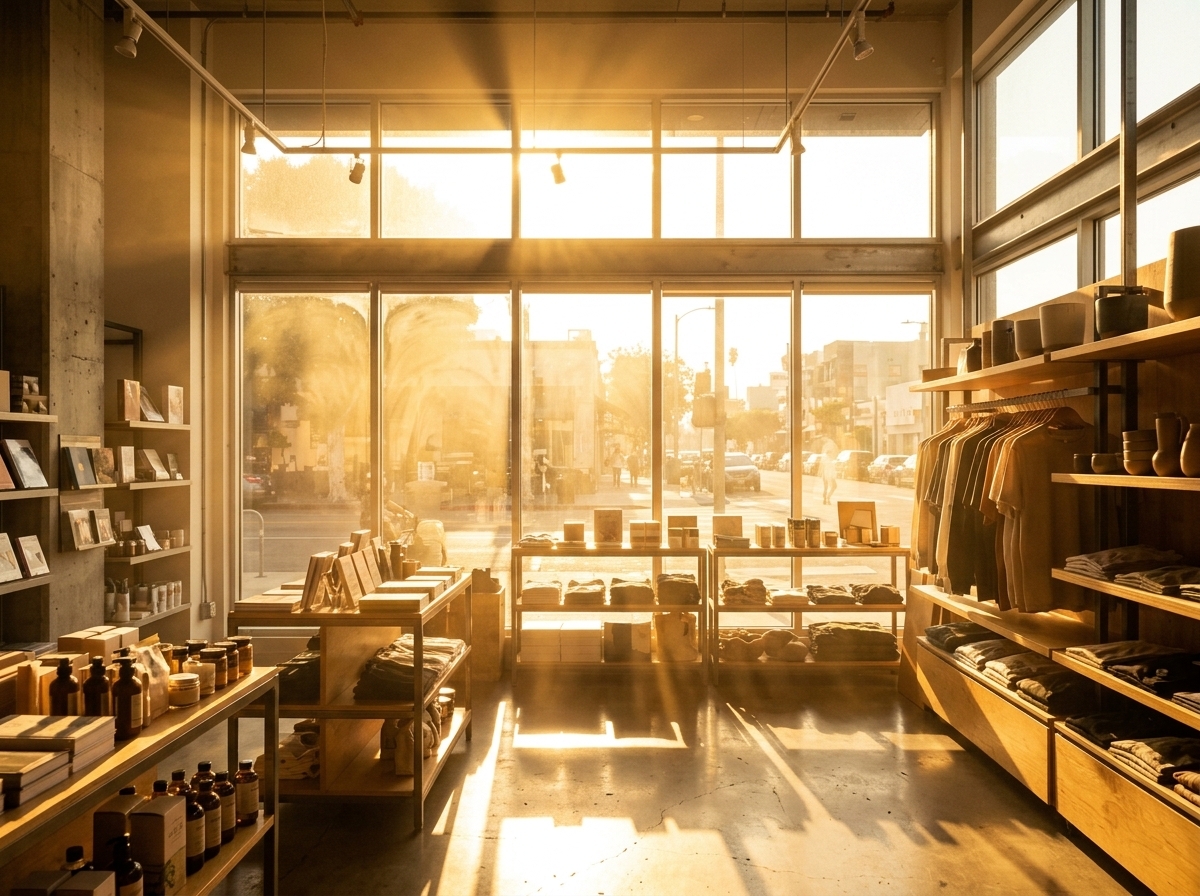
If your storefront faces west, you are dealing with the most intense solar exposure of the day. The afternoon sun sits low on the horizon and sends direct, concentrated rays straight through your glass.
This orientation creates two compounding problems at once.
Radiant heat spikes. The afternoon sun delivers peak infrared radiation exactly when outside air temperatures are also at their highest. Your HVAC system gets hit from both directions.
Extended glare windows. West-facing glass catches direct sun for several continuous hours (roughly 1 PM to sunset), unlike south-facing glass where the sun passes overhead more quickly.
South-facing storefronts still experience significant heat gain, but the sun's higher angle means the exposure is less direct. West-facing glass takes the full brunt of the lowest, most intense afternoon rays.
Heat is only half the story. The other half is glare, and it creates a completely different set of problems.
When low-angle afternoon sunlight hits your storefront glass, it floods the interior with harsh, blinding light. That intensity washes out product displays, makes digital screens unreadable, and creates an environment that feels hostile rather than welcoming.
Customers who cannot see your merchandise clearly will leave faster. Employees working near windows experience eye strain, headaches, and reduced productivity. Point-of-sale screens become unusable when sunlight hits them directly.
Glare also creates dramatic temperature contrasts within your space. The area near the windows can be 10 to 15 degrees warmer than the back of the store, making the environment feel uneven and uncomfortable no matter where your thermostat is set.
Your air conditioning system was designed to maintain a consistent interior temperature. When afternoon solar heat gain sends your storefront temperatures surging, your HVAC system goes into overdrive to compensate.
This creates a costly cycle:
Commercial buildings lose up to 40% of their cooling energy through untreated windows. For a storefront with large glass facades, that percentage can climb even higher because the glass-to-wall ratio is so much greater than a typical office building.
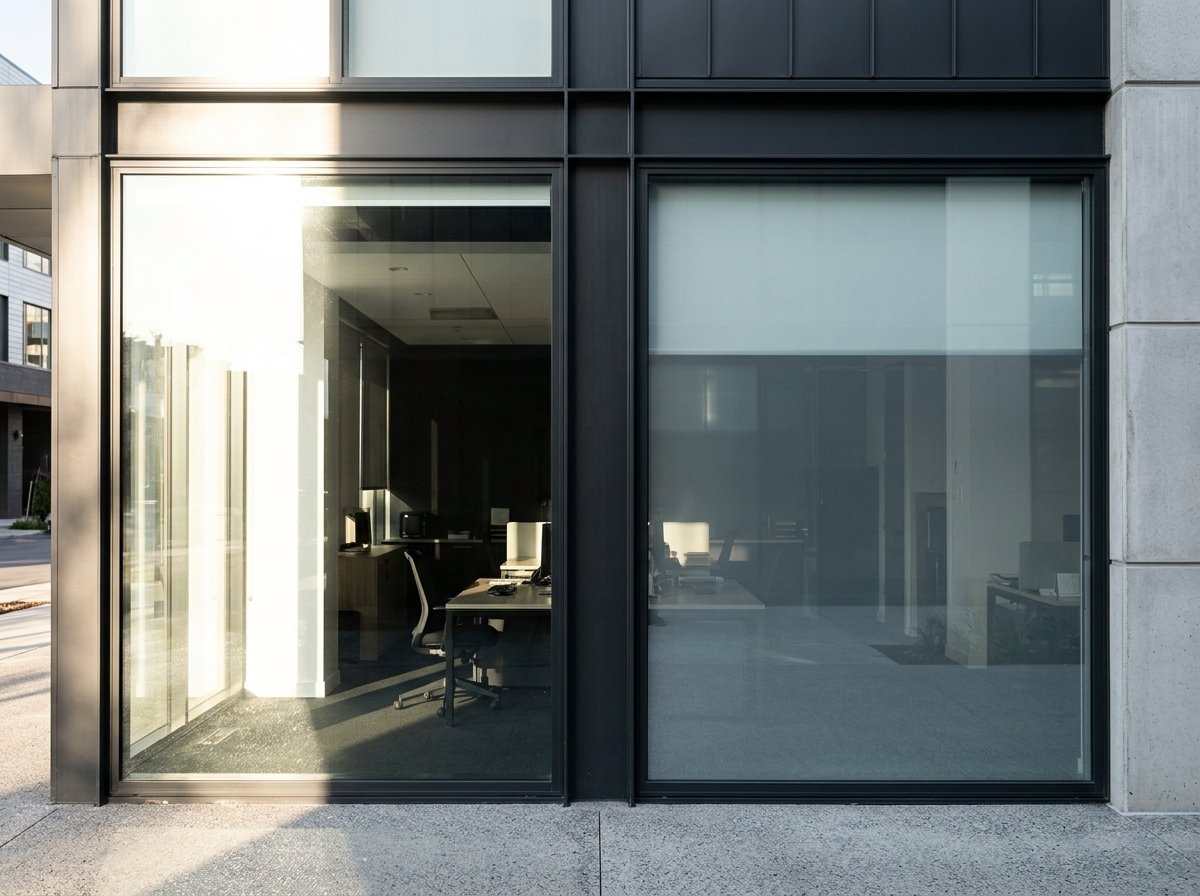
Solar control window film is a thin, multi-layered polyester film applied directly to the interior surface of your existing glass. It works by selectively filtering the solar spectrum before sunlight fully enters your space.
Here is what each layer targets:
The result is a storefront that looks the same from the outside but feels dramatically different on the inside. Temperatures stabilize, glare drops, and your HVAC system can finally maintain a consistent climate.
Not all window films are created equal. The right choice depends on your specific combination of heat, glare, and aesthetic requirements.
Spectrally selective films are engineered to target infrared heat while allowing the highest possible amount of visible light through. They appear nearly invisible on the glass.
This makes them the go-to choice for retail storefronts where product visibility and window displays are critical. You get serious heat rejection without changing the look of your facade.
Ceramic films use non-metallic nano-ceramic particles to achieve excellent heat rejection. Because they contain no metal, they will not interfere with cell signals, Wi-Fi, or point-of-sale communication systems.
For storefronts that rely on mobile payment processing, wireless inventory systems, or customer Wi-Fi, ceramic film eliminates a potential headache that metallic films can cause.
Low-emissivity (Low-E) film does double duty. In summer, it blocks solar heat from entering. In winter, it reflects interior heat back inside, improving insulation.
If your storefront experiences both extreme summer heat and cold winters, Low-E film delivers the best year-round energy savings. It reduces the load on both your cooling and heating systems.
Performance varies by product, but here is what professional-grade commercial films typically deliver:
For a west-facing storefront receiving direct afternoon sun, these numbers translate to an immediate, noticeable difference in comfort and temperature. Most business owners report a 5 to 15 degree drop in interior temperatures near their windows after installation.
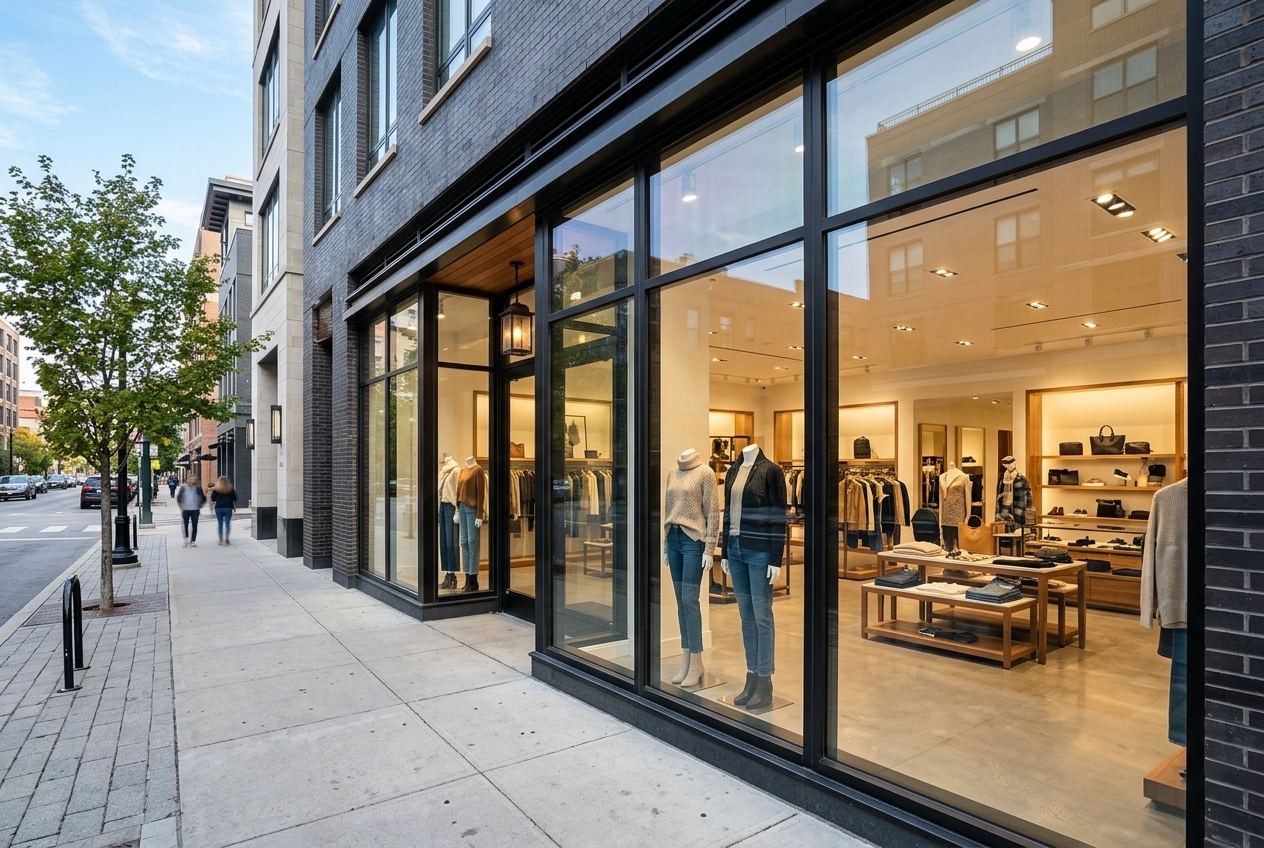
This is the most common concern, and the answer depends on the film you choose.
Modern spectrally selective and ceramic films are designed specifically for commercial applications where visibility matters. Films with a VLT of 50% to 70% still allow abundant natural light into your space while cutting heat and glare significantly.
Your window displays remain clearly visible from the sidewalk. Interior lighting levels stay comfortable without needing to blast overhead fixtures to compensate. The film itself is virtually invisible to passersby on the street.
Some retailers actually report that their displays look better after film installation because the harsh glare and washed-out effect of direct sunlight is eliminated. Colors appear richer and contrast improves when the light is controlled.
Afternoon sun does not just make your store uncomfortable. It actively damages your inventory.
UV radiation causes colors to fade, fabrics to weaken, and materials like leather and wood to dry out and crack. Products sitting in direct sunlight near your storefront windows degrade faster than identical items stored deeper in the space.
Window film blocks 99% of UV radiation, essentially creating a protective shield across your entire glass facade. This protection extends the display life of your merchandise and reduces the frequency of rotating stock away from sun-exposed areas.
Flooring, wall finishes, and branded signage also benefit. Replacing faded carpet, bleached displays, or sun-damaged graphics is an ongoing expense that window film eliminates at the source.
Yes. Professional-grade window film can be installed on single-pane, double-pane, tempered, and laminated glass. A qualified installer will perform a thermal stress analysis to ensure the film is compatible with your specific glass type and frame configuration.
Quality commercial window films backed by manufacturer warranties typically last 15 to 20 years. Professional installation ensures proper adhesion and longevity, and most films maintain their heat-rejection performance throughout their entire lifespan.
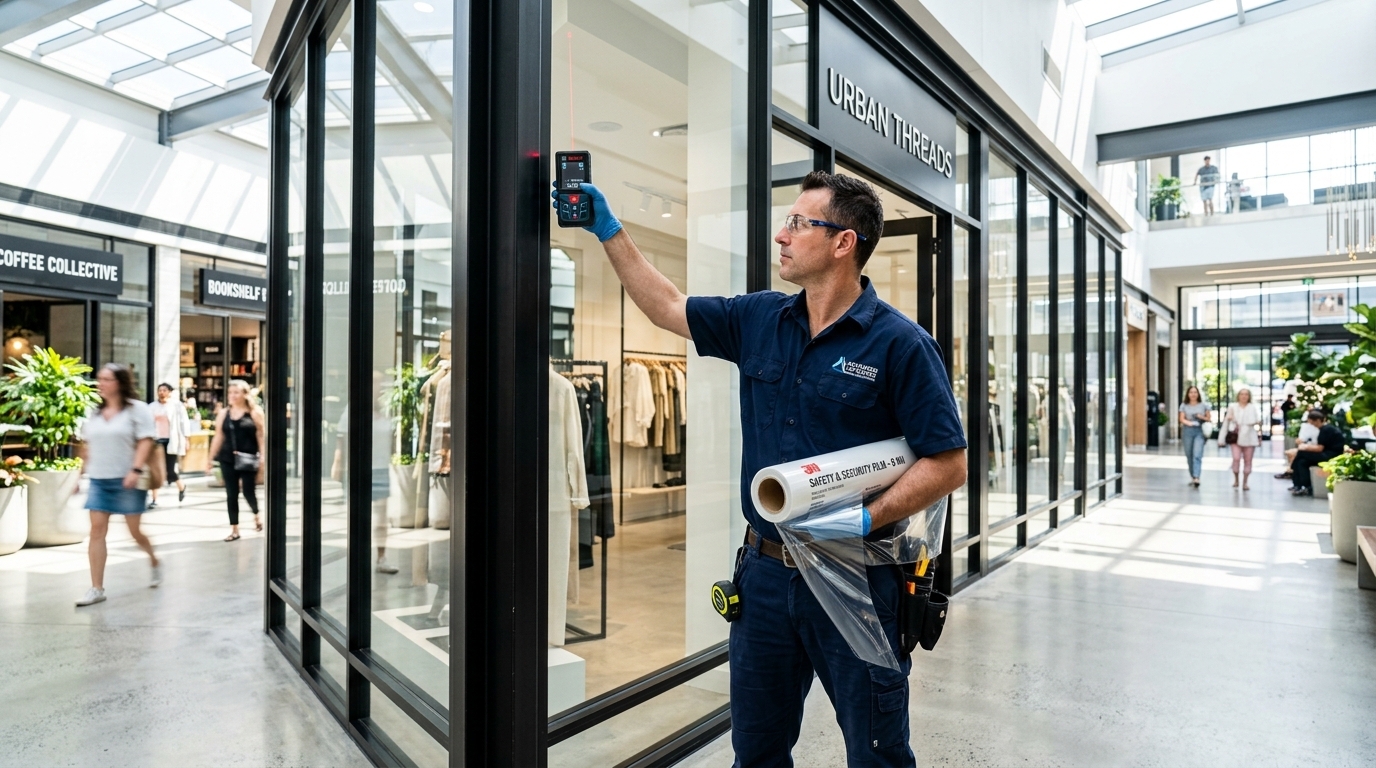
Professional installation is strongly recommended for commercial storefronts. The large glass panels, precise cutting requirements, and need for a thermal stress analysis make DIY installation risky. Improper application can void manufacturer warranties and create bubbling, peeling, or glass stress fractures.
Absolutely. South-facing storefronts still receive significant solar heat gain, especially during winter months when the sun is lower. Window film reduces heat and glare regardless of your orientation. West-facing stores see the most dramatic improvement, but south-facing and even east-facing locations benefit noticeably.
Most commercial clients notice lower HVAC runtime within the first week. Measurable energy cost reductions typically appear on the first full billing cycle after installation, with many businesses reporting 10% to 30% savings on cooling costs during peak summer months.
Your storefront should not feel like a punishment for customers and employees every afternoon. The science behind why it happens is straightforward: untreated glass lets in too much solar heat and glare, and the problem peaks during afternoon hours when the sun angle is lowest.
Window film solves this at the source. It blocks heat, cuts glare, protects your merchandise from UV damage, and lowers your energy costs, all without changing the look of your storefront or blocking your window displays.
The fix is fast, non-disruptive, and pays for itself through energy savings and extended HVAC life. Contact American Window Film today for a free consultation and stop dreading the afternoon sun.
No Comments Yet
Let us know what you think