

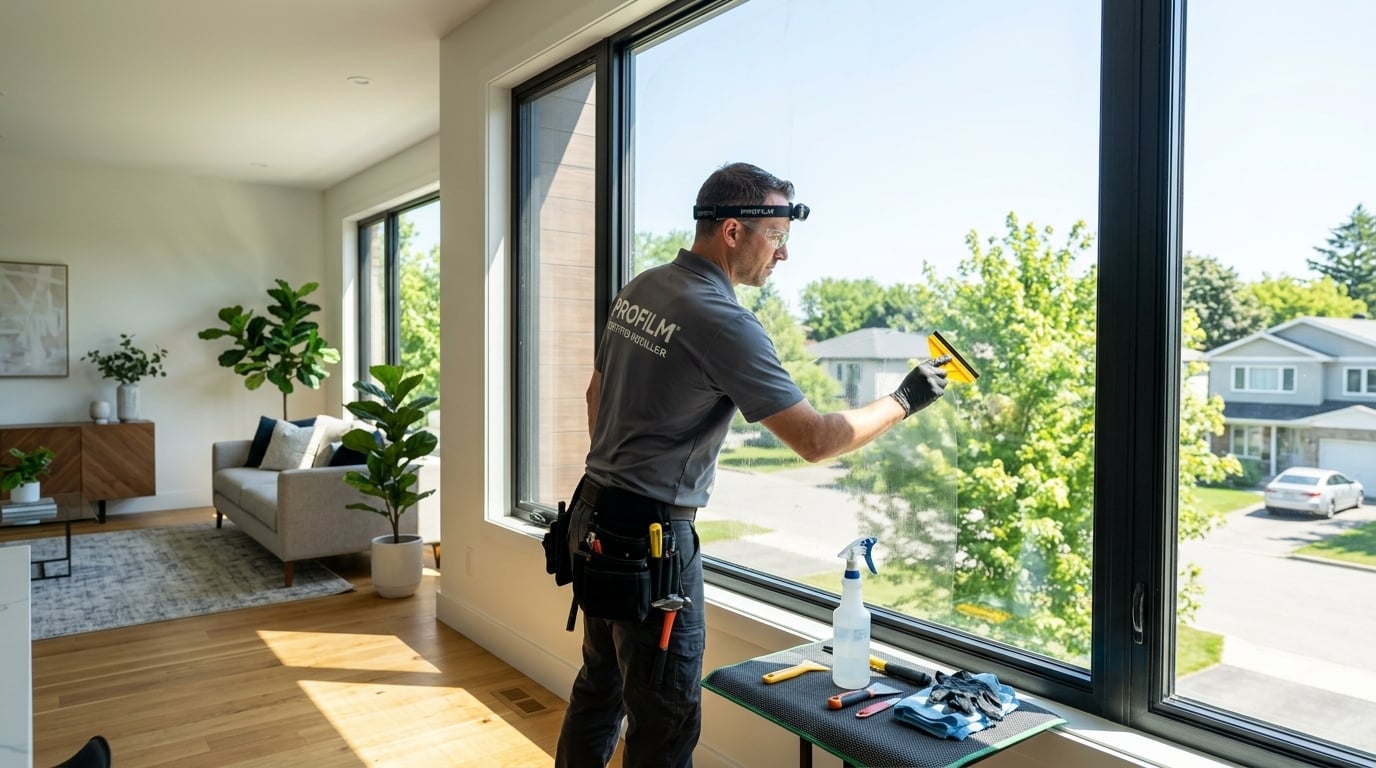
One of the most frequent questions homeowners, property managers, and architects ask is whether installing window film can cause double-pane windows to crack or seal failure. Many people have heard cautionary tales of glass mysteriously fracturing after being tinted, creating hesitation when considering solar control upgrades.
The engineering reality is clear: when properly specified and installed by certified professionals, architectural window film is completely safe for double-pane windows.
Tens of millions of square feet of architectural window film are successfully installed on double-pane insulated glass units (IGUs) across the globe every single year. Modern architectural films are engineered specifically to comply with the thermal stress tolerances of double-pane glazing.
Unfortunate glass breakage incidents almost always stem from two preventable errors: DIY installations using inappropriate film chemistry or uncertified contractors applying high-absorption films to incompatible glass types.
The fear of cracked glass and voided manufacturer warranties causes many building owners to endure suffocating summer heat and soaring electric bills unnecessarily. Double-pane windows without solar control allow massive amounts of radiant infrared heat into interior spaces.
Believing that window film will destroy their windows, property owners often invest in expensive exterior awnings or settle for permanently closed interior blinds.
Understanding the physics of thermal stress empowers property owners to capture significant energy savings while keeping their glass completely safe.
Professional architectural window film dealers utilize computer-modeled film-to-glass compatibility matrices developed by leading manufacturers like 3M. These engineering calculations evaluate glass dimensions, pane thickness, framing materials, exterior shading patterns, and altitude.
By matching the correct film technology to the specific glass assembly, certified installers guarantee that thermal stress remains well below structural fracture thresholds.
Homeowners can review real-world residential performance in our guide on best residential window film for heat reduction.
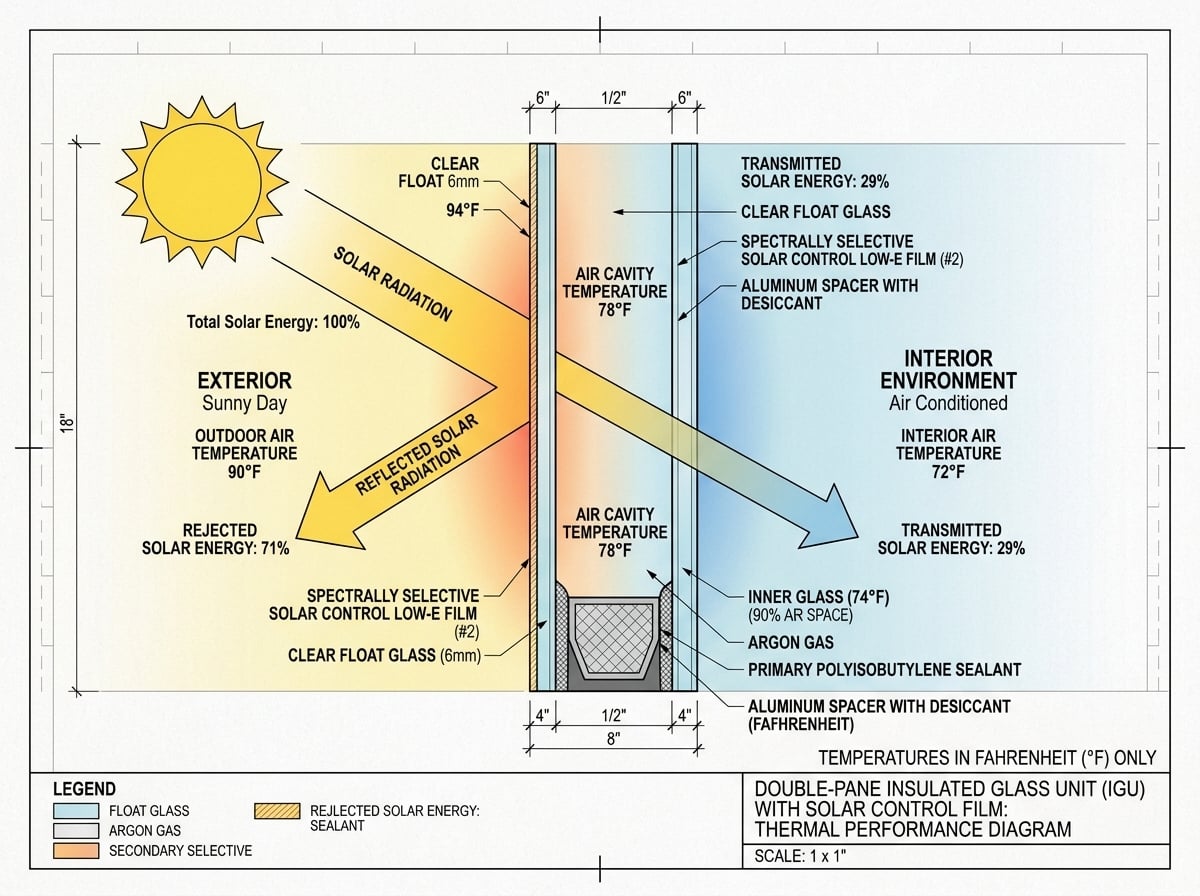
Glass expands when heated and contracts when cooled. A thermal stress fracture occurs when different areas of a single glass pane expand at significantly different rates, creating internal tensile stress that exceeds the edge strength of the glass.
Understanding how localized temperature deltas develop explains why improper film selection poses a risk.
When direct sunlight strikes an architectural window, the center of the glass pane absorbs solar energy and begins heating rapidly. At the same time, the outer edges of the glass pane are shielded from direct sunlight, recessed deep inside aluminum, vinyl, or wood framing gaskets.
The cooler perimeter glass remains contracted, while the heated center of the pane attempts to expand outward. This expansion creates tensile stress along the glass edges.
If the temperature differential between the hot center of the pane and the cool shaded edge exceeds 45°F to 50°F on standard annealed glass, a clean perpendicular thermal crack can propagate outward from the edge.
The physical strength and thermal resilience of window glass depend directly on the manufacturing heat treatment process used during fabrication.
Standard annealed glass, commonly used in residential windows, cools slowly during manufacturing, leaving low residual surface compression. Annealed glass has an edge strength of approximately six thousand pounds per square inch and is the most susceptible to thermal stress.
Heat-strengthened glass undergoes controlled thermal quenching, yielding roughly twice the mechanical and thermal strength of annealed glass.
Fully tempered safety glass undergoes rapid thermal chilling, creating high surface compression exceeding ten thousand pounds per square inch. Tempered glass can easily withstand center-to-edge temperature differentials exceeding 200°F without fracturing, making it completely immune to window film thermal stress.
Thermal stress fractures occur almost exclusively when inexperienced installers apply cheap, high-absorption films to standard annealed double-pane glass. Certain dyed films are engineered strictly for non-architectural applications, not flat architectural insulated windows.
These inappropriate films absorb sixty to seventy percent of incoming solar energy directly into the interior glass pane. This rapid heat absorption spikes the pane temperature, overwhelming the annealed glass edge strength and causing fractures.
Certified architectural window films, by contrast, rely primarily on solar reflection rather than solar absorption. High-performance ceramic and dual-reflective films keep total solar absorption safely below forty-five percent, preserving thermal margins.
To learn more about solar spectrum metrics, read our detailed guide on VLT vs SHGC vs TSER window film specifications.
| Glass & Window Assembly | Thermal Breakage Risk | Safe Window Film Categories | Engineering Recommendations |
|---|---|---|---|
| Double-Pane Clear Tempered | Zero Risk (Extreme resistance) | All solar, ceramic, reflective, and security films | Tempered glass safely handles any solar absorption level |
| Double-Pane Clear Annealed | Low to Moderate (If improperly matched) | Dual-reflective, neutral ceramic, spectrally selective | Solar absorption must remain under 48%; verify edge cuts |
| Double-Pane Tinted Annealed | Moderate to High | Low-absorption spectrally selective, exterior films | Factory tint already absorbs heat; specify low-absorption film |
| Double-Pane Low-E Annealed | Low (With verified film matrix) | Ceramic, spectrally selective, Low-E climate film | Must verify Low-E coating surface position (Surface #2 vs #3) |
Evaluating these glazing classifications ensures every installation complies with manufacturer safety guidelines.
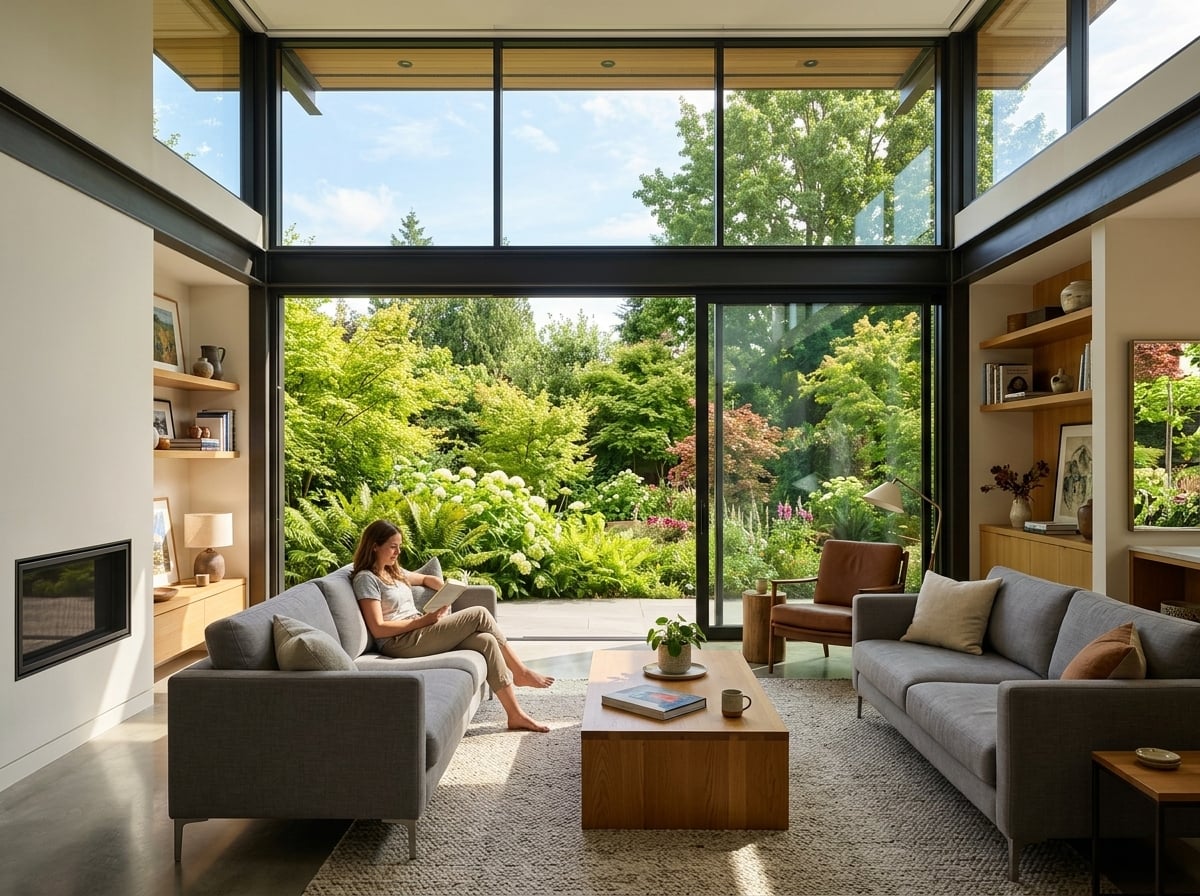
A related concern among property owners is whether window film causes seal failure in insulated glass units. An IGU consists of two glass panes separated by an airtight spacer bar containing desiccant and filled with dry air or inert gas such as argon.
Understanding how pressure dynamics operate inside an insulated glass unit eliminates common misconceptions about seal failure.
The sealed airspace between two panes of glass experiences natural diurnal pressure cycles. As sun warms the airspace during the day, the gas inside expands; as the airspace cools at night, the gas contracts.
Quality commercial and residential IGUs are engineered to withstand continuous pressure fluctuations for decades. Edge seals utilizing polyisobutylene primary seals and silicone secondary seals flex naturally with temperature shifts.
Applying an excessively dark, high-absorption film to the interior pane of an IGU can increase the temperature of the sealed air cavity beyond normal operating parameters. The excessive heat causes the trapped gas to expand with increased force, placing stress on perimeter seal bonds.
Certified architectural solar films avoid this issue by reflecting radiant energy rather than absorbing it. Reflective and ceramic films keep the inter-pane airspace temperature within normal manufacturer design limits.
Independent laboratory testing by organizations like the National Fenestration Rating Council (NFRC) confirms that certified architectural films do not cause premature seal failure when installed on structurally sound windows.
Discover why insulated windows struggle with heat buildup in our report on why home AC bills are so high in summer with double-pane windows.
Choosing a professional architectural window film dealer provides complete financial and structural protection. Certified dealers do not guess; they follow strict engineering protocols to guarantee absolute glass safety.
These quality controls protect building owners from unexpected liabilities.
Before recommending a window film, certified technicians conduct an on-site glazing audit. The technician identifies the glass thickness, determines whether the pane is annealed or tempered, and inspects glass edges for micro-nicks or damage.
Installers calculate external shading factors, such as overhangs or nearby structural columns, which create uneven shadow lines across the glass.
Only films that pass rigorous thermal stress simulations with comfortable safety margins are approved for installation.
To provide absolute peace of mind, premium manufacturers like 3M provide comprehensive warranty coverage that specifically addresses glass breakage and seal failure.
If an approved 3M architectural window film is installed on a compatible double-pane window and thermal breakage occurs within thirty-six to sixty months, 3M covers the replacement of the glass unit, including labor and materials.
If the original window manufacturer voids its seal failure warranty due to film installation, 3M steps in to assume full seal failure warranty coverage matching the original window manufacturer terms.
This dual warranty protection completely eliminates financial risk for homeowners and commercial building managers.
Here are answers to common questions property owners ask when evaluating window film safety for double-pane windows.
These practical answers help dispel persistent myths.
A thermal stress fracture has a distinct visual appearance that is easily distinguished from impact damage. A thermal crack always originates along the edge of the glass pane, extending perpendicularly into the glass for one to two inches before branching off in wandering lines.
Unlike impact fractures, a thermal crack has no impact point, crater, or spiderweb center.
Yes, architectural window films are routinely installed on modern Low-E double-pane windows. Professional technicians inspect the window to determine whether the factory Low-E coating is on Surface #2 (outer pane, cavity side) or Surface #3 (inner pane, cavity side).
Once the coating position is confirmed, compatible spectrally selective or ceramic films are specified to optimize thermal comfort safely.
Yes, for certain tinted, thick, or deeply shaded double-pane annealed windows where interior film might exceed thermal absorption limits, exterior-applied window film is an exceptional solution.
Exterior film reflects solar radiation before it ever enters the glass envelope, keeping glass panes completely cool and eliminating thermal stress risks.
Fully tempered glass features a small permanent manufacturer stamp or etched monogram in one corner of the pane, often called a "bug." The bug identifies the glass fabricator and safety certification standards.
If no bug is visible, technicians can verify tempering using specialized optical polarized glass inspection tools.
You do not have to let unfounded fears of cracked glass prevent you from enjoying lower cooling bills, glare reduction, and UV protection. When engineered and installed by certified professionals, architectural window film is completely safe, reliable, and backed by industry-leading warranties.
Experienced glazing specialists conduct comprehensive thermal audits, assess your window construction, and recommend compatible high-performance films tailored to your property. To schedule a complimentary window compatibility evaluation and receive free film samples, contact American Window Film.
No Comments Yet
Let us know what you think