

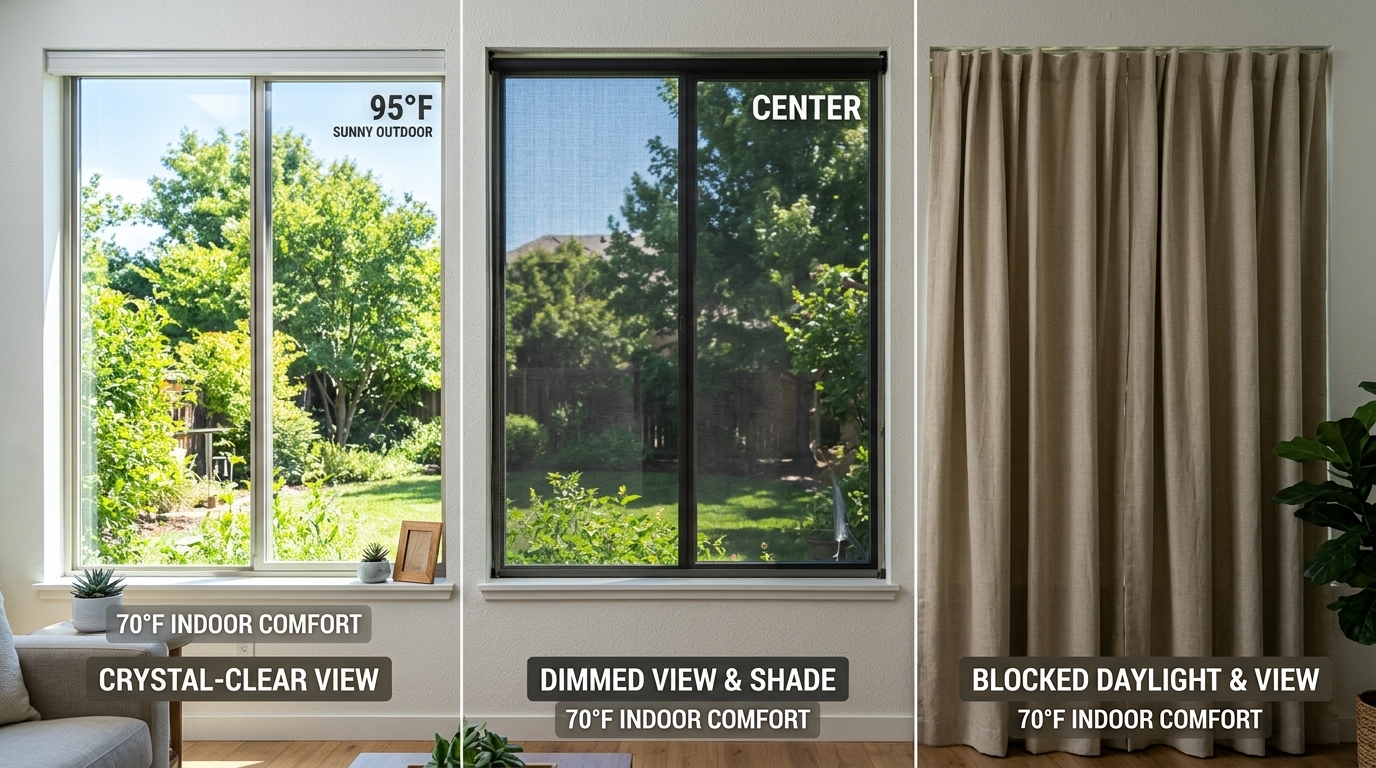
Homeowners battling relentless afternoon heat and soaring summer electric bills face a critical decision when choosing window treatments. Selecting between architectural window film, exterior solar screens, and thermal curtains determines not only how much heat enters your living space, but also whether you preserve natural daylight and outdoor views.
While all three window treatments aim to lower indoor temperatures, they rely on completely different physical mechanisms to stop solar energy. Understanding where and how each product intercepts solar radiation helps you invest in the most effective cooling upgrade for your home.
Modern residential windows are designed to maximize natural daylight and connect indoor living rooms with outdoor landscapes. Even double-pane windows allow tremendous amounts of invisible infrared radiation and visible solar heat to pass straight through the glass pane.
Once solar radiation penetrates untreated glass, it heats up hardwood floors, furniture, and interior walls, forcing your air conditioning system to run nonstop.
Sunlight consists of three distinct spectrums of energy: visible light, ultraviolet (UV) radiation, and near-infrared thermal energy. Over fifty percent of total solar heat comes from invisible near-infrared wavelengths that carry pure thermal heat directly into your home.
When afternoon sun strikes a west-facing or south-facing window, indoor room temperatures near the glass can quickly climb past 85°F.
Without an effective barrier at the building envelope, your home acts like a greenhouse that traps radiant heat throughout the evening. Homeowners experiencing this issue can learn more in our guide on why your home AC bill is so high in summer with double-pane windows.
The fundamental difference between window film, solar screens, and thermal curtains comes down to the exact location where solar energy is intercepted. Stopping heat before or directly at the glass surface prevents thermal energy from ever entering the room air volume.
Conversely, trying to block heat after sunlight has already passed through the window pane traps hot air inside your living space.
Evaluating how each solution handles solar heat rejection, ultraviolet filtration, and visible light transmission reveals why performance varies so dramatically across these three options.
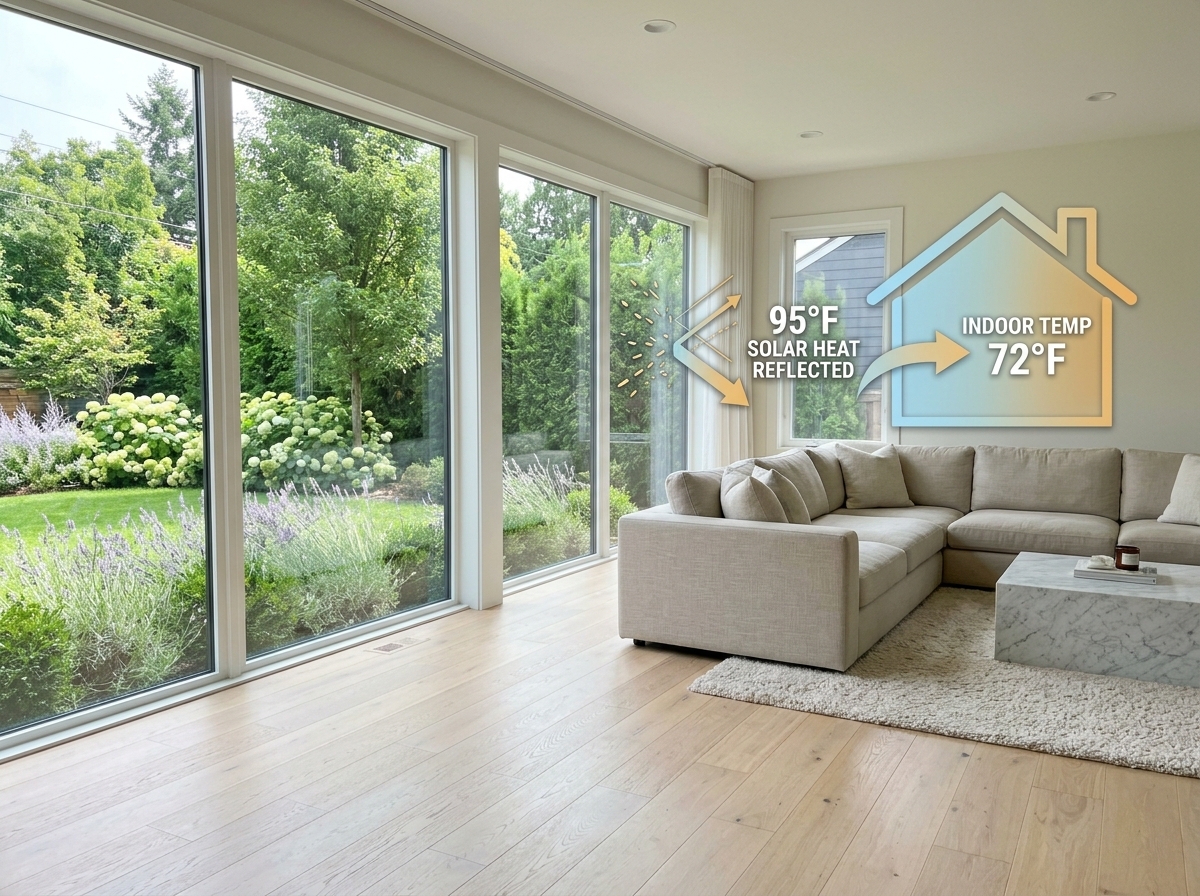
Architectural solar control window film is a thin, multi-layered polyester or nano-ceramic laminate applied directly to the interior or exterior surface of existing window glass. Engineered at the molecular level, modern solar film selectively filters the solar spectrum without darkening your home.
Once bonded to the glass pane, window film operates as a permanent, passive thermal barrier that requires zero daily adjustment.
Advanced nano-ceramic and spectrally selective window films target specific wavelengths of solar energy with remarkable precision. These optical coatings reject up to eighty percent of heat-producing infrared light while allowing seventy percent or more of soft, natural visible daylight to pass straight through.
Because the film rejects heat right at the glass plane, thermal energy is reflected back outdoors before it can warm your room furnishings.
Homeowners can explore specific film formulations in our comprehensive guide to the best heat-blocking window film for homes.
Unlike woven mesh screens or opaque fabric drapes, architectural window film leaves your outdoor sightlines completely clear. You can enjoy panoramic views of your backyard, garden, or coastline during the hottest hours of the afternoon without squinting through harsh sun glare.
Every professional solar control window film also incorporates ultraviolet inhibitors integrated directly into the mounting adhesive and polyester layers.
This UV barrier blocks 99 percent of harmful UV-A and UV-B rays, preventing sun fading on expensive hardwood floors, leather sofas, rugs, and artwork.
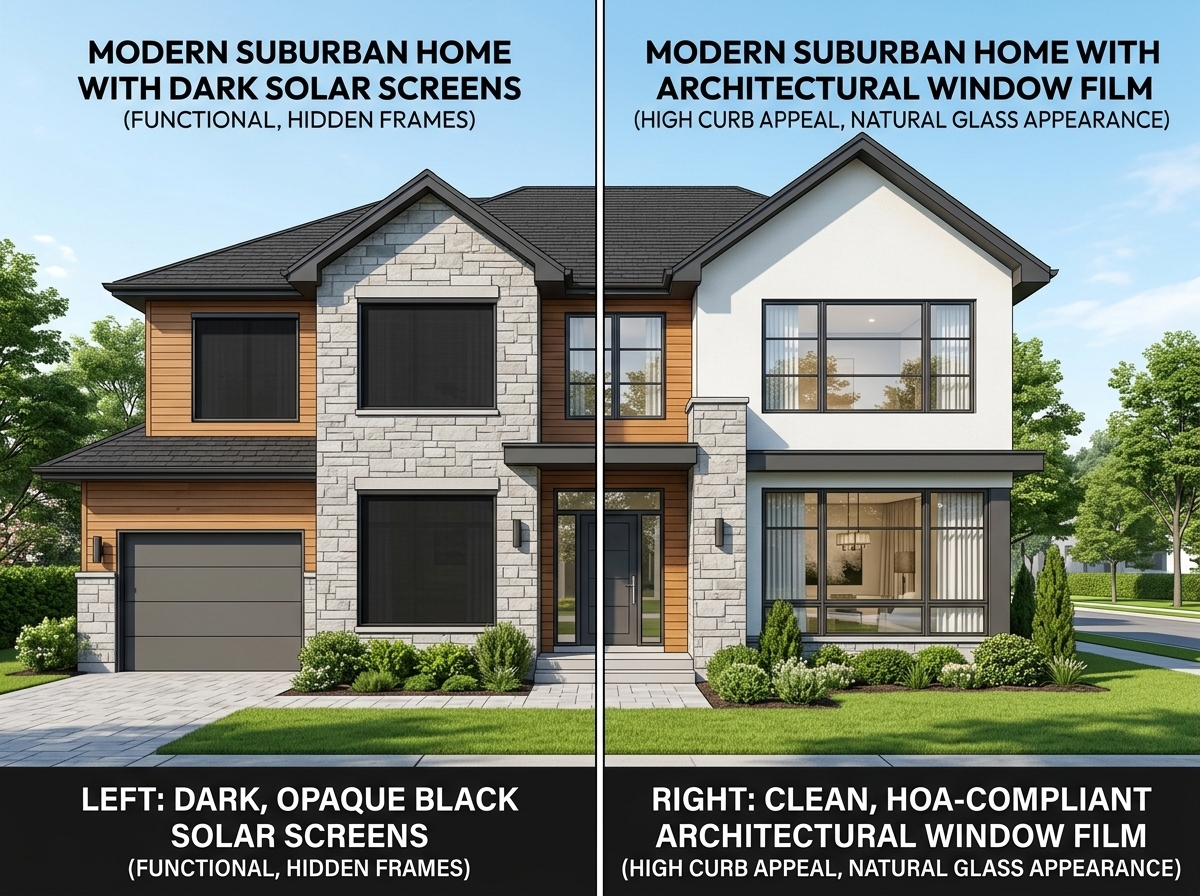
Because spectrally selective ceramic window film has low exterior reflectivity, it is virtually invisible from the street. Homeowners living in strict Homeowners Association (HOA) communities can upgrade their windows for maximum heat rejection without violating exterior architectural guidelines.
Window film never collects household dust, pet hair, or allergens, and it cleans easily with a soft microfiber cloth and ammonia-free glass cleaner.
There are no cords to tangle, no fabric panels to dry clean, and no exterior frames to remove before seasonal windstorms.
Exterior solar screens are heavy-duty mesh frames mounted on the outside of residential window openings. Woven from dense vinyl-coated polyester or fiberglass yarn, solar screens intercept sunlight a few inches before it reaches the exterior glass pane.
Solar screens are rated by their weave density, typically advertised as eighty percent or ninety percent blockage screens.
Because exterior solar screens sit outside the window assembly, they absorb and scatter solar radiation in the outdoor air stream. Preventing direct sunlight from striking the exterior glass pane keeps the window surface noticeably cooler during peak afternoon sun exposure.
An eighty percent solar screen blocks roughly eighty percent of incoming solar energy, while a ninety percent screen blocks up to ninety percent of total light and heat.
This exterior shading mechanism provides substantial heat reduction for homes exposed to extreme desert sun.
The primary drawback of exterior solar screens is that they cannot distinguish between invisible infrared heat and desirable visible daylight. To block eighty or ninety percent of solar heat, a solar screen must also block eighty or ninety percent of your natural indoor light.
Rooms fitted with ninety percent solar screens often feel dim, cave-like, and gloomy, forcing homeowners to turn on artificial indoor lights in the middle of a sunny day.
Looking outward through a thick, dark vinyl mesh weave also degrades optical clarity, turning crisp backyard views into a blurry, gridded haze.
Mounting thick black, brown, or charcoal mesh screens across the front of a house drastically alters its architectural curb appeal. Windows take on a flat, opaque, commercial appearance from the street, which leads many HOA boards to prohibit exterior solar screens on front-facing elevations.
Because solar screens remain exposed to scorching sun, driving rain, wind, and airborne dirt year-round, the vinyl-coated mesh gradually dries out, sags, and frays.
Dirt and pollen trapped in the tight mesh weave washes onto the window glass during rainstorms, requiring homeowners to unlatch and remove heavy screen frames just to wash their windows.
Thermal curtains and blackout drapes are interior fabric treatments hung from rods mounted above the window casing. Multi-layered thermal curtains typically feature a decorative face fabric backed by insulating acrylic foam or a heavy blackout liner.
Many homeowners purchase thermal curtains as a quick do-it-yourself attempt to cool down hot bedrooms and living areas.
From a building science perspective, interior curtains suffer from a major thermodynamic flaw during summer cooling months. For sunlight to hit your curtains, solar energy must first pass completely through the window glass and enter the interior room envelope.
Once infrared radiation passes through the glass and strikes the curtain fabric, it converts into long-wave radiant heat trapped in the air pocket between the glass and the drape.
As that air pocket heats up past 100°F, convective air currents rise out of the top of the curtain rod and circulate that trapped heat directly into your living room.
Thermal curtains only provide solar heat protection when they are pulled completely shut across the window opening. Drawing heavy blackout curtains closed at 1:00 PM plunges your living room, kitchen, or home office into pitch darkness for the entire afternoon.
While total darkness is ideal for night-shift workers sleeping during the day or nursery nap times, most families do not want to live in a dark room with lamps switched on all summer.
The moment you open your curtains to enjoy natural daylight or check on the backyard, zero heat or UV protection remains.
Floor-to-ceiling fabric draperies act as magnets for airborne household dust, pollen, pet dander, and cooking odors. Keeping heavy thermal curtains hygienic requires regular vacuuming with upholstery attachments and expensive professional dry cleaning.
Bulky curtain panels also intrude into valuable wall and floor space, often covering baseboards, radiators, or window trim.
For a deeper look at how interior shades compare to glass retrofits, read our analysis of window film vs motorized solar shades.
Comparing architectural window film, exterior solar screens, and thermal curtains side by side highlights how each product impacts thermal comfort, natural light, aesthetics, and long-term cost.
The comparison matrix below breaks down the core performance metrics across all three window treatments.
| Performance Metric | Architectural Window Film | Exterior Solar Screens | Thermal Blackout Curtains |
|---|---|---|---|
| Where Heat Is Blocked | Directly at the glass plane (reflects IR heat outdoors) | Outside the window (1 to 2 inches before glass) | Inside the room (traps heat between glass and fabric) |
| Solar Heat Rejection | Up to 80% IR Rejection / 60% to 79% TSER | 80% to 90% total shade factor | Low to Moderate (30% to 45% net heat reduction) |
| Natural Light Preservation | High (allows 40% to 70% clear natural daylight) | Low (blocks 80% to 90% of incoming daylight) | Zero natural light when closed for heat protection |
| Outdoor View Clarity | 100% unobstructed, optically clear glass view | Gridded, hazy mesh obstruction | 100% blocked when curtains are drawn shut |
| UV Fade Protection | 99% continuous UV-A and UV-B filtration | 80% to 90% UV blockage (10% to 20% passes through) | Only blocks UV when closed; fabric itself fades over time |
| HOA & Curb Appeal Impact | Virtually invisible; 100% HOA-friendly options | Heavy dark mesh alters facade; frequently banned by HOAs | Visible liner backing from street; interior bulk |
| Expected Lifespan | 15 to 25+ years (backed by lifetime residential warranty) | 5 to 10 years before mesh sags, fades, or tears | 5 to 8 years before foam backing cracks or fabric fades |
When evaluating daylight harvesting, architectural window film is the only solution that separates solar heat from visible light. You can cut harsh television and computer screen glare by fifty to seventy percent while keeping your home bright, open, and inviting.
Solar screens force you to sacrifice eighty to ninety percent of your daylight permanently, even on overcast mornings or mild spring afternoons.
Thermal curtains force an all-or-nothing compromise: either suffer through blinding glare and heat with the curtains open, or sit in artificial lighting with the curtains closed.
During cold winter months, homeowners want to keep expensive indoor furnace heat from escaping through cold window panes. Low-E architectural window films, such as 3M Thinsulate Climate Control film, reflect radiant indoor heat back into the room to improve winter insulation while rejecting summer solar heat.
Exterior solar screens provide zero winter insulation value and actually block beneficial winter warming sunlight unless you climb a ladder to remove and store every screen in autumn.
Heavy thermal curtains do help reduce cold drafts around leaky vintage window frames at night, making them a useful secondary layer alongside insulated window film.
Professional architectural window film installation typically ranges from eight to eighteen dollars per square foot, depending on whether you select dual-reflective, nano-ceramic, or Low-E formulations. Backed by a lifetime residential manufacturer warranty, window film never needs replacement and lowers summer cooling bills for decades.
Custom exterior solar screens generally cost between one hundred and two hundred fifty dollars per window installed, but weather degradation requires screen re-meshing every seven to ten years.
Custom-tailored thermal draperies and heavy mounting hardware easily exceed three hundred to six hundred dollars per window while delivering the lowest summer heat rejection of the three options.
Many homeowners discover that architectural window film and interior curtains do not have to be mutually exclusive. Pairing high-performance solar control window film with decorative curtains gives you the best of both worlds without any functional compromise.
Here is how combining both treatments elevates home comfort:
By letting architectural window film handle the heavy lifting of solar heat rejection, your curtains can serve purely for interior design and nighttime privacy.
Homeowners comparing window treatments often have specific questions regarding glass safety, HOA rules, and energy performance.
These answers clarify the most important technical details before you schedule an installation.
A ninety percent exterior solar screen and a premium nano-ceramic or dual-reflective window film both reject massive amounts of solar heat. However, a ninety percent solar screen achieves that heat reduction by blocking ninety percent of your natural light and obscuring your view with thick dark mesh.
Architectural window film rejects up to eighty percent of infrared heat while keeping your glass crystal clear and your living room flooded with natural daylight.
Improperly selected aftermarket products can increase thermal stress on insulated double-pane glass units. Dark, ninety percent exterior solar screens that partially shade a window or trap heat against certain Low-E glass coatings can occasionally create uneven temperature zones across the pane.
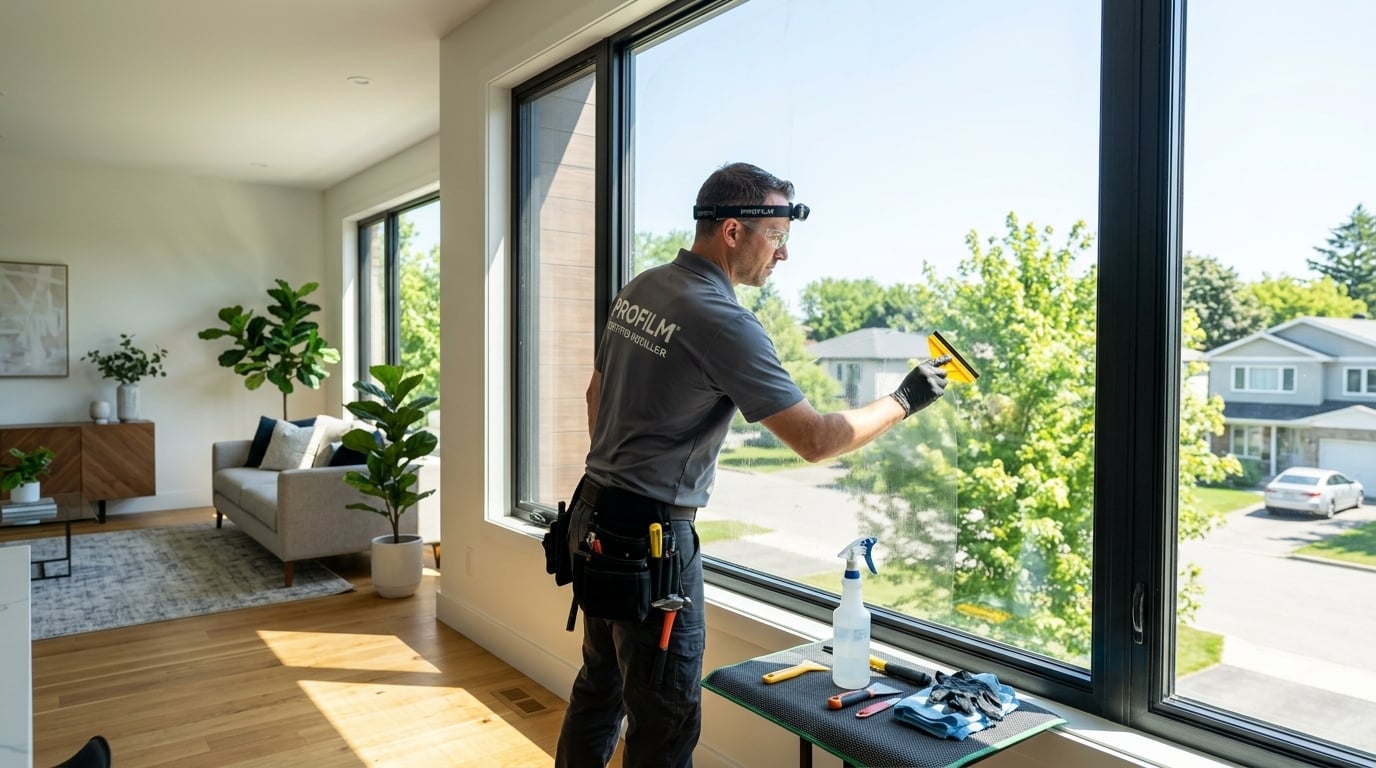
When you partner with an authorized architectural window film dealer, technicians perform a comprehensive glass compatibility audit and back your installation with a manufacturer glass breakage and seal failure warranty.
Most Homeowners Associations enforce strict architectural covenants requiring uniform exterior window appearances across the neighborhood. Exterior solar screens cover the outside of the window frame in opaque black, brown, or gray mesh, hiding the natural window muntins and changing the facade of the house.
Spectrally selective ceramic window films are applied to the interior glass surface and feature a neutral, non-reflective finish that looks indistinguishable from untreated glass from the street.
Standard solar control window films are designed to preserve natural light and outdoor views rather than darken a room completely. If you require pitch-black 24-hour darkness for a baby nursery, home theater, or day-sleeping bedroom, we offer specialized opaque blackout window films that block one hundred percent of visible light.
Alternatively, most homeowners install clear nano-ceramic heat-blocking window film to keep the bedroom cool all day and use light curtains strictly for sleeping hours.
You should never have to live behind dark exterior mesh screens or sit in a cave with closed blackout curtains just to keep your home cool in the summer. High-performance architectural window film stops solar heat and 99 percent of damaging UV rays right at the glass while keeping your rooms bright and your views completely unobstructed.
Our certified residential specialists help you compare optical samples directly on your windows to find the ideal balance of heat rejection, natural light, and HOA-compliant curb appeal. To schedule a free consultation and receive a custom quote for your home, contact the team at American Window Film.

No Comments Yet
Let us know what you think