

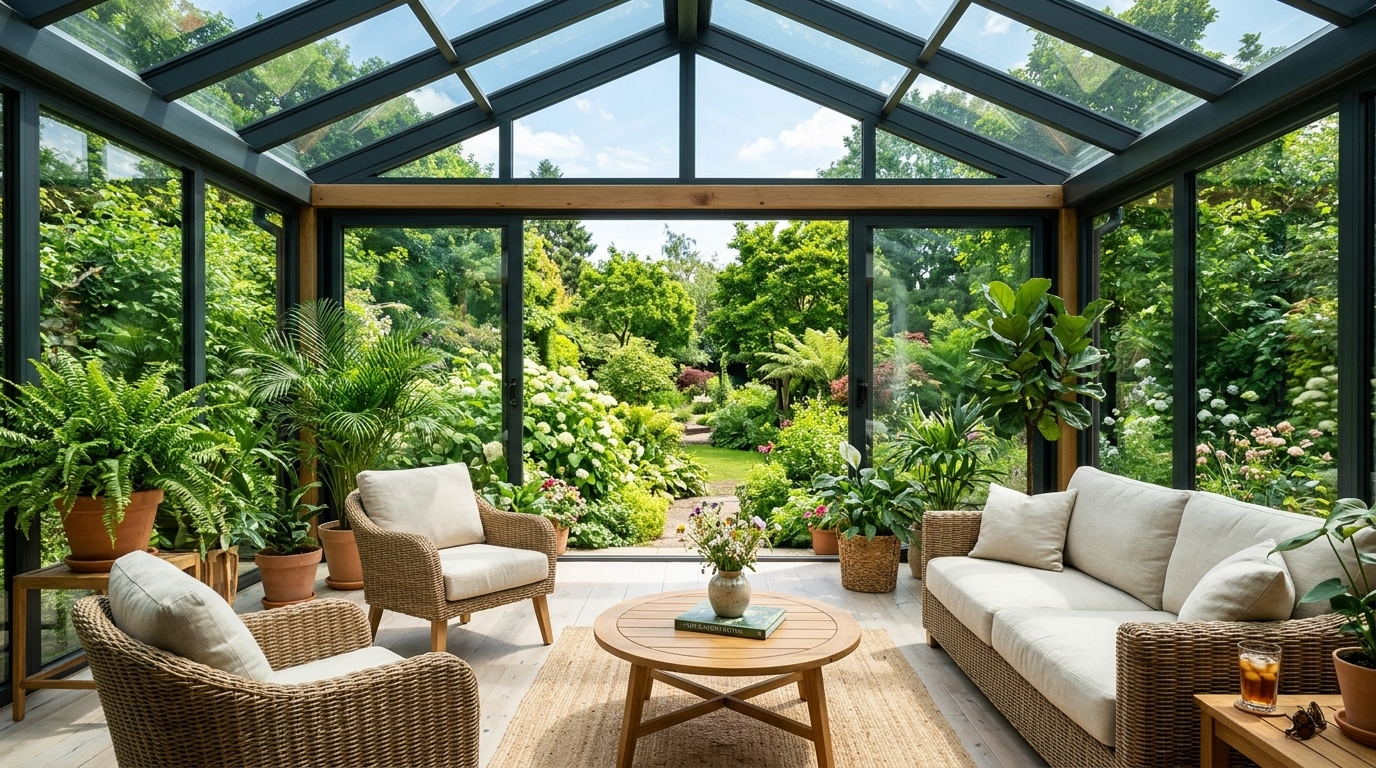
Homeowners invest tens of thousands of dollars building a bright glass sunroom, solarium, or conservatory expecting it to become the favorite gathering spot in the house. Instead, once summer afternoon temperatures climb past 90°F, that dream room turns into a sweltering greenhouse that nobody can sit in between noon and 7:00 PM.
Installing architectural window film for sunroom heat reduction stops solar radiation directly at the glass surface before heat ever enters the room. With the right spectrally selective or nano-ceramic film engineered safely for double-pane glazing, you can cool an overheating sunroom by 10°F to 15°F while keeping your backyard views wide open.
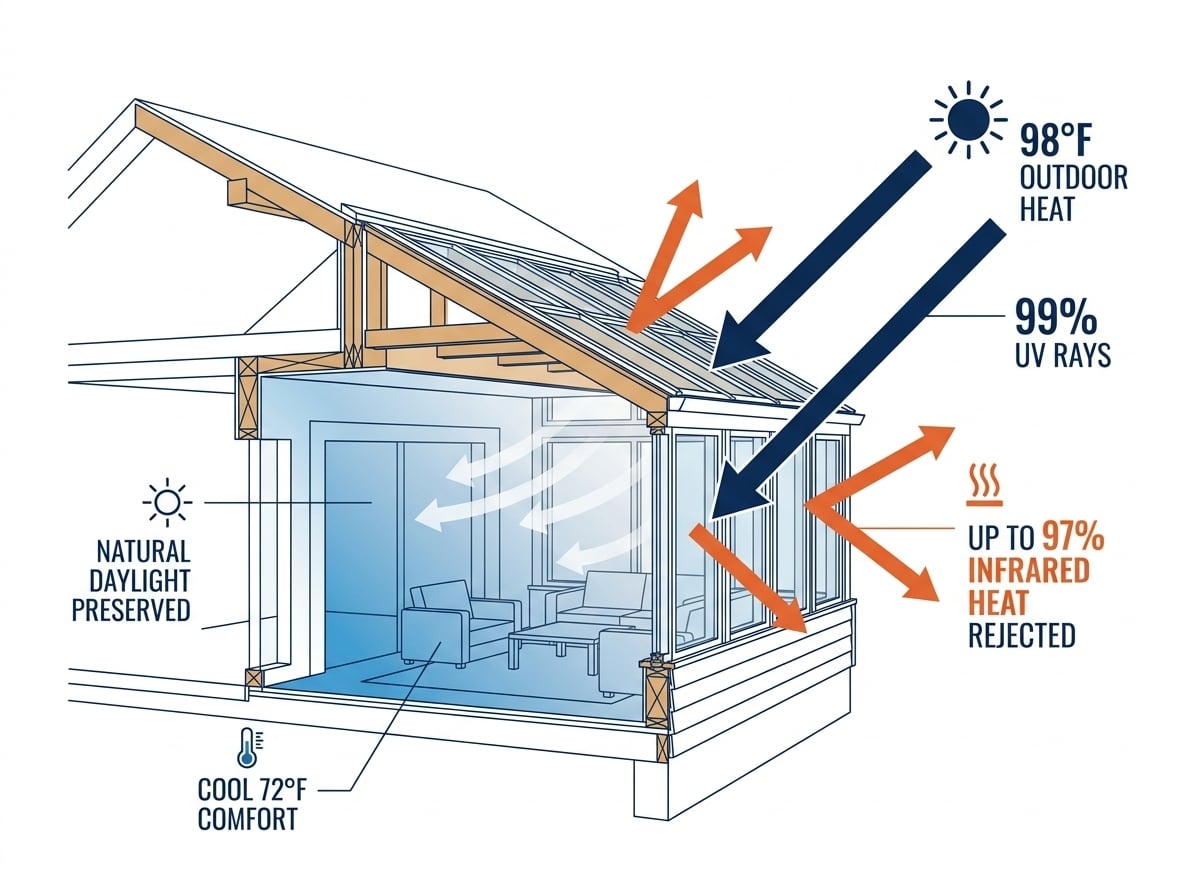
Unlike a standard bedroom with one or two modest windows, a glass sunroom wraps occupants in 180 to 270 degrees of vertical glass plus sloped overhead glass panels. Even when outdoor air temperatures sit at a pleasant 85°F, direct sunlight pouring through untreated glass walls rapidly pushes indoor sunroom temperatures past 100°F to 110°F.
That rapid heat buildup is pure greenhouse physics. Short-wave solar radiation, consisting of visible light, ultraviolet (UV) rays, and invisible near-infrared heat energy, passes effortlessly through clear residential window glass.
Once that solar energy strikes interior tile floors, wicker furniture, sofas, and rugs, those surfaces absorb the energy and re-radiate it back into the air as long-wave thermal heat. Glass acts like a one-way thermal trap for long-wave heat, locking hot air inside the conservatory while forcing your home air conditioner or mini-split system to run continuously at maximum load.
Homeowners desperate for sunroom heat relief usually try interior cellular shades, heavy curtains, or oversized portable air conditioners first. Each of those workarounds comes with steep comfort, energy, or aesthetic trade-offs that undermine why you built a sunroom in the first place.
Interior blinds and roller shades only intercept sunlight after solar radiation has already passed through the window glass. Heat gets trapped in the narrow air pocket between the glass and the blind, creating a radiant convection heater that still warms the room while completely blocking your panoramic garden views.
Adding a dedicated ductless mini-split or cranking central air conditioning down to 68°F fights the symptom instead of stopping the heat source. Running heavy mechanical cooling against three walls of unshielded glass drives summer utility bills sharply upward and wears out HVAC compressors years ahead of schedule.
Architectural solar window film solves the problem at the exterior thermal boundary by reflecting and filtering up to 97 percent of heat-carrying infrared light right at the glass pane. Your conservatory stays bright, open, and visually connected to the outdoors while cutting cooling demand dramatically.
Choosing the right film technology depends on your sunroom's compass orientation, glass construction, and how much natural brightness you want to preserve. Reviewing the best residential window film for heat reduction narrows your decision down to four architectural options engineered specifically for flat glass.
Spectrally selective films, such as 3M Prestige Series or advanced multi-layer nano-ceramic films, represent the gold standard for residential sunrooms and conservatories. Using hundreds of microscopic non-metallized optical layers, these films filter out up to 97 percent of heat-producing infrared rays while allowing 50 to 70 percent of natural visible daylight to stream inside.
Because spectrally selective films maintain lower interior and exterior reflectivity than bare window glass, your sunroom never looks dark, smoky, or mirrored from the backyard. Non-metallic ceramic and nano-optical constructions also ensure zero interference with home Wi-Fi routers, cellular reception, or smart-home sensors inside the room.
If your glass sunroom faces due west or southwest with zero tree cover, low-angle late-afternoon sunlight creates blinding screen glare alongside intense radiant heat. Dual-reflective architectural film uses a subtly reflective exterior layer to reject up to 70 to 79 percent of total solar energy while keeping the interior glass face soft, neutral, and low-glare.
Unlike older shiny mirror tints that turn windows into dark interior mirrors after sunset, dual-reflective films preserve clear nighttime views out to your illuminated patio or garden. Homeowners who watch television, read tablets, or work on laptops inside a sunlit conservatory appreciate how sharply dual-reflective films tame eye strain.
In northern and four-season climates, glass sunrooms swing from 102°F ovens in July to freezing 52°F iceboxes in January. Standard solar films block summer heat brilliantly, yet they do very little to stop warm furnace heat from escaping through cold window panes on a 25°F winter evening.
Installing insulating Low-E window film delivers true twelve-month climate control for four-season sunrooms. During summer, the Low-E coating rejects intense incoming solar heat gain, while during winter its low-emissivity surface reflects radiant indoor heating back into the living space, eliminating chilly glass drafts and cutting winter condensation along window frames.
Conservatories with sloped glass roofs, skylights, triple-pane glazing, or heavy factory Low-E coatings sometimes cannot safely accept standard interior-applied films due to heat buildup inside the insulated glass cavity. Exterior-grade architectural solar films solve this challenge by intercepting solar radiation on the outermost glass surface before heat ever penetrates the first pane.
Stopping solar energy outside the glass delivers the highest possible cooling efficiency and virtually eliminates thermal stress on sensitive double-pane seals. Exterior sunroom films are specially engineered with weather-resistant hard coats and edge-sealing protocols to withstand rain, snow, and direct overhead sun for years.
Homeowners shopping for sunroom tint often make the mistake of judging performance strictly by how dark a film sample looks in their hand. Modern nano-optical films prove that darkness and heat rejection are completely separate metrics, which is why comparing NFRC performance numbers matters far more than shade color.
Focus on three standardized measurements on every architectural film specification sheet:
| Sunroom Film Category | Visible Light (VLT) | SHGC (Lower = Cooler) | Total Solar Energy Rejected (TSER) | Best Sunroom Application |
|---|---|---|---|---|
| Untreated Clear Double-Pane Glass | 78% to 81% | 0.70 | 30% (baseline) | Unprotected greenhouse overheating |
| Clear Spectrally Selective (e.g., 3M Prestige 70) | 68% to 70% | 0.42 to 0.45 | 50% to 55% (up to 97% IR blocked) | Maximum brightness, strict HOA rules, clear views |
| Neutral Nano-Ceramic (40% to 50% VLT) | 40% to 50% | 0.36 to 0.41 | 56% to 62% | Balanced daytime heat, glare, and natural views |
| Dual-Reflective Solar Film (25% VLT) | 25% to 30% | 0.24 to 0.30 | 68% to 75% | Unshaded west-facing sunrooms with intense glare |
| All-Season Low-E Insulating Film | 65% to 70% | 0.43 to 0.48 | 48% to 54% (+ winter heat retention) | Four-season sunrooms in cold-winter regions |
Notice how a nearly invisible clear spectrally selective film slashes SHGC from 0.70 down to 0.42 without noticeably dimming your conservatory. Matching the exact SHGC and VLT balance to each compass elevation lets you prioritize high-rejection films on scorching west walls while keeping east and north glass crystal clear.
Sunrooms present unique glazing engineering risks that make film selection far more technical than tinting a single living room window. Installing an incompatible off-the-shelf film on double-pane sunroom windows can crack expensive glass panels or blow out insulated seals within a single summer season.
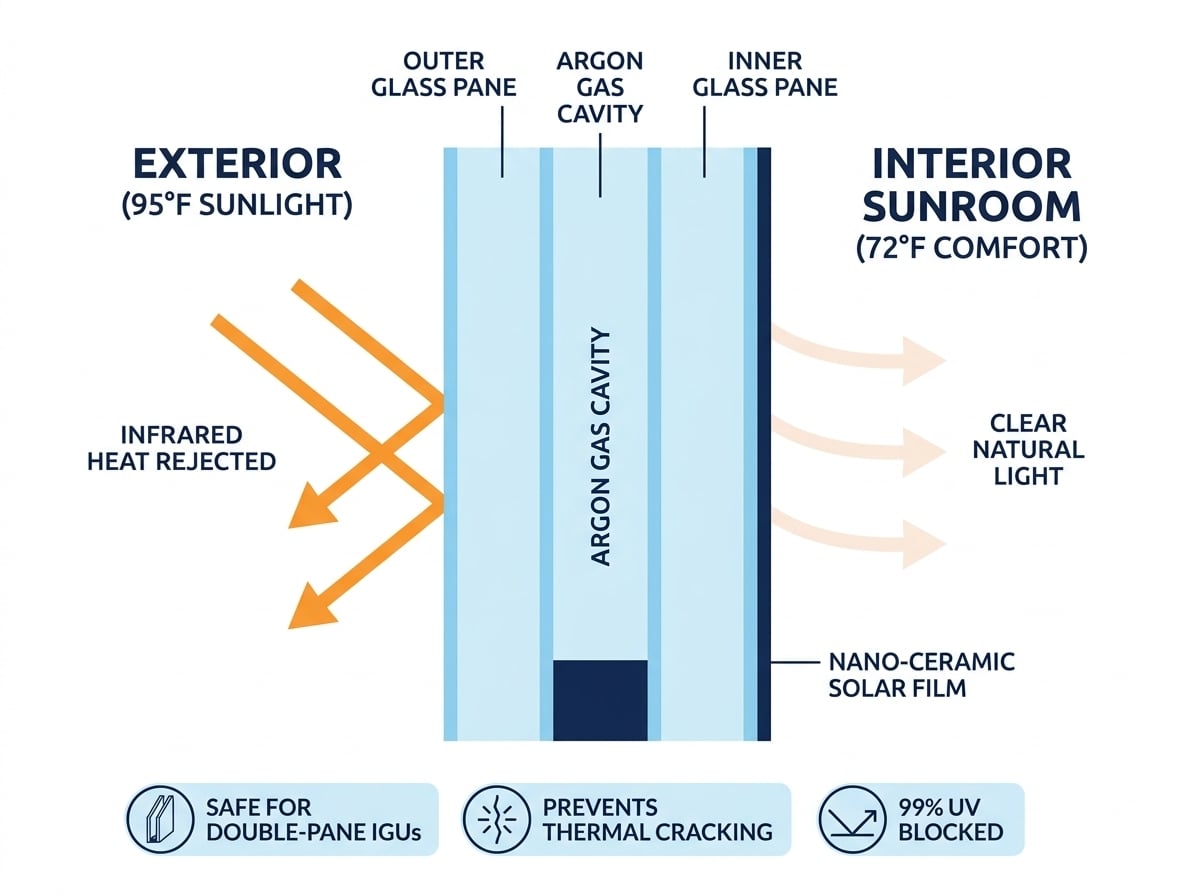
Most modern sunrooms are constructed with double-pane insulated glass units (IGUs) filled with argon gas and coated on an interior surface with factory Low-E glazing. Applying a dark, heavily dyed, or high-absorption film to the inside pane traps intense solar energy directly inside the glass itself.
As the center of the glass heats up toward 140°F while the shaded edges hidden inside vinyl or aluminum framing stay much cooler, uneven thermal expansion builds severe stress across the glass perimeter. If that stress exceeds the glass edge strength, thermal fracture cracks the pane cleanly across the window, or trapped cavity heat ruptures the perimeter seal and causes permanent foggy condensation between the panes.
Always verify safe window film for double-pane and single-pane windows by choosing low-absorption spectrally selective or exterior-grade films approved for your exact glass assembly.
Many three-season sunrooms and patio enclosures feature twin-wall polycarbonate or acrylic roof panels instead of tempered architectural glass. Standard polyester window films engineered for glass must never be installed onto polycarbonate or plastic roofing panels.
Polycarbonate sheets continuously release trace microscopic gases as they heat and cool in direct sunlight, a natural process called outgassing. Because standard glass window film adhesives form an airtight vapor barrier, trapped outgassing bubbles, blisters, and delaminates the film within months while potentially warping the plastic panel itself.
If your sunroom combines glass walls with a polycarbonate roof, a professional glazing specialist will apply architectural glass film strictly to the vertical glass panes and recommend specialized breathable polycarbonate-rated film or exterior shading exclusively for the plastic roof panels.
Leading architectural film manufacturers such as 3M, LLumar, and Huper Optik require certified dealers to run formal glass-to-film compatibility calculations before installing on double-pane sunrooms. Those engineering checks evaluate glass thickness, annealed versus tempered construction, factory Low-E surface location, partial shading patterns from roof overhangs, and frame material.
When a certified dealer installs an approved architectural film, major manufacturers back the job with glass breakage and seal failure coverage that steps in to protect your windows alongside a limited lifetime residential film warranty. Sloped overhead conservatory glass also requires professional scaffolding, precision edge trimming, and contamination-free slip techniques that DIY kits simply cannot replicate safely.
Excessive heat is only half of the damage caused by unprotected sunroom glass. Direct sunlight blasting through three walls of windows accelerates bleaching and dry-rot on hardwood floors, woven wicker, patio cushions, leather chairs, and colorful area rugs far faster than anywhere else in your home.
Architectural solar window films block 99 percent of harmful UV-A and UV-B radiation, cutting the single biggest driver of fabric discoloration and wood breakdown while also curbing solar heat and visible light fading. Every quality sunroom film acts like permanent SPF 1000+ sunscreen for both your interior decor and your family's skin during long afternoons spent reading or entertaining.
Homeowners often worry that UV-blocking window film will starve the ferns, palms, citrus trees, and orchids thriving inside their solarium. Fortunately, indoor houseplants rely primarily on visible blue and red wavelengths (photosynthetically active radiation between 400 and 700 nanometers) rather than destructive UV rays or scorching infrared heat.
High-VLT spectrally selective films transmit abundant visible plant light while stopping the intense 105°F leaf-scorching heat spikes that dehydrate potting soil and burn delicate foliage. Most conservatory plants actually look healthier and require less frantic summer watering once solar film stabilizes room temperatures.
Before scheduling an in-home glass consultation, homeowners consistently ask five key questions about sunroom window film performance and longevity.
On direct sun-exposed glass walls during 90°F to 100°F summer afternoons, high-performance solar control window film typically reduces peak indoor sunroom temperatures by 10°F to 15°F compared to untreated glass. Even better, eliminating radiant solar heat directly through the windows makes a 76°F sunroom feel noticeably cooler on your skin because sunlight is no longer baking your arms and seating surfaces.
No, modern spectrally selective and nano-ceramic films reject the vast majority of infrared heat while allowing 50 to 70 percent of natural visible daylight through the glass. From both inside and outside, clear spectrally selective films look virtually indistinguishable from bare glass and never create the dark cave effect associated with outdated tinted films.
DIY installation is strongly discouraged for sunrooms and glass conservatories due to glass breakage liability and overhead installation difficulty. Store-bought films lack glass compatibility warranties for double-pane IGUs, peel prematurely under intense overhead sun, and frequently trap dust bubbles or crease on awkward angled roof panels.
No, blocking 99 percent of UV rays does not stop photosynthesis in indoor houseplants. Choosing a high-VLT spectrally selective film (50% to 70% VLT) preserves the visible light spectrum plants require for healthy growth while protecting leaves from extreme afternoon heat stress and sunburn.
Professionally installed interior architectural solar films typically last 15 to 20+ years without bubbling, peeling, or turning purple, and most major residential brands include a limited lifetime warranty for the original homeowner. Exterior-grade films installed on sloped overhead conservatory roofs face constant weather exposure and generally deliver 7 to 12 years of reliable high-efficiency performance before replacement.
Your sunroom should be the brightest, most relaxing space in your home every afternoon of the year, not a locked-off 105°F sauna from May through September. By stopping radiant solar heat directly at the glass with double-pane safe spectrally selective, ceramic, or all-season Low-E window film, you protect your furnishings, lower summer air conditioning costs, and preserve crystal-clear backyard views.
As a Premier Authorized 3M Window Film Dealer with certified residential installers nationwide, our team performs complete double-pane glass compatibility audits, brings live film samples directly to your conservatory, and delivers warranty-backed installations built to last decades. To schedule a free in-home sunroom window film consultation and quote, contact the specialists at American Window Film.
No Comments Yet
Let us know what you think